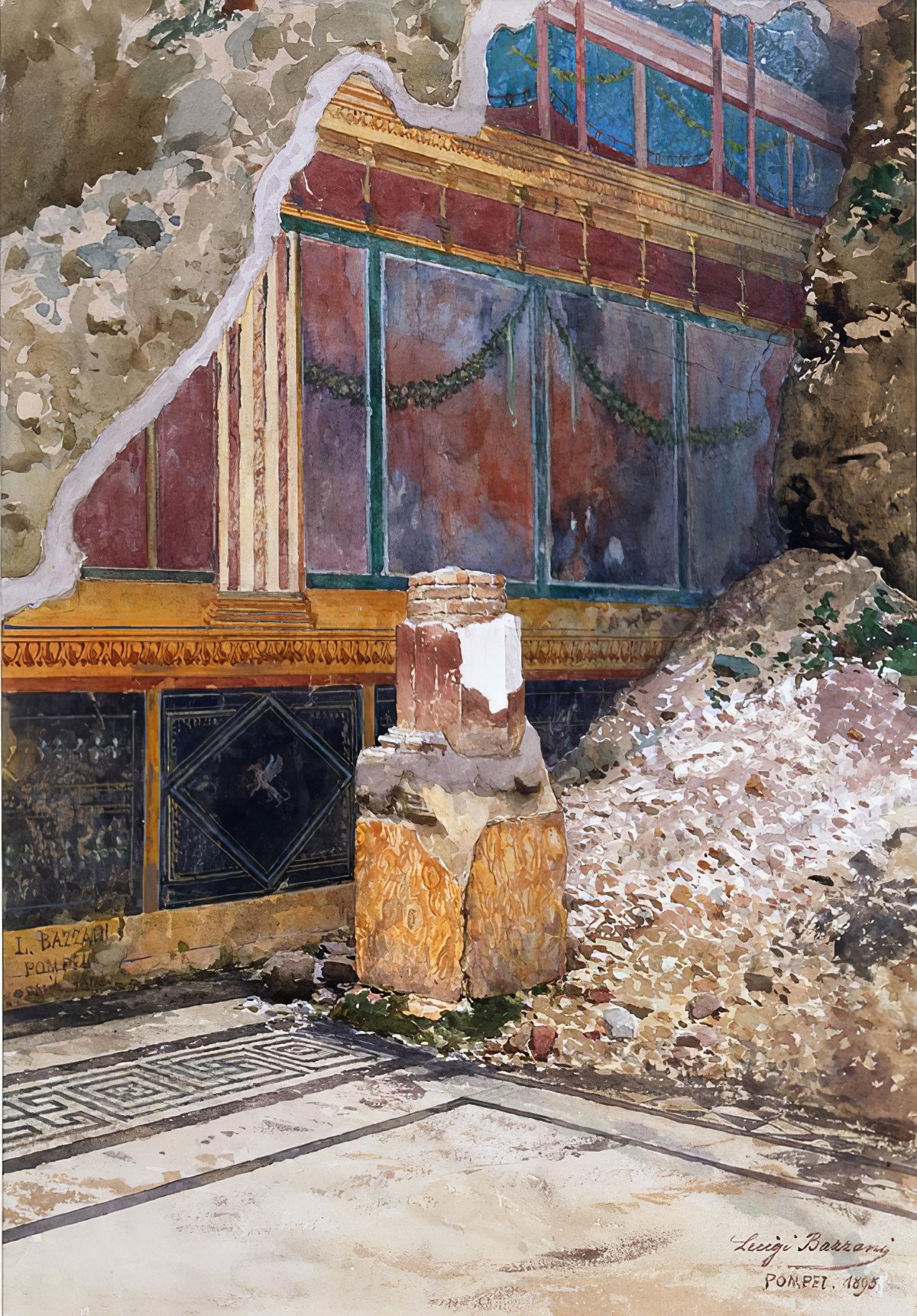

Why does a Roman villa carry a name from a 19th-century royal wedding? When the House of the Silver Wedding was unearthed in 1893, it matched the year Margherita of Savoy celebrated her silver wedding anniversary. This Roman house was buried in the ash from the Eruption of Mount Vesuvius in 79 AD.
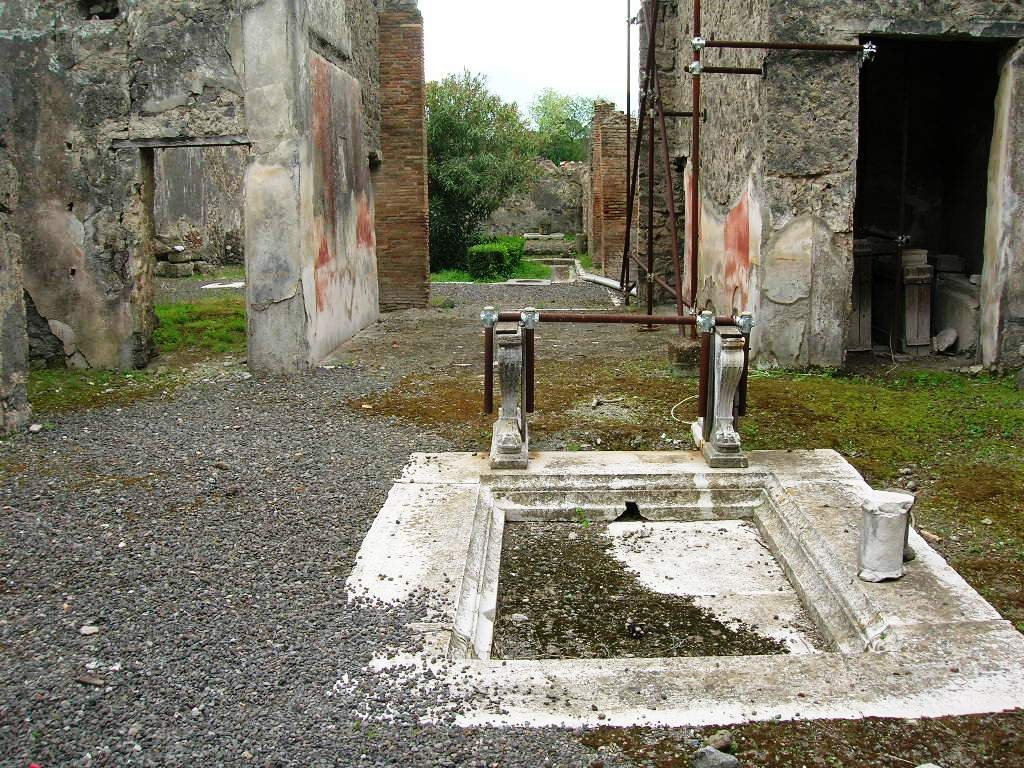
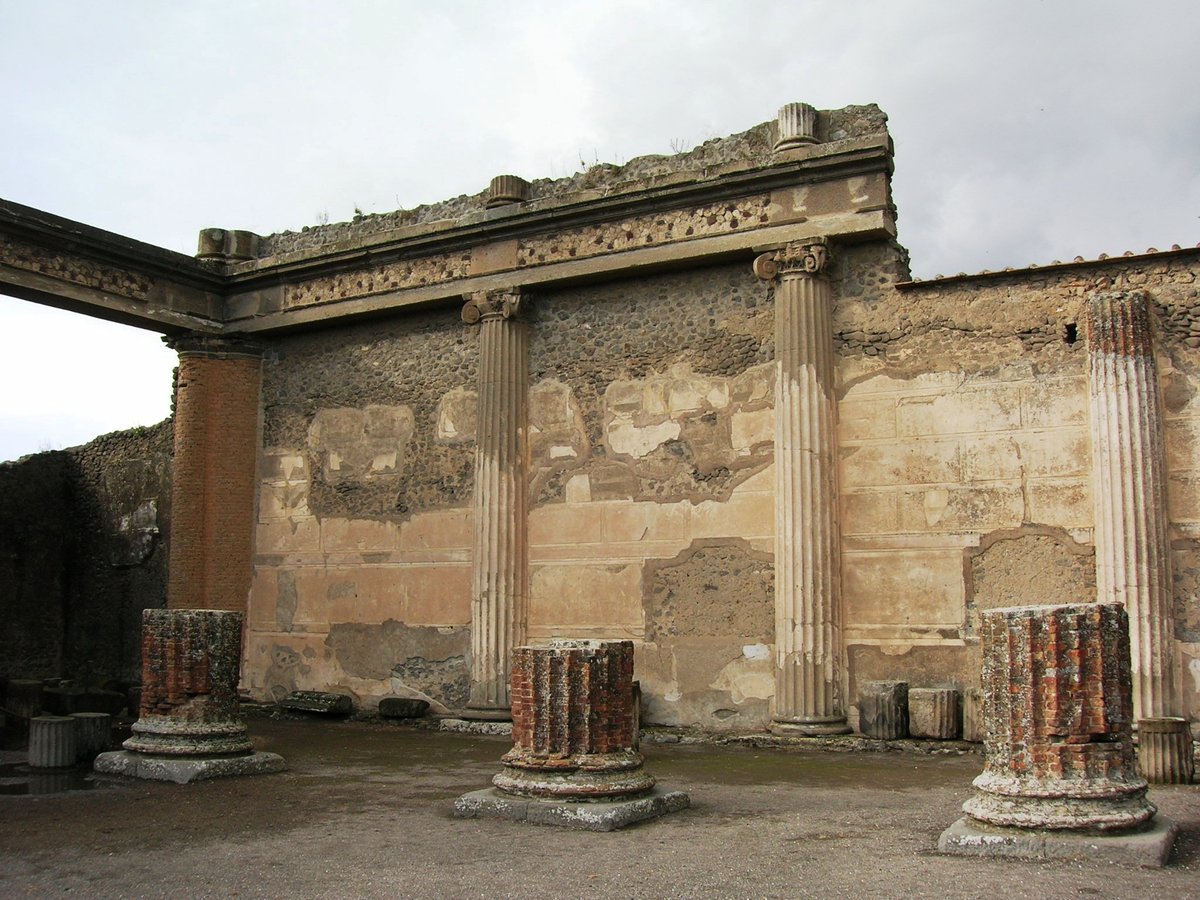
The house dates back to the 2nd century BC and was renovated in the early 1st century AD. It was the domus of a wealthy resident and is considered to be the finest tetrastyle atrium in the city. The atrium features four tall Corinthian columns supporting a roof with palmette antefixes and lion-headed gutter spouts, along with an elegantly ornamented exedra.
Visitors can see two gardens. The largest features a central pool and a triclinium, while the other contains a bath-house, an open-air swimming pool, a kitchen, and a living room. This living room features a mosaic floor, wall paintings, and a barrel-vaulted ceiling supported by four octagonal columns decorated in imitation of porphyry.
The remains are located in the last side street off Via Vesuvio, next to an as-yet unexcavated part of the site. The paintings in the house were fully published in a volume in 2002 as part of a project by the German Archaeological Institute to record houses in Pompeii.
Sources: Wikipedia, OpenStreetMap, Wikidata, Wikimedia Commons

Written by Nicolo Ciampini
Discuss this with the author and others
No comments yet. Be the first to start the conversation.