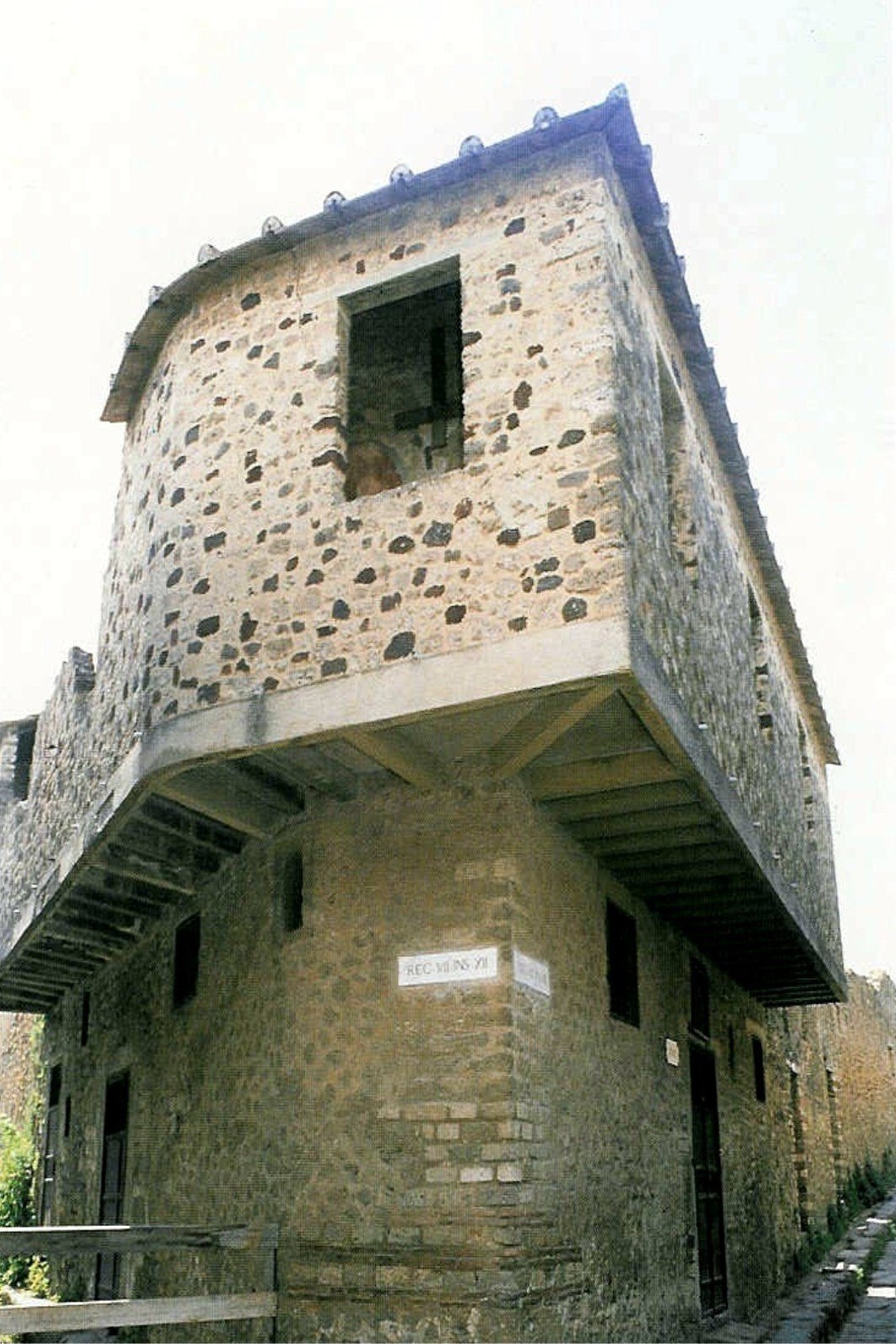

The Lupanar is the ruined building of an ancient Roman brothel in the city of Pompeii. It is also known as the Lupanare Grande or the "Purpose-Built Brothel" in the Roman colony. Since Pompeii was closely associated with Venus, the ancient Roman goddess of love, sex, and fertility, the site was tied to the mythological figure of prostitution. The Lupanar was the largest of the brothels found in Pompeii, containing 10 rooms.
While most brothels during this period were small with only a few rooms, the Lupanar featured plain furnishings, such as mattresses on brick platforms. The building served as a popular social hub or "piazza," evidenced by over 150 transcribed pieces of graffiti. These markings included sports tournament advertisements, political propaganda, and colloquial messages. Because much of the population was not completely literate, the graffiti served as an intentionally interactive experience where visitors could read, speak aloud, and physically touch the engravings.
The Romans called brothels lupanar, meaning a wolf den, and a prostitute was called a lupa, or "she-wolf." The brothel's frescoes were curated to suggest a purified and idealistic sexual environment, specifically depicting heteronormative intercourse. These artworks were often placed above eye level to establish a symbolic distance between the viewer and the sexual journey. The graffiti within the walls also tell stories, with various authors responding to each other's carvings in a sort of dialogue.
Sources: Wikipedia, OpenStreetMap, Wikidata, Wikimedia Commons
Written by Nicolo Ciampini
Discuss this with the author and others
No comments yet. Be the first to start the conversation.