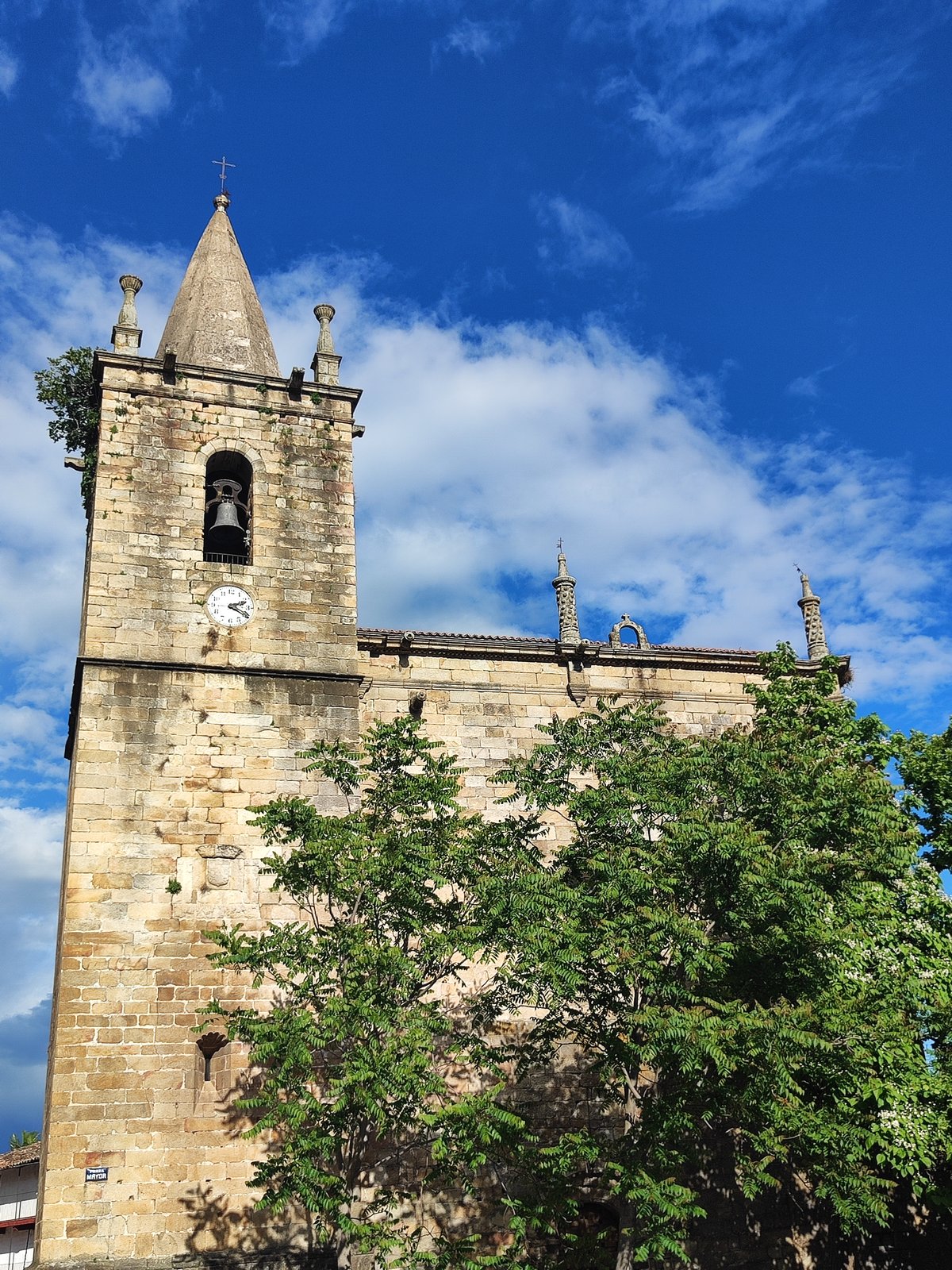

The tower of the Iglesia de Nuestra Señora del Buen Varón still displays the arms of the Duke of Alba. When the town passed into the lordship of the Duke of Alba in 1472, he promoted the construction of some churches in the region, such as the one in Hoyos, as a symbol of his economic power. These structures were designed to stand out from the neighboring towns.
As we look closer at the town of Hoyos, we see it grew around the church in a radial pattern of irregular medieval squares. The structure itself serves as a layered record of history. The church features a primitive portal from the first half of the 13th century, showing a late Romanesque style with carved capitals and vegetal decoration.
Further investigation into the records suggests that a third construction phase was nearly finished before 1563, potentially under the direction of the master architect Pedro de Ibarra. His work may have included the design of the choir tribune and the heightening of the walls. By 1569, important works continued on the nave, while the sacristy was built between 1575 and 1585.
Today, we can approach this building as a protected monument. Important preservation work between 2002 and 2007 replaced the wooden roof structure with a mix of metal and wood. These interventions did not affect the image or the historical-artistic and heritage values of the temple.
Sources: Wikipedia, OpenStreetMap, Wikidata, Wikimedia Commons

Written by Nik Frost
Discuss this with the author and others
No comments yet. Be the first to start the conversation.