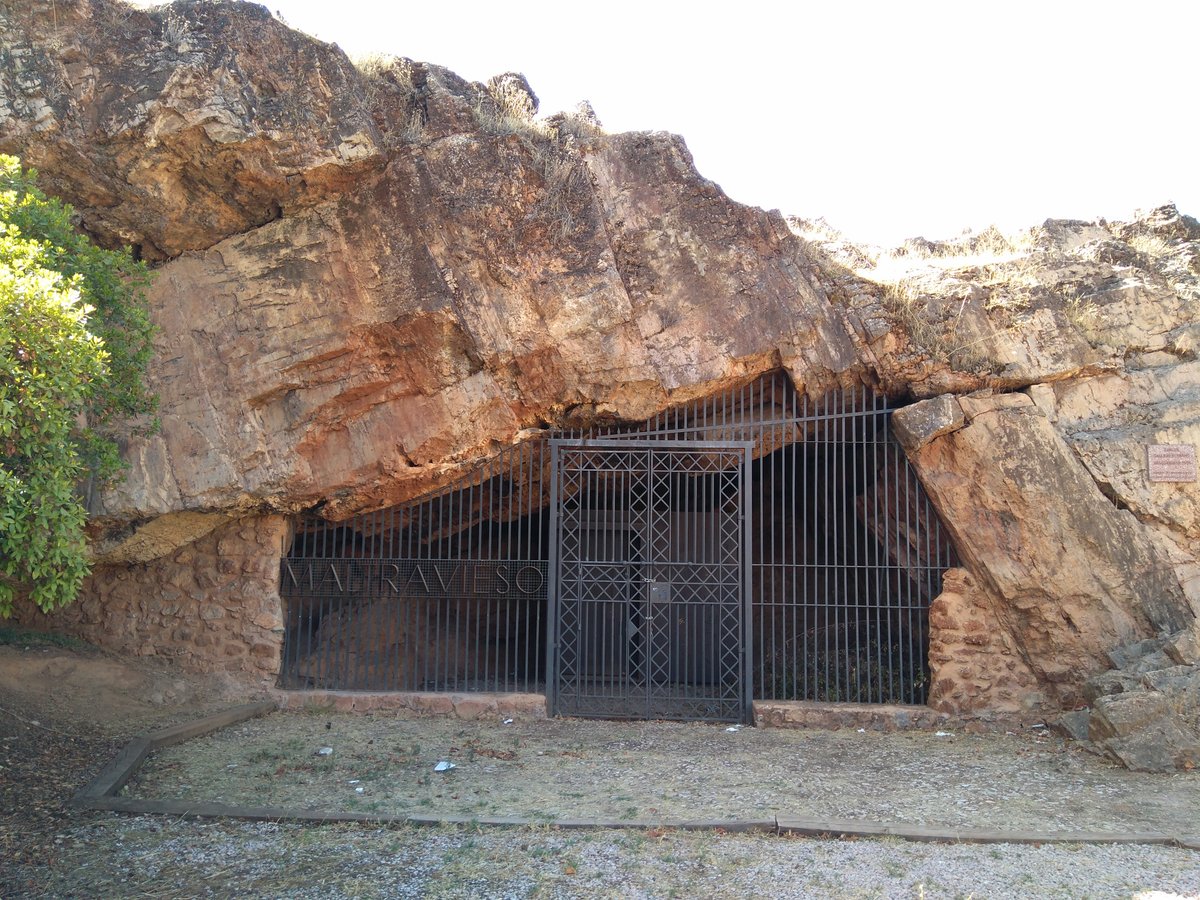

Cueva de Maltravieso in Cáceres, Spain, is famous for its 71 prehistoric hand stencils found on its walls. In 2018, researchers determined that a hand stencil from the cave was dated to 64,000 years ago, placing it in the Middle Paleolithic period.
This dating implies that the art predates the presence of European early modern humans, which has important implications for Neanderthal behavior. However, the dating and the possibility of Neanderthal cave art are disputed based on the physical-chemical evidence.
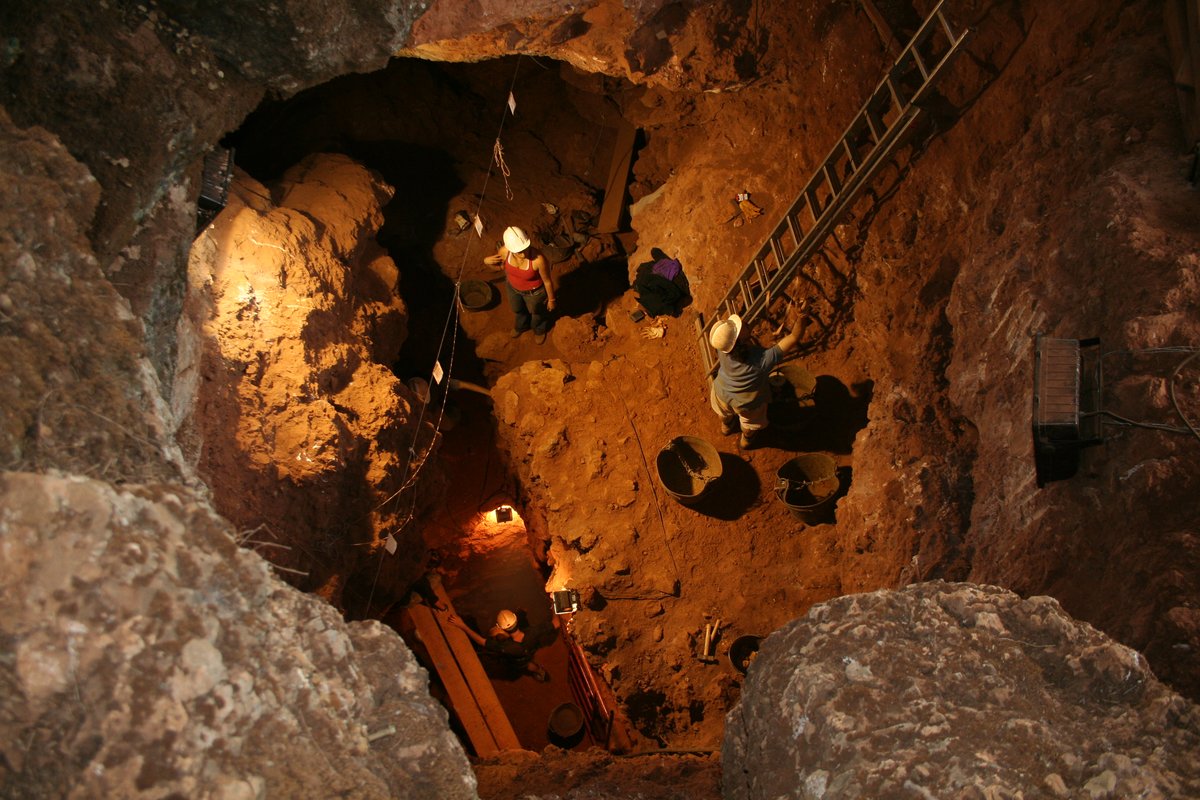
The Cave of Maltravieso was discovered in 1951 and shows traces of human occupation from the Middle Paleolithic. It contains cave art, including linear designs and some animal paintings. A visitor center, the Centro de interpretación de la Cueva de Maltravieso, opened in 1999.
The site is located in Cáceres, Extremadura, Spain. Other nearby Paleolithic caves are those of El Conejar, Santa Ana and Castañar de Ibor.
Sources: Wikipedia, OpenStreetMap, Wikidata, Wikimedia Commons




Written by Nik Frost
Discuss this with the author and others
No comments yet. Be the first to start the conversation.