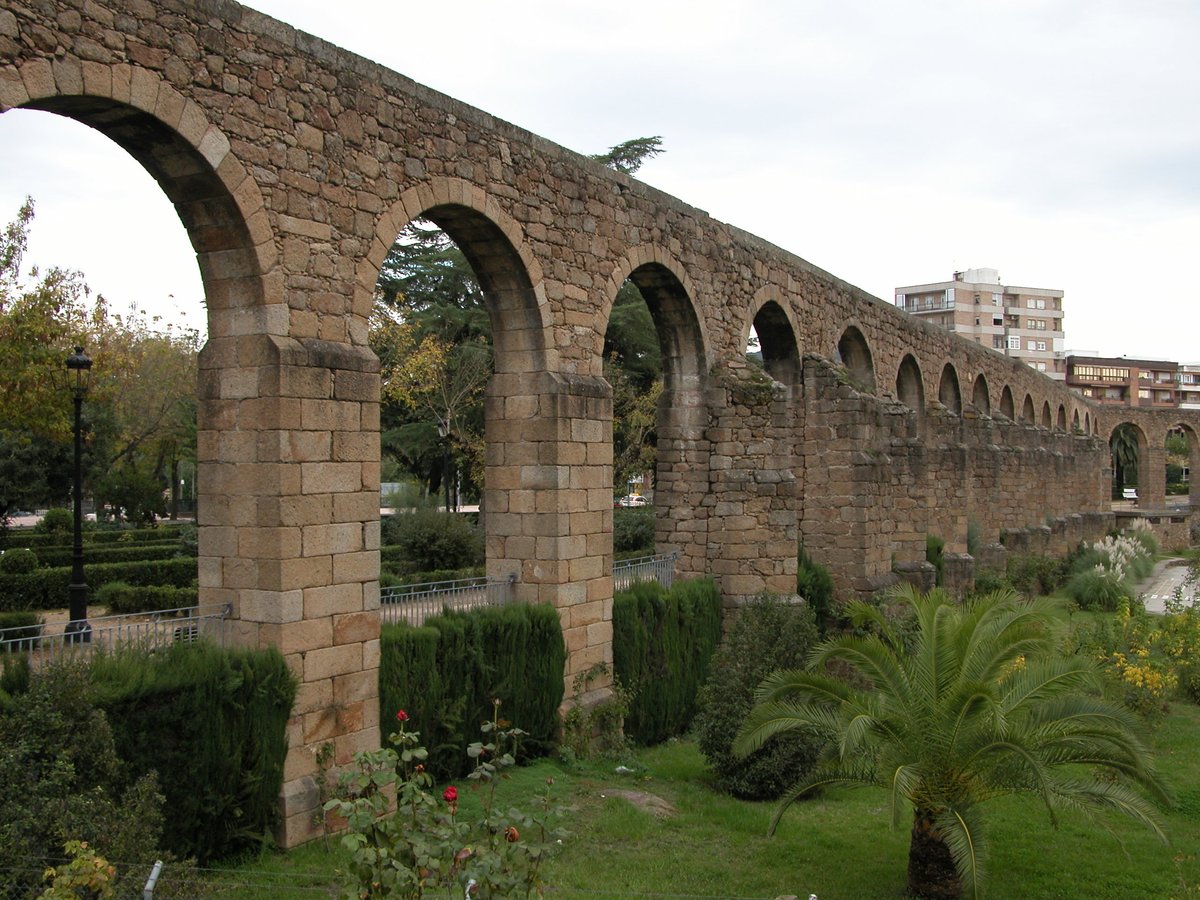

Constructed as a contemporary replacement for a predecessor, the San Antón Aqueduct in Plasencia represents a testament to time's relentless march. It channeled water from the hills of Cabezabellosa and El Torno through a pipeline of joined clay tubes that wound through rocky and uneven terrain. Near the city, the structure transforms into a granite masonry aqueduct, leading toward the Fortaleza de Don Luis de Ávila y Zúñiga, where a reservoir distributed water to the city's public fountains.
The 20th century, however, ushered in fresh hazards, with bombs during the Spanish Civil War wrecking multiple arches, such as those crossing the N-630 road. But a stealthier adversary rose - fire. Due to the uncontrolled growth of plants in its joints, the aqueduct frequently caught fire during fireworks displays at the nearby children's traffic park.
As the world moved into the 21st century, a section began to lean in 2009, necessitating restoration works to prevent its collapse. Seven of the 55 surviving arches are located next to the Hospital Virgen del Puerto, situated within a rest area that offers views of the local dehesas. From here, one can also reach the Ermita de la Virgen del Puerto, the patron saint of Plasencia.
Sources: Wikipedia, OpenStreetMap, Wikidata, Wikimedia Commons
Written by Nik Frost
Discuss this with the author and others
No comments yet. Be the first to start the conversation.