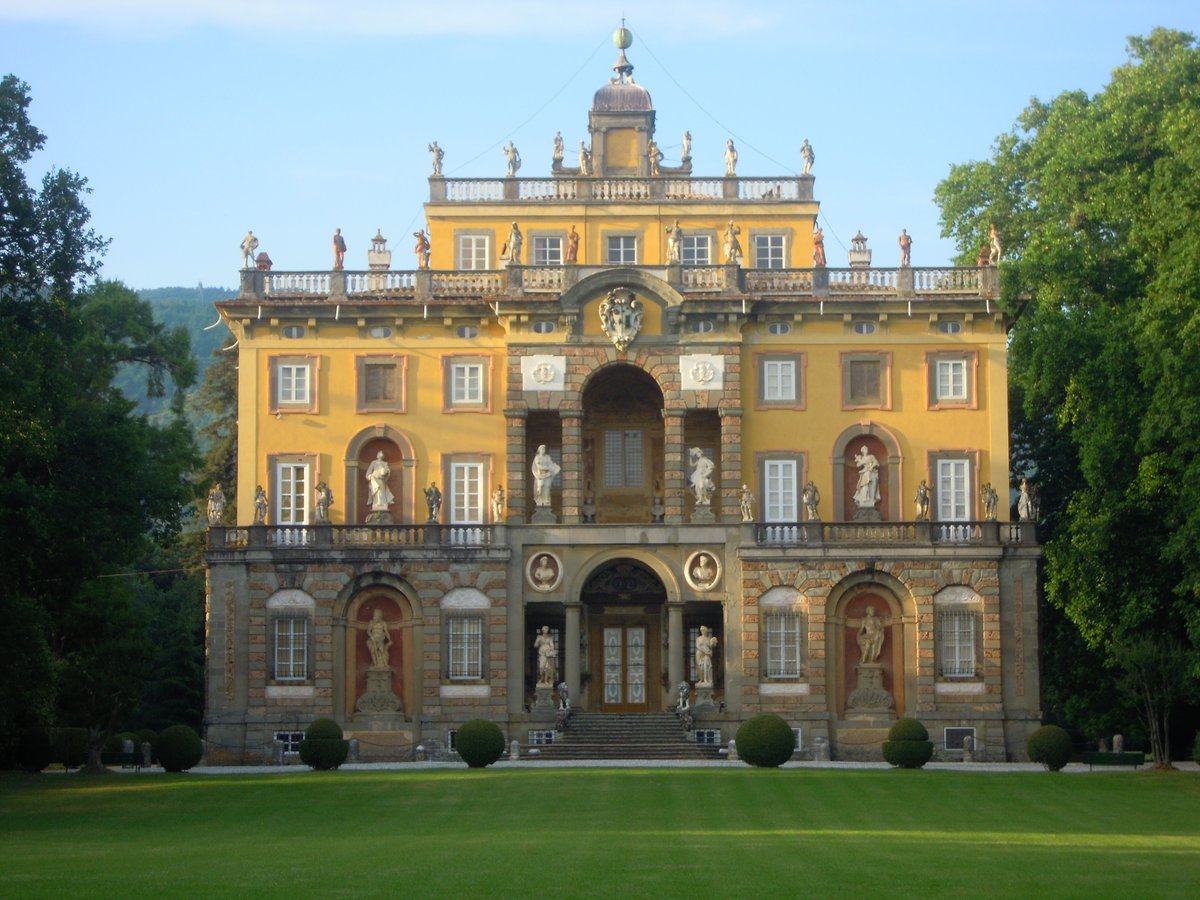

A row of magnificent cypress trees, stretching approximately 700 metres, highlights the main axis of the villa and complements the facade of the main building. At the end of the avenue, near a majestic gate that enters the house, there is a small village that was once intended for the servants.
In 1816, Victoria Santini married into the Torrigiani family, who uprooted the existing garden to make an 'English style' park. Only the garden of Flora survived this transformation. The surviving layout of the garden dates back to the Santini family in 1650, and the villa is currently owned by Fabio Colonna di Stigliano.
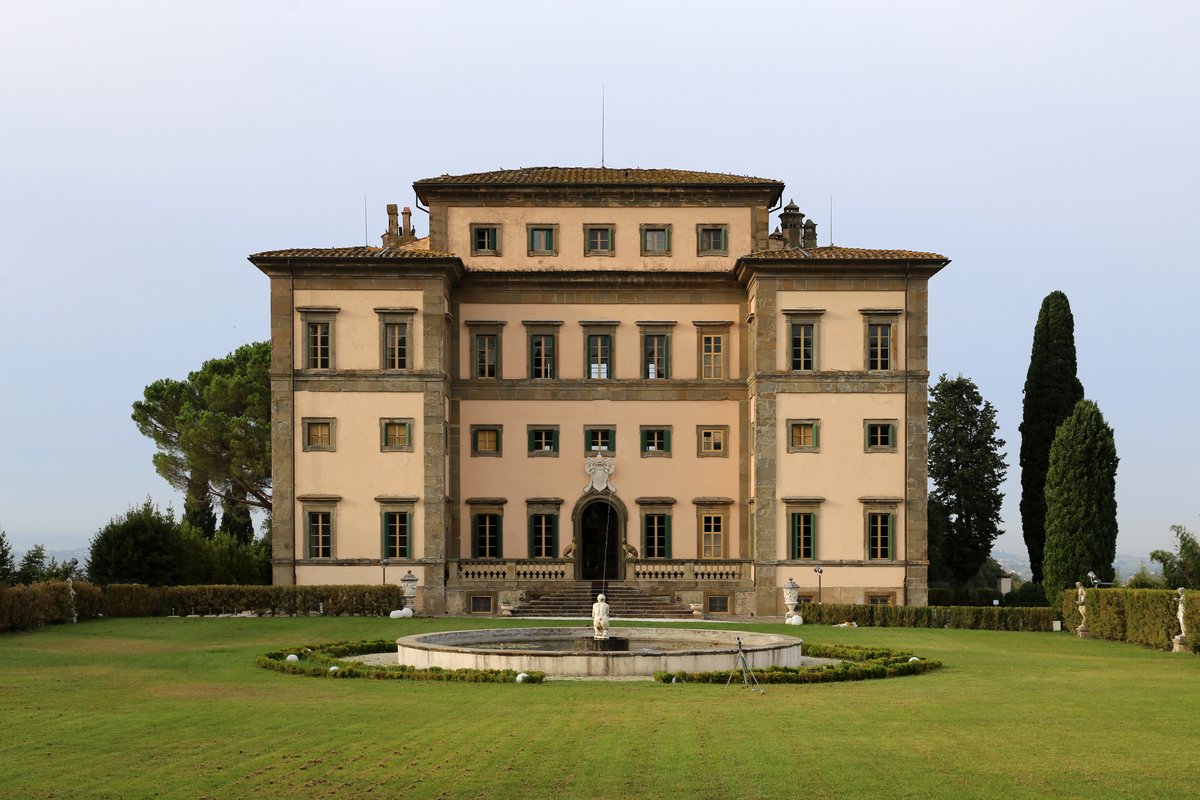
The villa stands out from other villas in Lucca and Tuscany by the multicoloured facade of the main building, obtained using different materials like stone grey and tuff, alternating yellow pillars and arches, and marble statues of white. The back facade is of late Renaissance style, characterized by a large portico of the Tuscan order. Inside, there is an elliptical staircase decorated with stucco and a private theatre.
The heart of the park is the Nymphaeum of Winds, named for the statues personifying the winds, where the paths converge. There are a number of giochi d'acqua by means of which the marquis would bemuse unwary guests, chasing them into the garden from the upper terrace. Once there, they would try to shelter in the Temple of Flora, only to find themselves soaked by water pouring from the domed ceiling.
Sources: Wikipedia, OpenStreetMap, Wikidata, Wikimedia Commons
Written by Nicolo Ciampini
Discuss this with the author and others
No comments yet. Be the first to start the conversation.