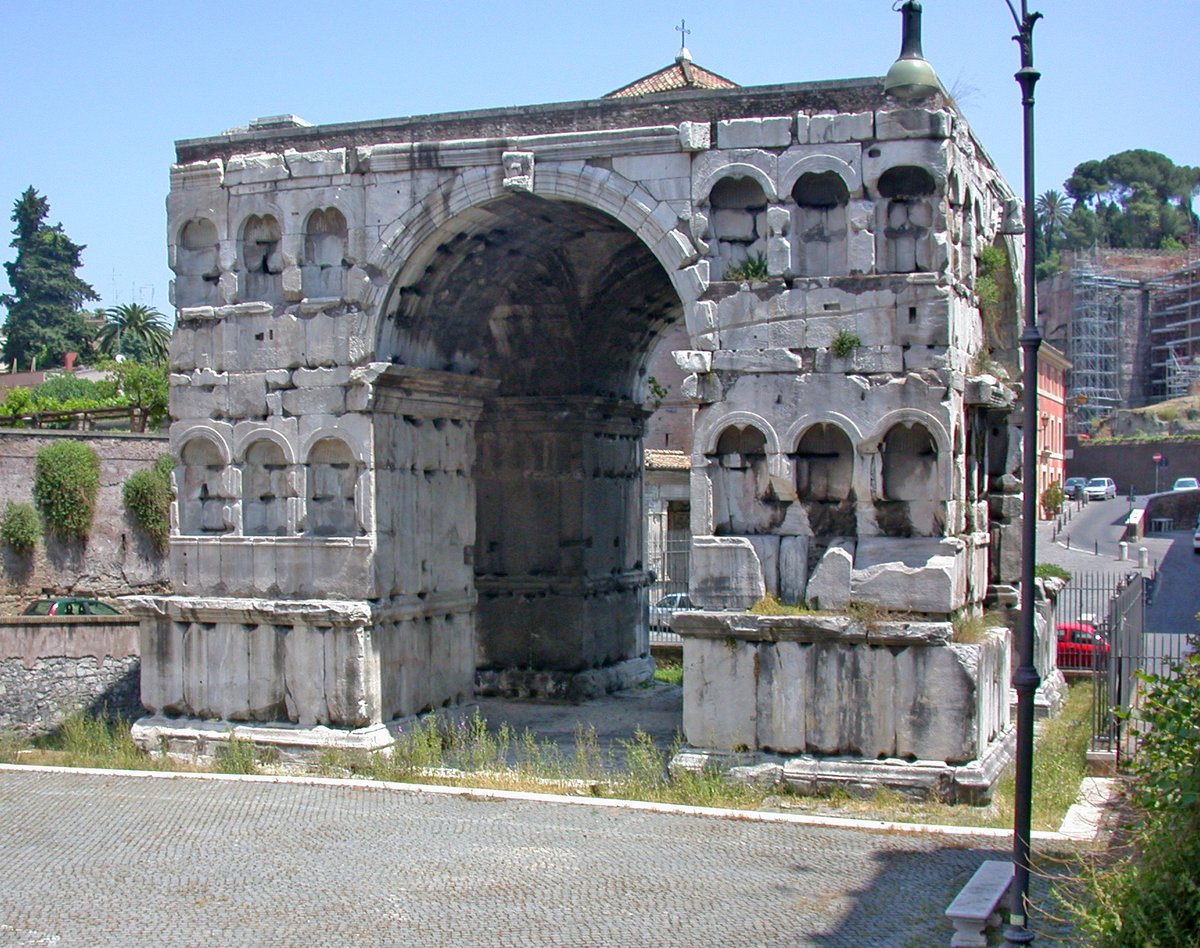

The Arch of Janus, located in Rome, is the only preserved quadrifrons triumphal arch, dating back to the early 4th century AD. It was set up at the northeastern limit of the Forum Boarium, close to the Velabrum, over the Cloaca Maxima drain that went from the Forum to the River Tiber. The arch's purpose – whether it was a boundary marker or a shelter for traders at the Forum Boarium cattle market – is a mystery that persists. Some researchers believe it was dedicated to Constantine I or Constantius II and was known as the Arch of the deified Constantine.
The arch is 16 meters high and 12 meters wide, and it was originally higher, but the attic storey was removed in 1830. Each pier of the arch has two rows of three niches, but none of the statues that may have filled these 48 niches has been identified. The keystone at the apex of the central arch on the north side is thought to depict Minerva, but others believe it may be Palladium.
Sources: Wikipedia, OpenStreetMap, Wikidata, Wikimedia Commons
Written by Nicolo Ciampini
Discuss this with the author and others
No comments yet. Be the first to start the conversation.