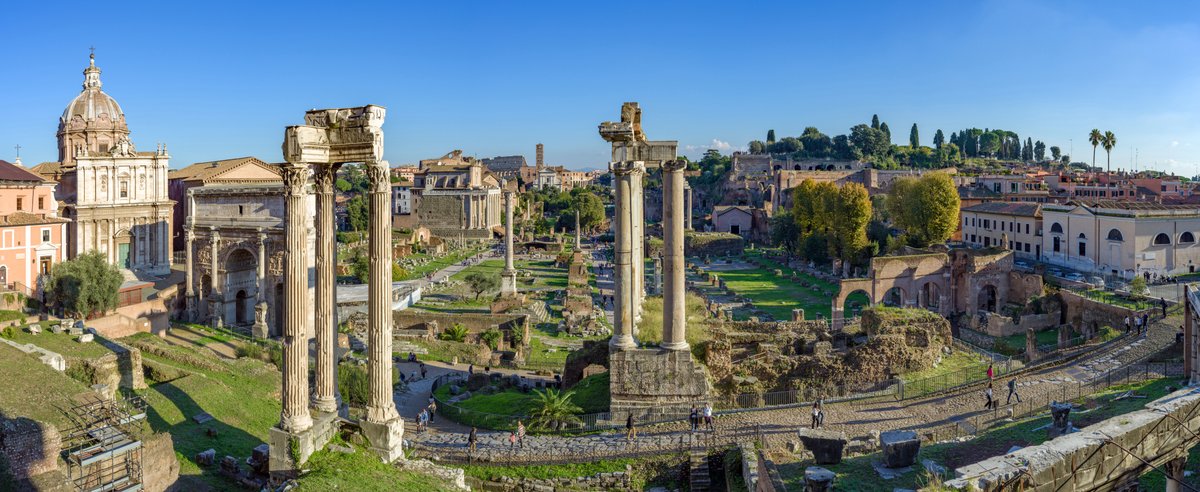

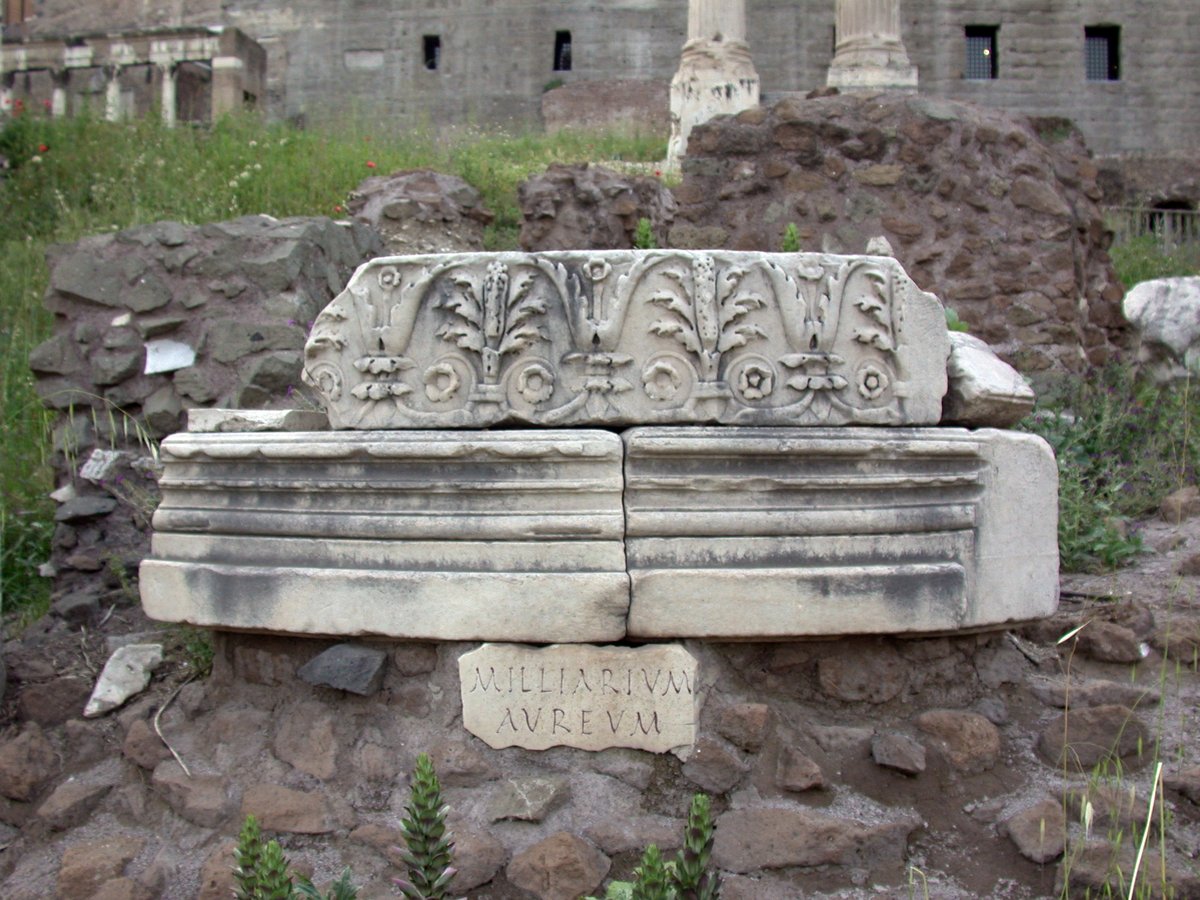
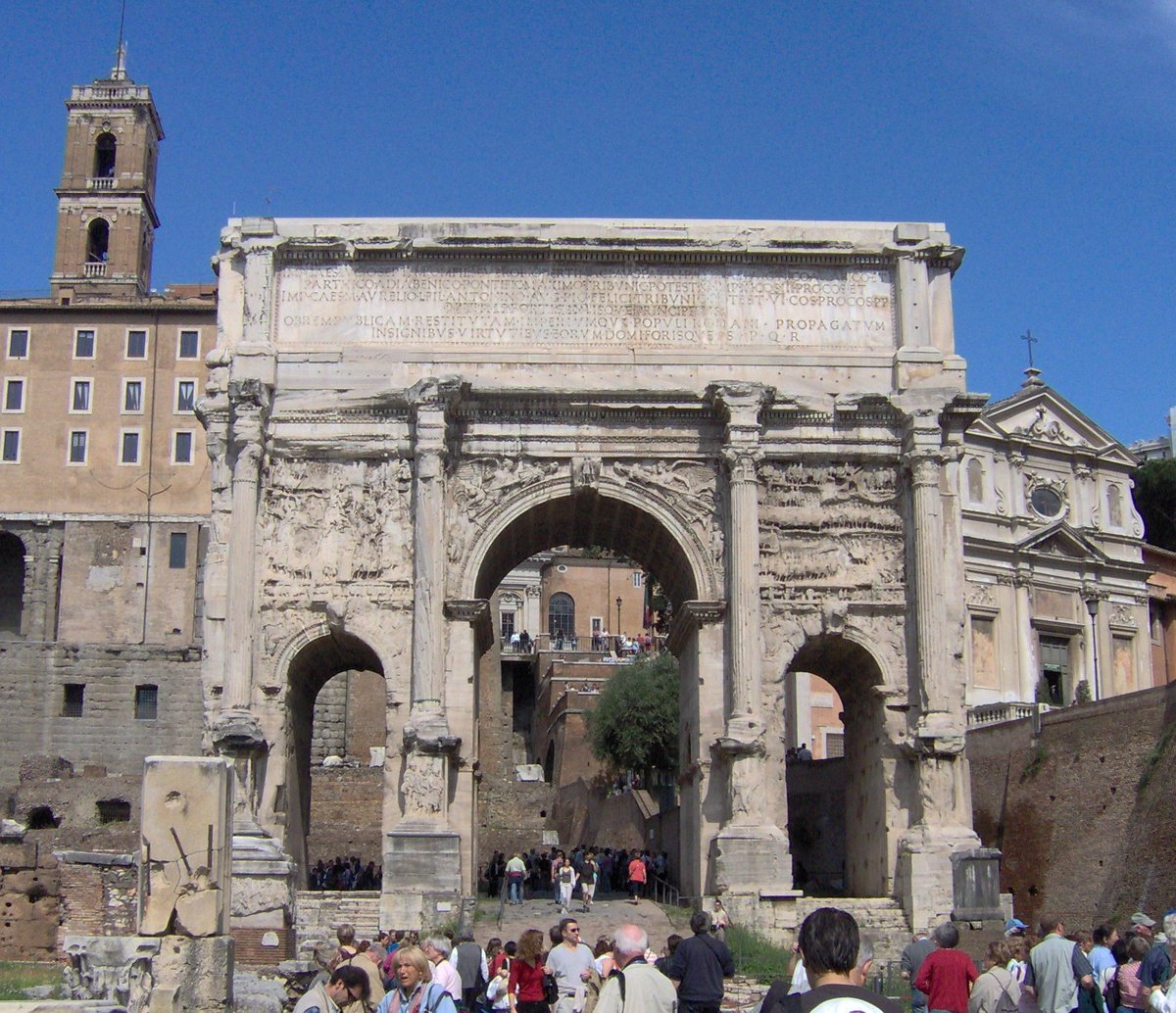
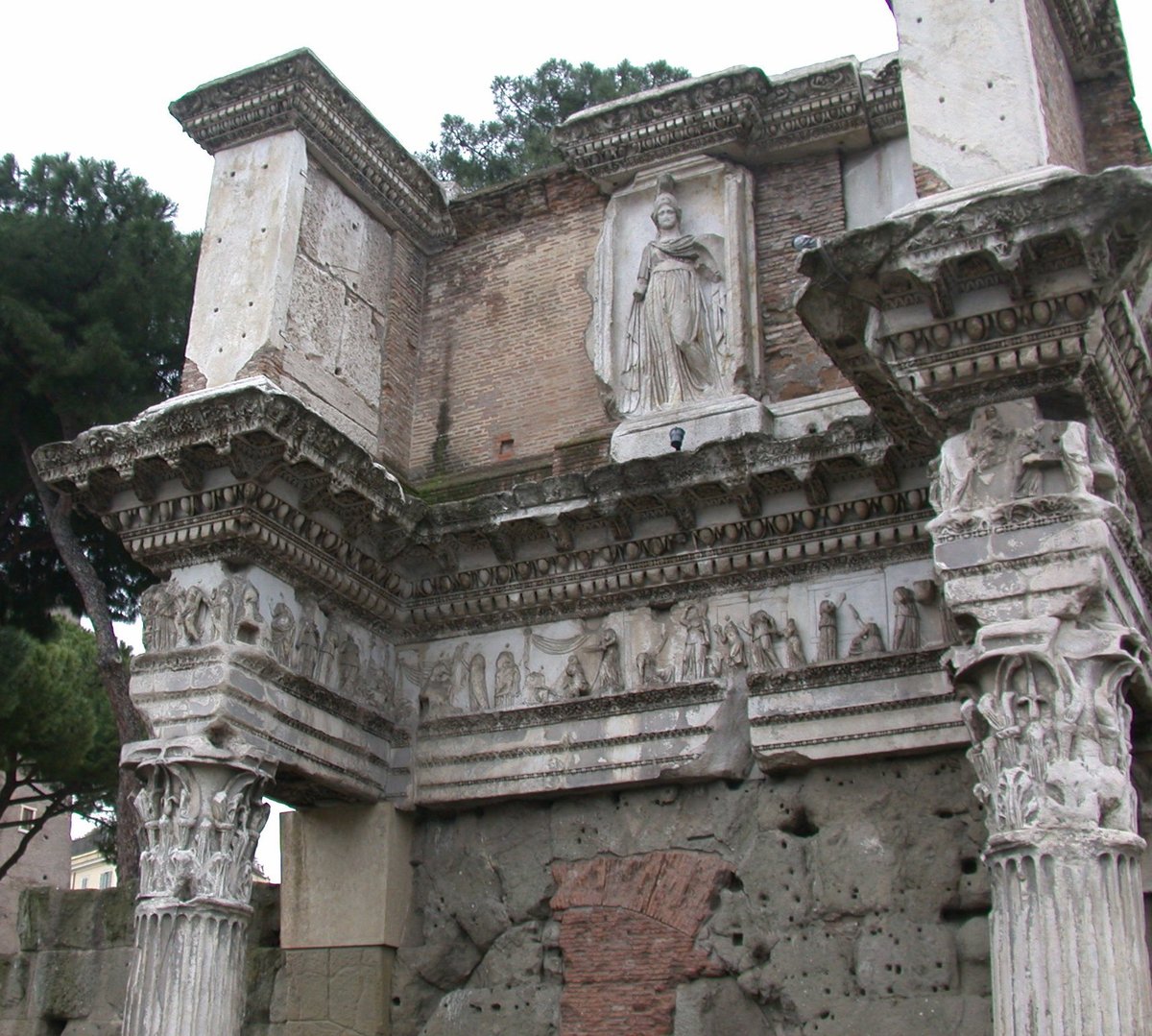
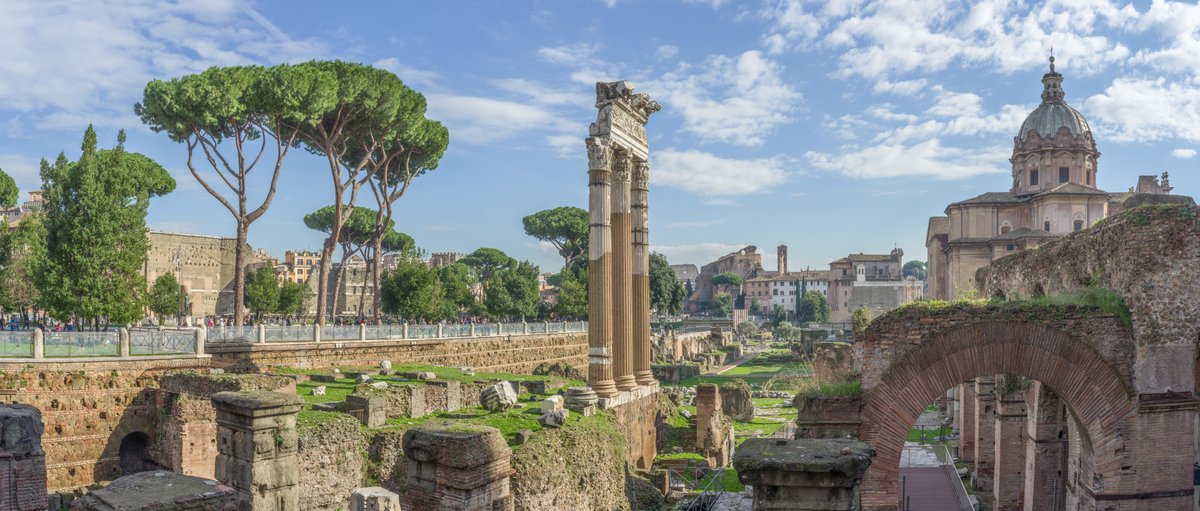
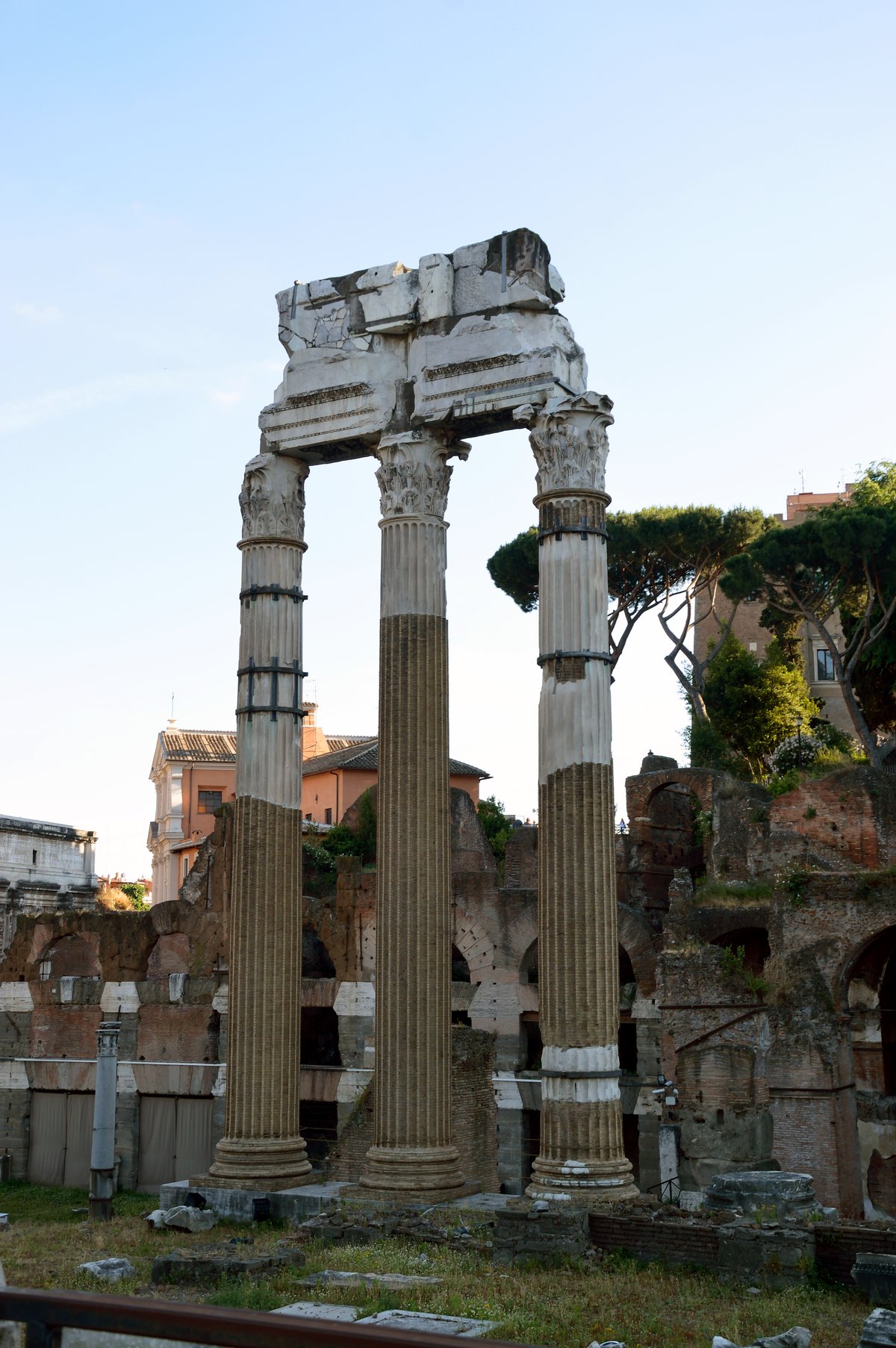
The Roman Forum, also known as the Forum Romanum, is a rectangular plaza surrounded by the ruins of important ancient government buildings at the center of Rome. For centuries, it was the site of triumphal processions, elections, public speeches, and criminal trials. It served as the nucleus of commercial and legal affairs, where statues and monuments commemorated the city's leaders. Located in the valley between the Palatine and Capitoline Hills, the site today is a sprawling ruin of architectural fragments and archaeological excavations.
Unlike later imperial fora modeled on Greek public plazas, the Roman Forum developed gradually, organically, and piecemeal over many centuries. The site was originally a marshy lake where waters from surrounding hills drained, but it was drained by the Tarquins with the Cloaca Maxima. Because of its location, sediments from flooding and erosion have raised the level of the Forum floor for centuries. Residents paved over the debris that was too much to remove, reaching a final travertine paving during the reign of Augustus.
The Forum's basilicas during the Imperial period, the Basilica Aemilia and the Basilica Julia, defined its long sides. By the Imperial period, the large public buildings crowding the central square had reduced the open area to a rectangle of about 130 by 50 meters. Significant structures include the Regia from the 8th century BC and the Temple of Vesta from the 7th century BC. Julius Caesar later built the Basilica Julia and the Curia Julia, refocusing judicial offices and the Senate.
From the Forum, victorious generals mounted the Capitoline Rise to the Temple of Jupiter Optimus Maximus during celebratory military processions known as Triumphs. They entered the city by the western Triumphal Gate and proceeded down the Via Sacra. Today, the ruins remain a major site of archaeological interest, attracting 4.5 million or more sightseers yearly who see the remains of a city that built itself over several millennia.
Sources: Wikipedia, OpenStreetMap, Wikidata, Wikimedia Commons
Written by Nicolo Ciampini
Discuss this with the author and others
No comments yet. Be the first to start the conversation.