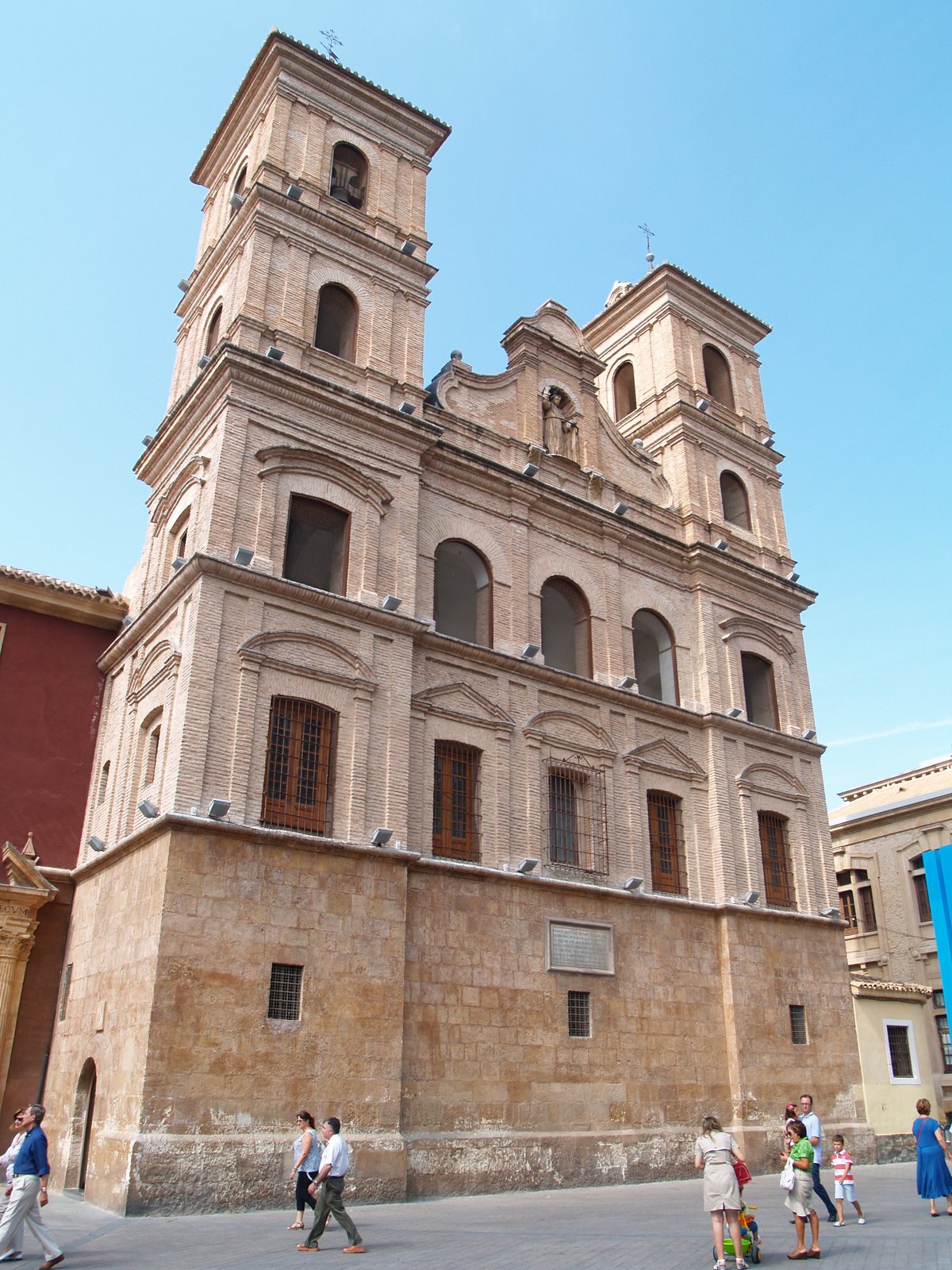

The Arco de Santo Domingo in Murcia, Spain, connects the Iglesia de Santo Domingo and the Capilla del Rosario, two structures that remain from an ancient Dominican Order monastery. The historical origins of these buildings date back to the 16th century for the Capilla del Rosario and the 18th century for the Iglesia de Santo Domingo, with the monastery ceasing to exist during the Desamortización de Mendizábal of 1836. However, the Jesuits took over the temple in the 19th century and continue to manage it today. The church and the Capilla del Rosario, along with the Arco de Santo Domingo, were declared cultural properties in 1982.
The Capilla del Rosario is the oldest part of the current structure, built between 1543 and 1575 and primarily sponsored by the powerful Cofradía del Rosario. It has three naves with side chapels and features the statue of the Virgin Mary with the baby Jesus. The main entrance of the Capilla del Rosario showcases a Renaissance-style portal, often attributed to Pedro Monte, with a semicircular arch flanked by two striped columns supporting an entablament and a fronton containing the statue of the Virgin Mary.
The Iglesia de Santo Domingo, built between 1722 and 1745, boasts a unique aspect with two facades - the main one faces the Plaza Romea, while the other is entirely of brick and serves a representative and urbanistic function due to the importance of the plaza. An interesting feature is the statue of the Dominican San Vicente Ferrer, which appears on the upper part of the main façade, commemorating the sermons that the saint delivered in this plaza in 1411.
The windows on this monumental façade were used as viewing points over the former Plaza del Mercado, allowing the Dominican community to watch the activities that took place there. The lower part of the main façade has a sober and Renaissance air, while the upper part features baroque details, including the statues of Santo Domingo and San Francisco, as well as the coats of arms of the Franciscan Order and the Dominican.
Sources: Wikipedia, OpenStreetMap, Wikidata, Wikimedia Commons
Written by Nicolo Ciampini
Discuss this with the author and others
No comments yet. Be the first to start the conversation.