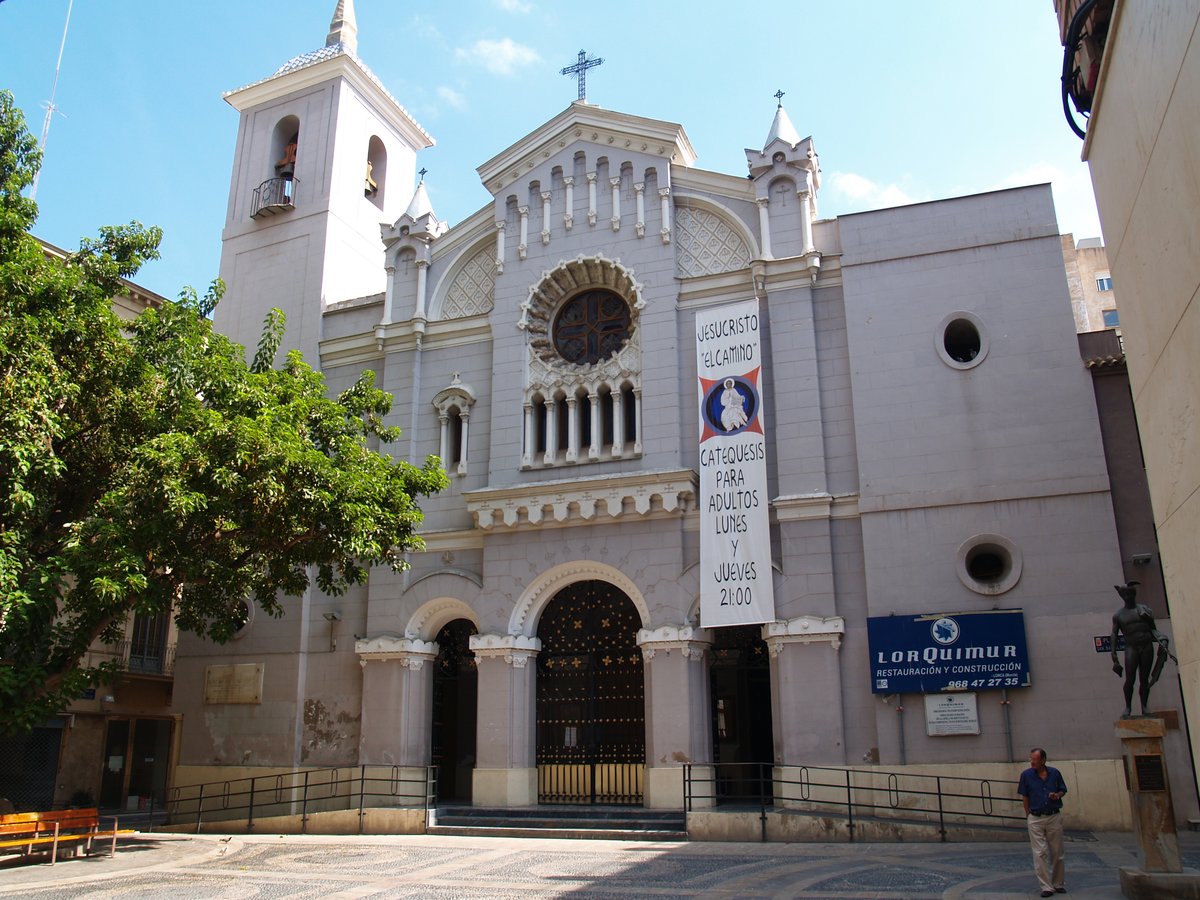

Iglesia de San Bartolomé-Santa María, situated in the historic centre of Murcia, Spain, bears a unique dual heritage. Originally a mosque, it was converted to Christian worship following the Christian conquest of Murcia in 1266. The current structure dates back to the late 18th century, inaugurated on August 24, 1767, by architect Justo Millán in the eclectic style, echoing historicism. Serving as the historical seat of the Servitas Cofradía since 1767, the church features a neoclassical chapel from the end of the 18th century.
Since 1884, it has also been the seat of the Santo Sepulcro Cofradía. During the Civil War, the church was looted, losing many works of art. The Junta de Incautación y Protección del Patrimonio Artístico de Murcia, organized by Mayor Fernando Piñuela, managed to save numerous masterpieces that are still in San Bartolomé today. Post-Civil War, Manuel Muñoz Barberán, a Lorca painter, created the frescoes of the apse. In 1983, the church of San Bartolomé was declared a Cultural Asset of Interest.
Sources: Wikipedia, OpenStreetMap, Wikidata, Wikimedia Commons
Written by Nicolo Ciampini
Discuss this with the author and others
No comments yet. Be the first to start the conversation.