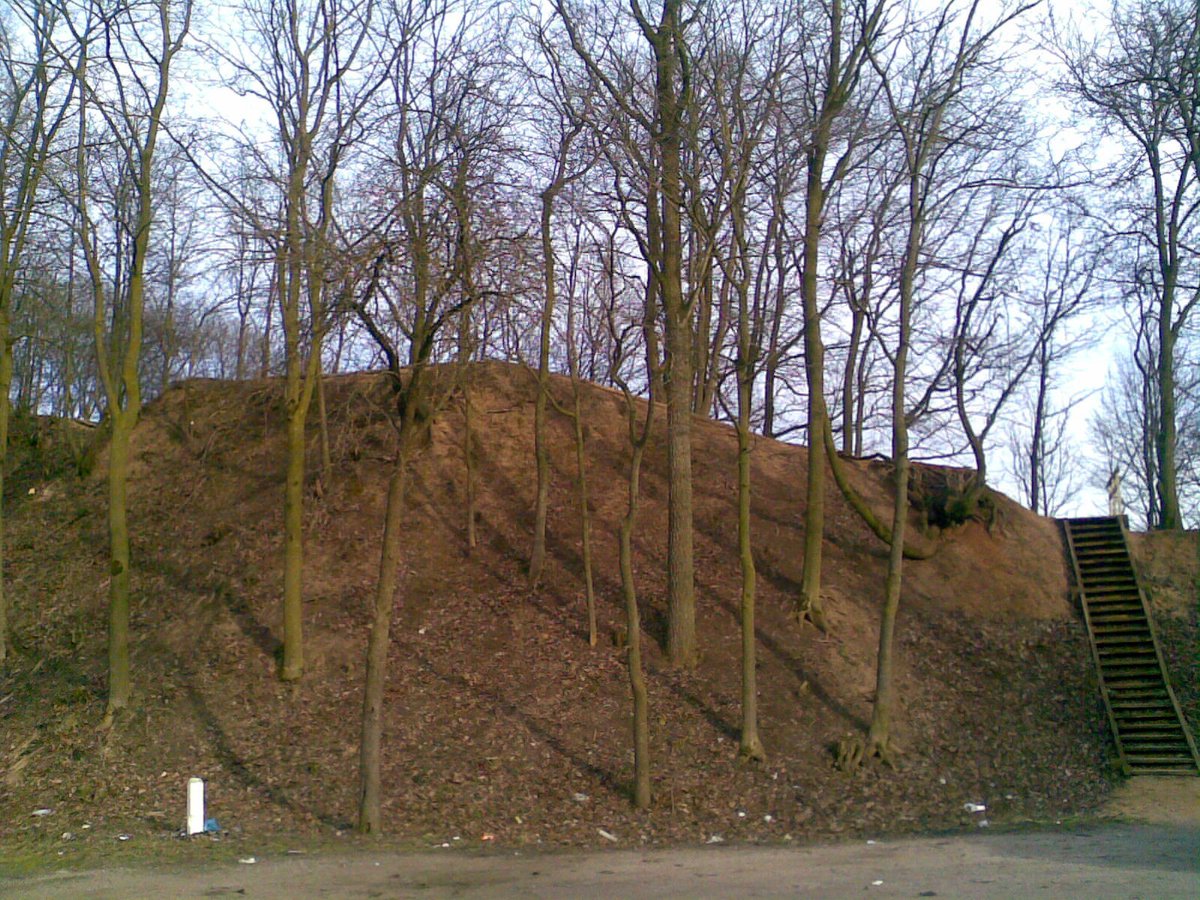

The Lokėnėliai complex, Lithuania, consists of two hillforts and a settlement adjacent to them, covering approximately 102,000 m². This archaeological site dates back to the 1st millennium AD and was buried for centuries. One of the hillforts houses a hidden gem of Lithuania: a pyramid-shaped mound. The pyramid stands 3 meters tall, 14 meters long, and features a 5-meter high entrance staircase. During archaeological excavations in 1998-1999, three construction phases of the pyramid were uncovered.
In its first phase, a 2-meter square, 0.5-meter high pyramid was built with a mortar made from burned bones. The second phase extended the pyramid to 4 meters square and 1 meter high, featuring a semi-circular entrance to the interior, enclosed by pillars. In the third phase, the pyramid was constructed from the same material, divided into compartments with separate entrances. The site is safeguarded by the Lithuanian state as a cultural heritage site.
Sources: Wikipedia, OpenStreetMap, Wikidata, Wikimedia Commons
Written by Nicolo Ciampini
Discuss this with the author and others
No comments yet. Be the first to start the conversation.