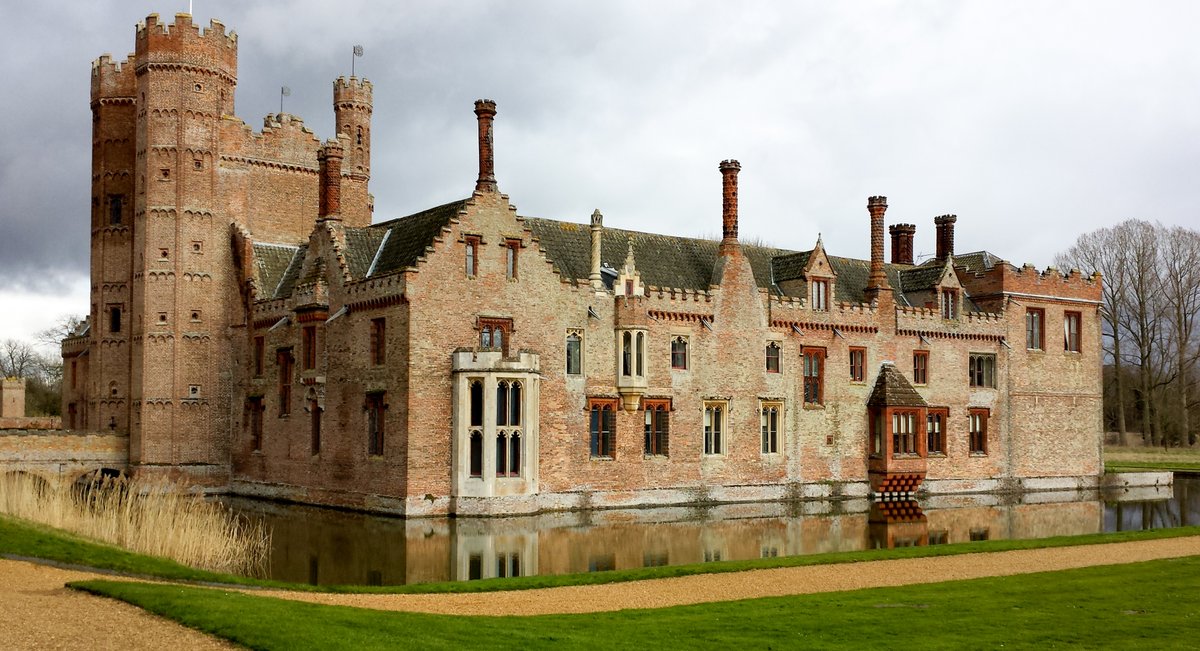
Oxburgh Hall stands as a testament to the power and prestige of the Bedingfelds, a gentry family who lived at this English manor for centuries. The hall was built in the late 15th century, though its true significance lies in its history, which includes a secret priest hole constructed during Queen Elizabeth I's persecution of Catholics, and tapestries sewn by Mary, Queen of Scots and Bess of Hardwick during her time in Scotland while imprisoned by the English. Let's explore the hidden history of this church-turned-noble-home.
Hidden Secrets
Oxburgh Hall is known for its priest hole, a secret chamber constructed by the Catholic Bedingfelds to hide priests during Queen Elizabeth I's persecution of Catholics. The priest hole is hidden behind one of the bedposts, making it difficult for visitors to find, even today.
Royal Tapestries
But the hidden history of Oxburgh Hall doesn't end with the priest hole. The hall is also home to some of the most famous tapestries in England, sewn by Mary, Queen of Scots and Bess of Hardwick during her time in Scotland while imprisoned by the English. The tapestries are now on display at the hall, and visitors can see them as part of the tour.
A Hidden Gem
Oxburgh Hall is a true hidden gem, tucked away in the countryside of Norfolk. It has been a hall, a church, and even a prison, and each chapter of its history is worth exploring. So if you're in the area, be sure to stop by and uncover the hidden secrets of Oxburgh Hall for yourself.
Sources: Wikipedia, OpenStreetMap, Wikidata, Wikimedia Commons
Written by Nicolo Ciampini
Discuss this with the author and others
No comments yet. Be the first to start the conversation.