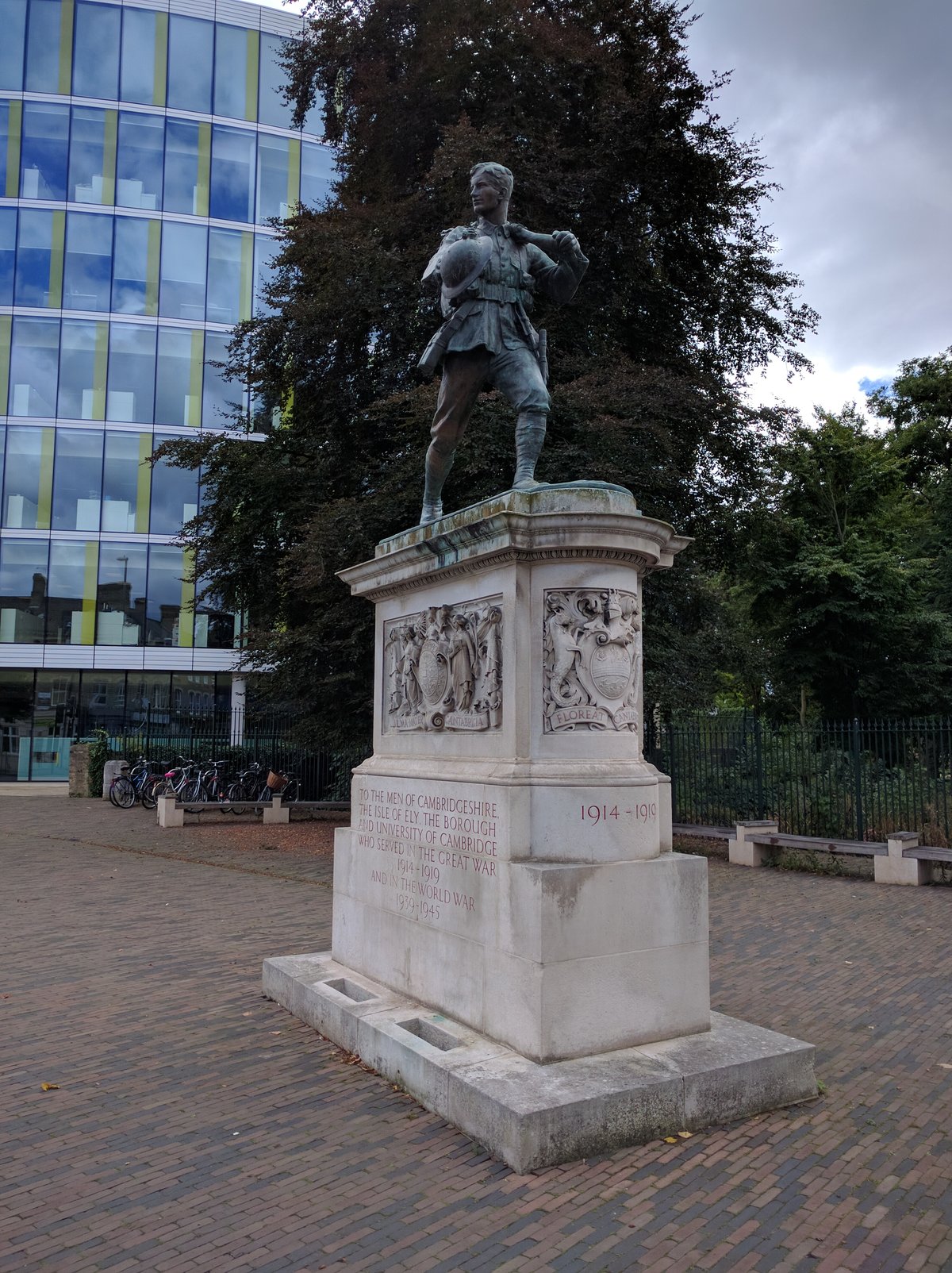
In the heart of Cambridge, on Hills Road and outside Cambridge University Botanic Garden, stands a bronze statue known as 'The Homecoming' or simply 'Coming Home'. This sculpture is the focal point of the Cambridge War Memorial. Created by Canadian sculptor Robert Tait McKenzie, the statue stands seven feet tall, with the soldier depicted purposefully striding, rifle sloping over his left shoulder. The statue's origin dates back to the debates in Cambridge following World War I, when the city and university were determining the appropriate war memorial, its location, and how to raise the necessary funds.
The sculpture, intended to be 8 feet tall, was eventually reduced to 7 feet due to a shortage of funds. By 1920, a committee led by Charles Adeane had recommended three parallel memorials, including the Cambridge War Memorial. The estimated £30,000 for all three works were slow to raise. By the end of 1920, only £12,000 had been collected. The new nurses' home at Addenbrooke's was completed in 1924. The origins of the nurses' home as a war memorial had been forgotten by 1976, when the hospital moved away from the Old Addenbrooke's Site.
The oak panels that were initially intended for Ely Cathedral became the memorial for the 6,000 war casualties, listed alphabetically by town and parish, without rank distinctions.
Sources: Wikipedia, OpenStreetMap, Wikidata, Wikimedia Commons
Written by Nicolo Ciampini
Discuss this with the author and others
No comments yet. Be the first to start the conversation.