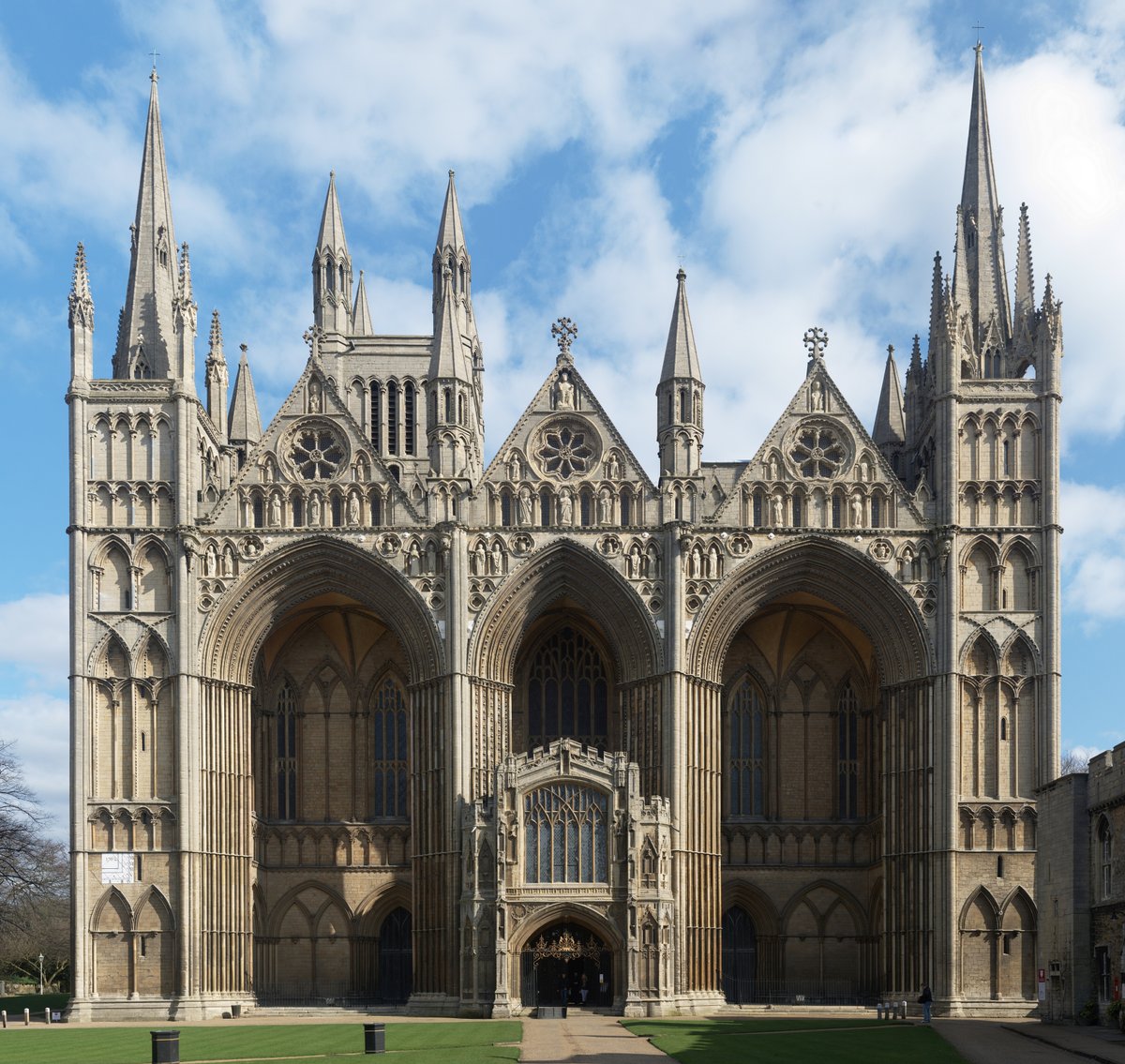

The West Front of Peterborough Cathedral is an imposing Early English Gothic façade featuring three enormous arches that are without architectural precedent and have no direct successor. The appearance is slightly asymmetrical, as one of the two towers rising from behind the façade was never completed, though this is only visible from a distance.
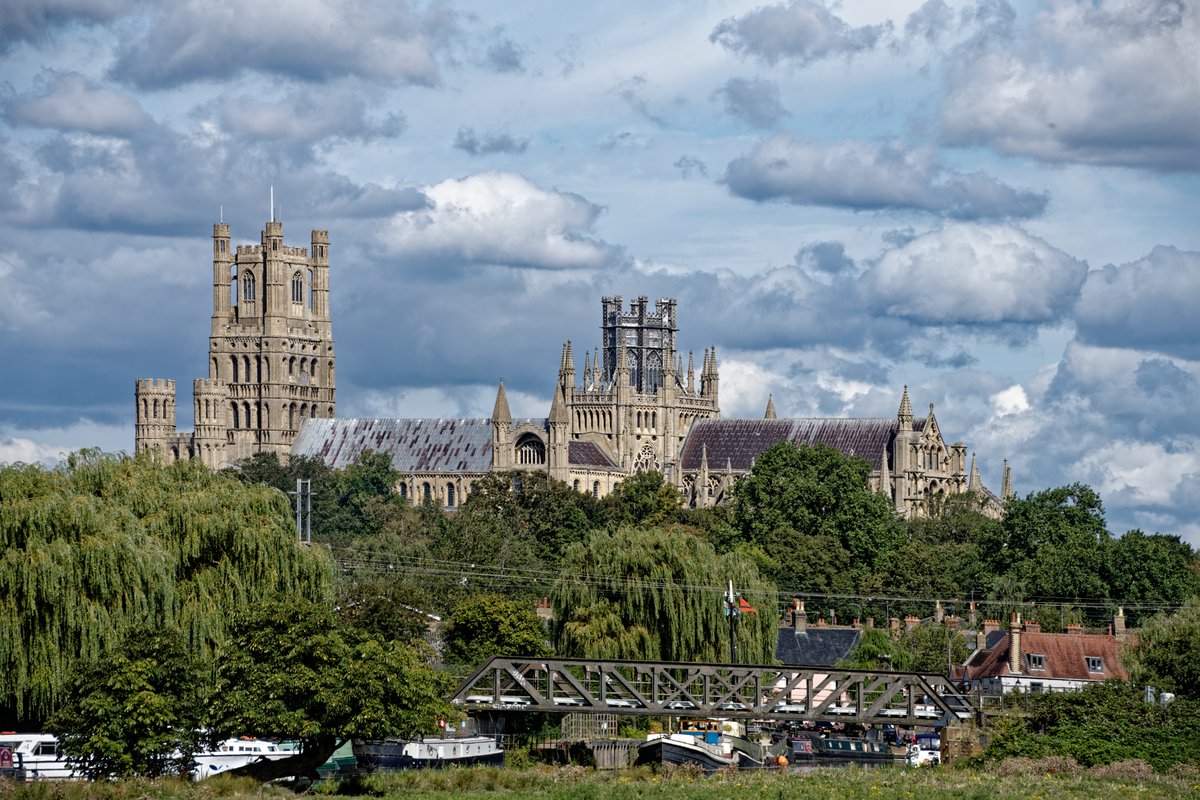
The site began as an Anglo-Saxon minster named Medeshamstede around 655 AD. While the monastic settlement was destroyed by Vikings in 864, a Benedictine Abbey was created in 966. After a fire in 1116 necessitated a new church in the Norman style, the building was completed to the western end of the Nave by 1193. The church was largely built of Barnack limestone from quarries on its own land; the builders of Ely Cathedral and Ramsey Abbey paid annually for access to these quarries in thousands of eels.
Completed between 1230 and 1250, the decorated wooden ceiling of the nave still survives. It is unique in Britain and one of only four such ceilings in all of Europe. Although it has been over-painted twice, it retains the character and style of the original. Visitors can see the three high gables of the West Front where statues of the Apostles Saint Peter, Saint Paul, and Saint Andrew look down.
Hidden within the cathedral's history is the Hedda Stone, a medieval stone carving located in an alcove of the New Building. This carving of twelve monks commemorates the destruction of the monastery and the death of the Abbot and monks when the area was sacked by the Vikings in 864.
Sources: Wikipedia, OpenStreetMap, Wikidata, Wikimedia Commons

Written by Nicolo Ciampini
Discuss this with the author and others
No comments yet. Be the first to start the conversation.