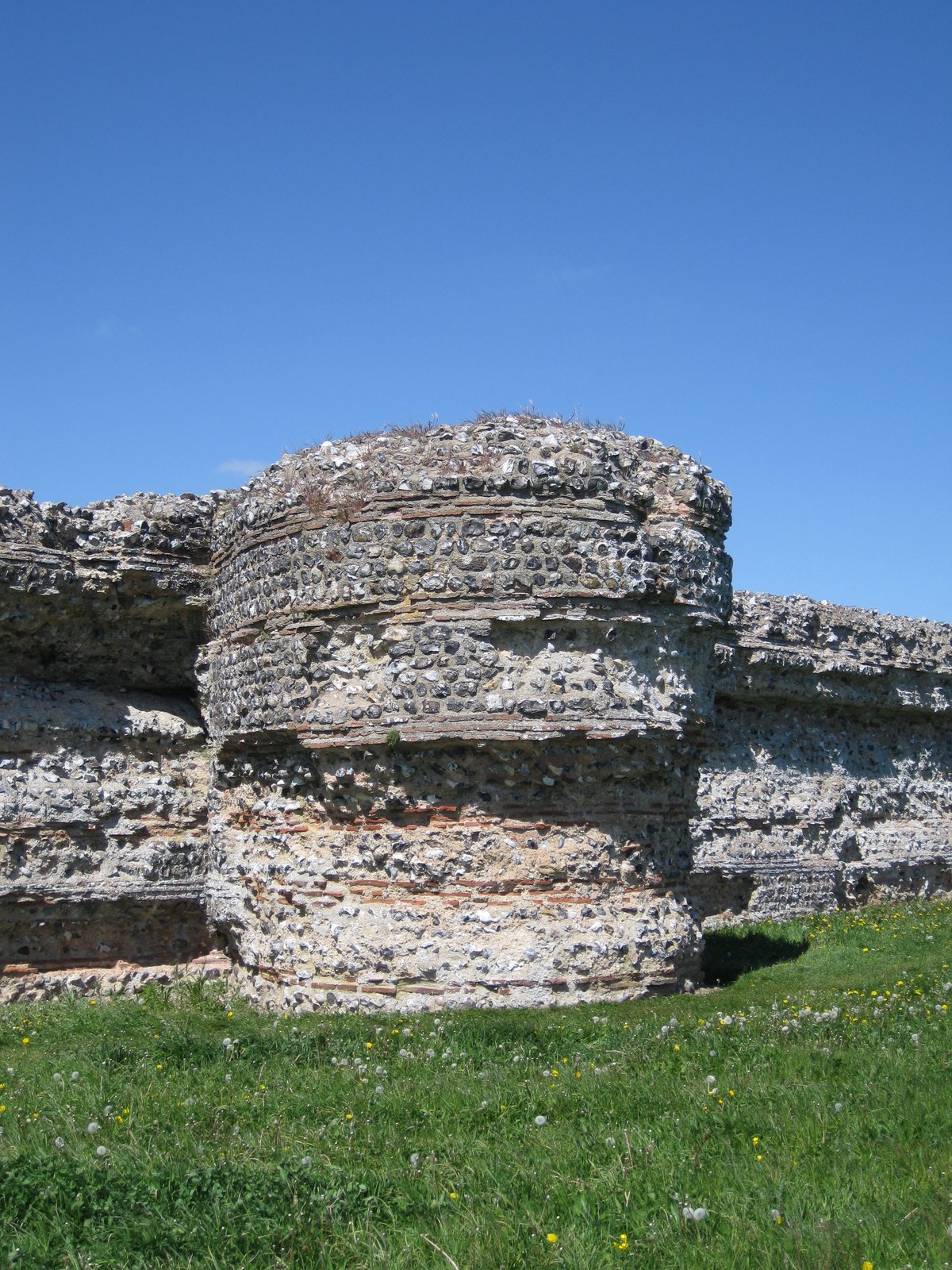

Imagine a Roman soldier in the 3rd century standing on this ridge, looking out over a wide estuary. He was part of the Saxon Shore defense, tasked with keeping raiders at bay. The Romans built a massive rectangular fort here, with walls nearly 3 metres thick at the base, using alternating bands of flint and red tile.
Fast forward a few centuries and the site's history becomes complex. Some suggest it became a monastic settlement in the 7th century, though a 1983 report concluded there was no definitive evidence for a monastery in Burgh Castle itself. Then came the Normans in the 11th century. They constructed a motte in the southwest corner, using the Roman fort as a bailey, with a timber tower on the motte and the castle bailey located to the northeast.
What is left today is a layered history of reuse. You can still see the Roman walls, which stand about 4.6 metres high, while the nearby medieval church of St Peter and St Paul incorporates Roman brick in its fabric, presumably taken from the fort site. It is a clear example of historical recycling - the site may have served as a quarry for building materials in later centuries.
Today, you can walk the site for free. The west wall is long gone, collapsed into what is now a marshy mudflat, but the rest of the fort remains as a reminder of the site's long history from Roman times to the Norman era.
Sources: Wikipedia, OpenStreetMap, Wikidata, Wikimedia Commons

Written by Nicolo Ciampini
Discuss this with the author and others
No comments yet. Be the first to start the conversation.