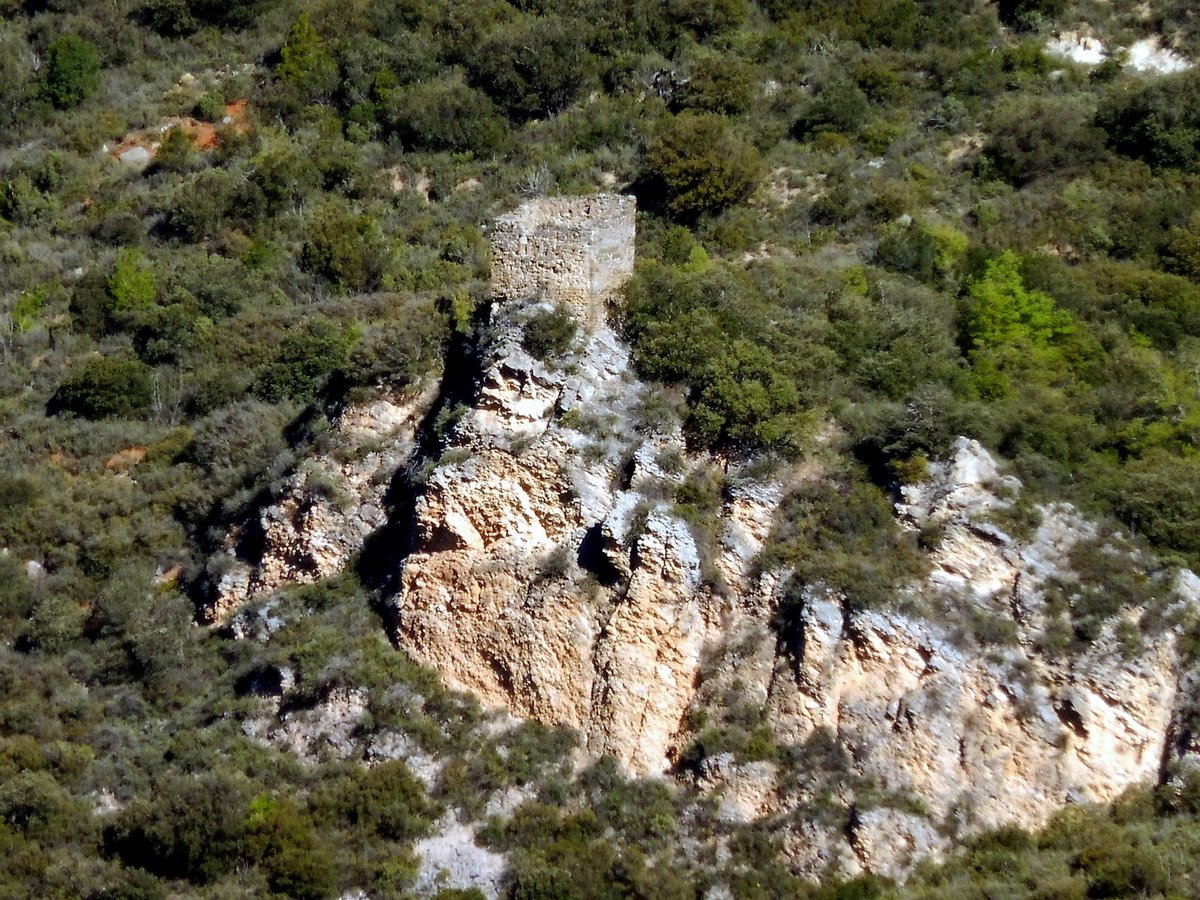

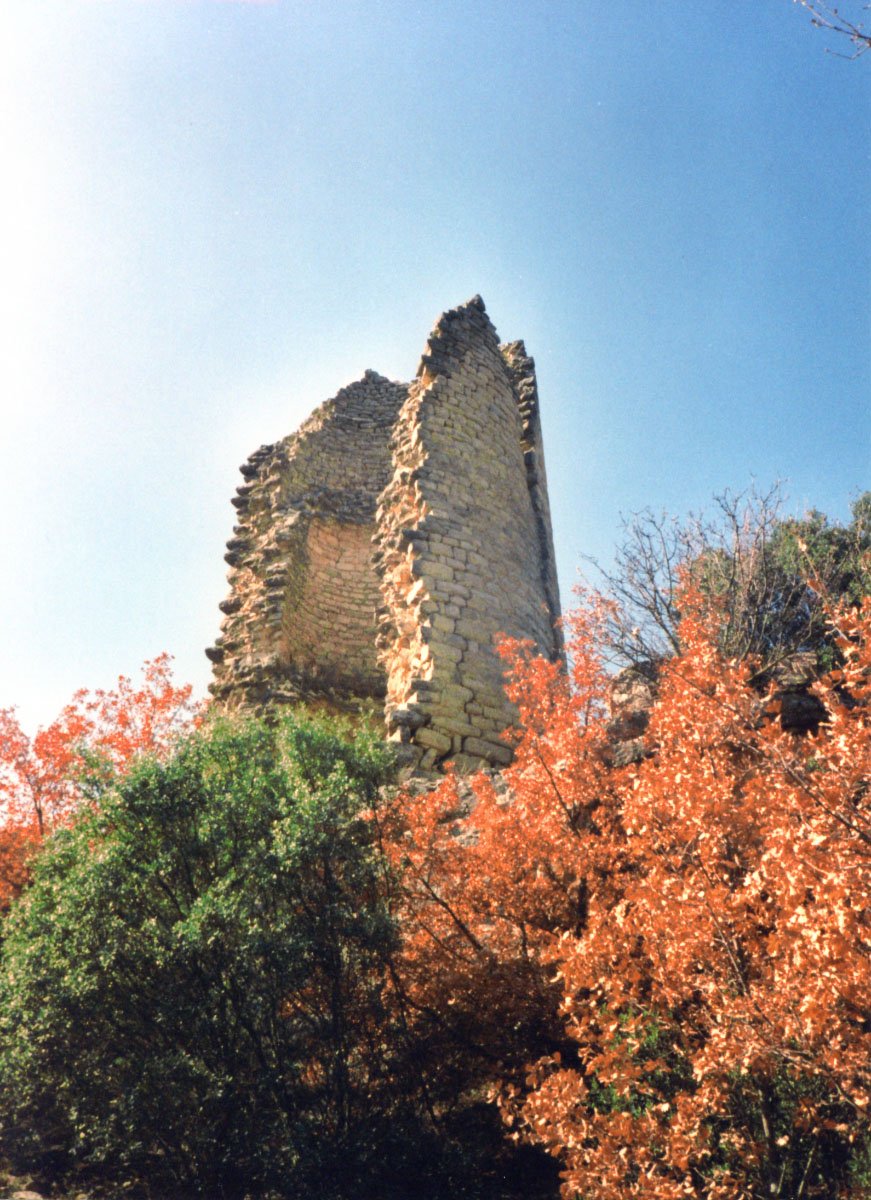
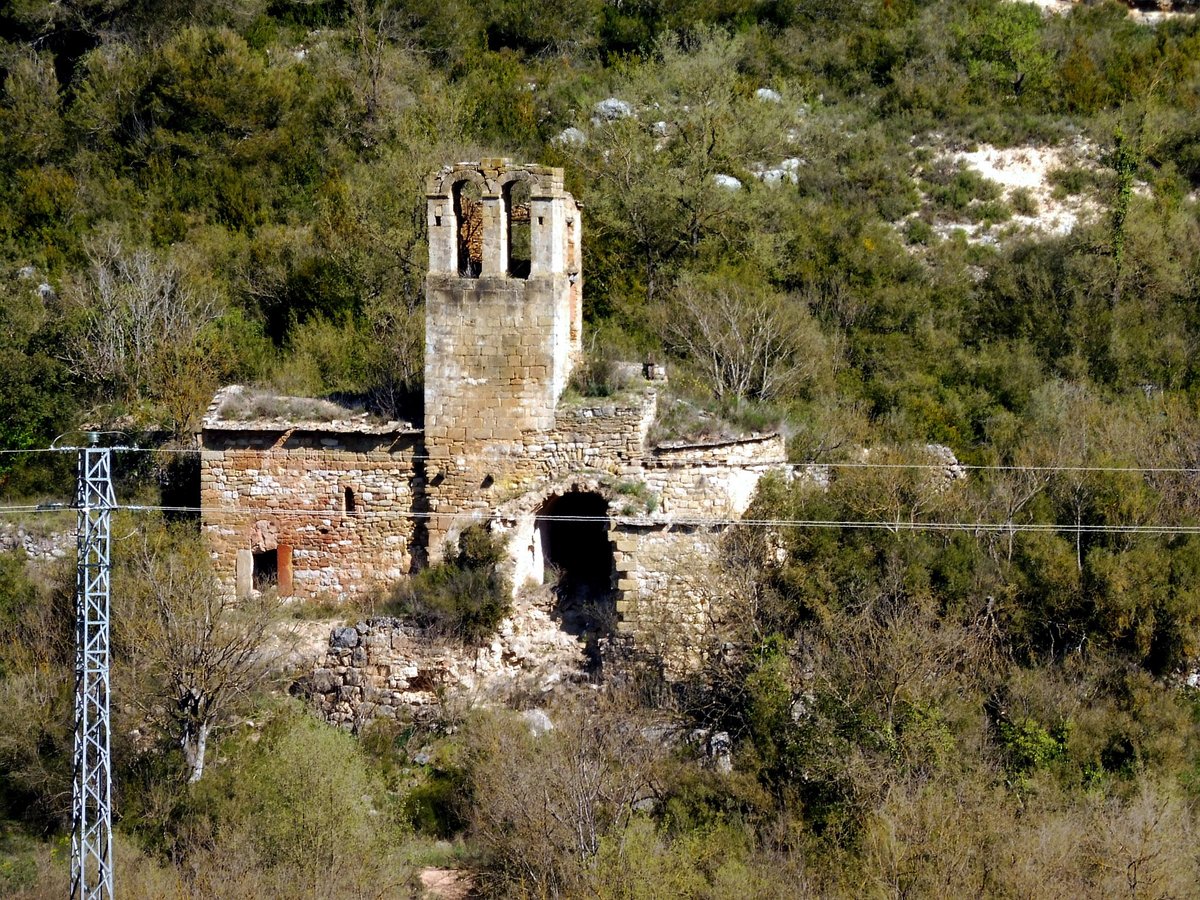
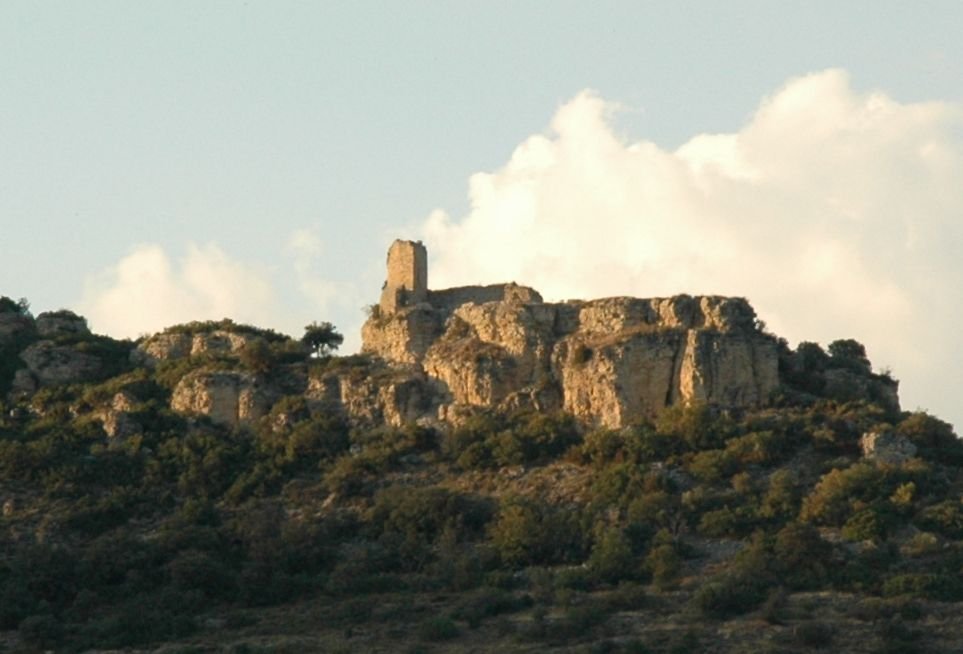
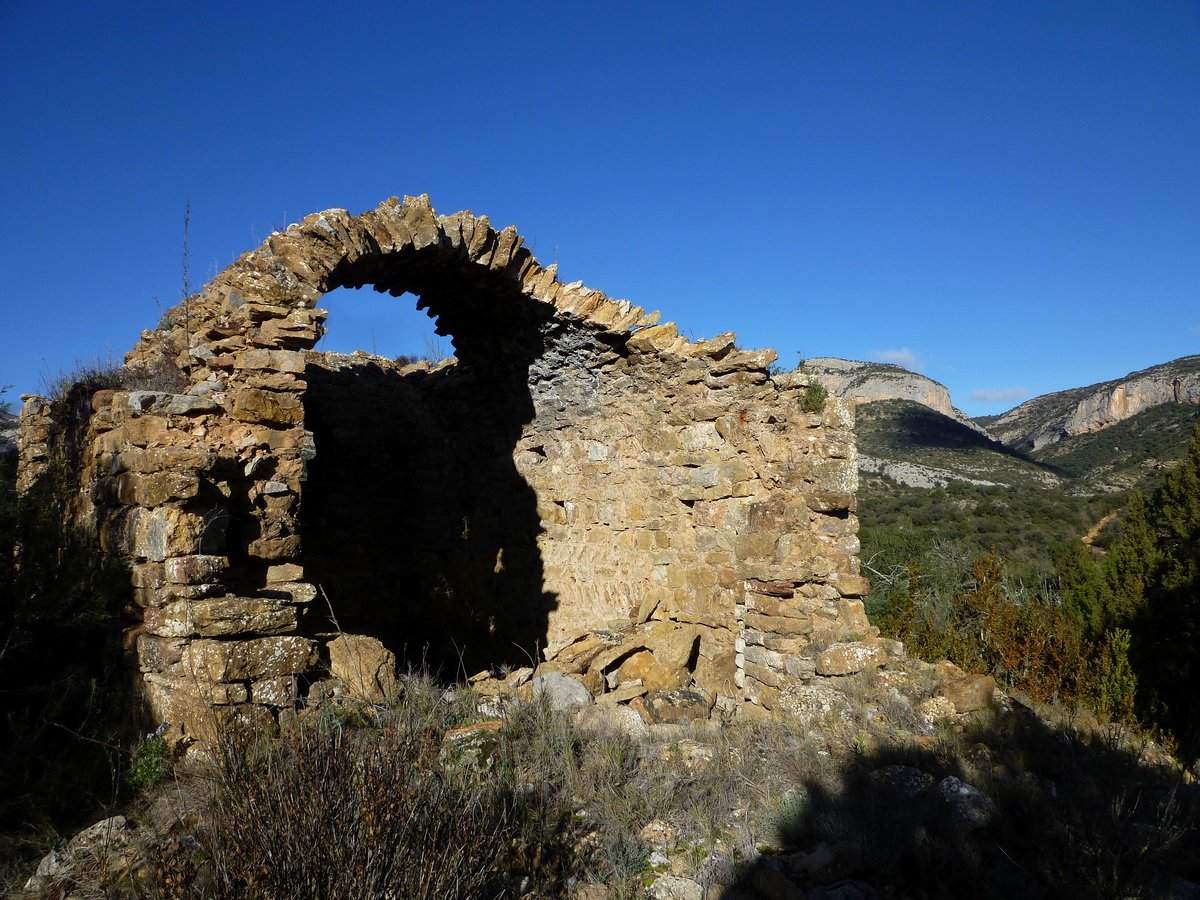
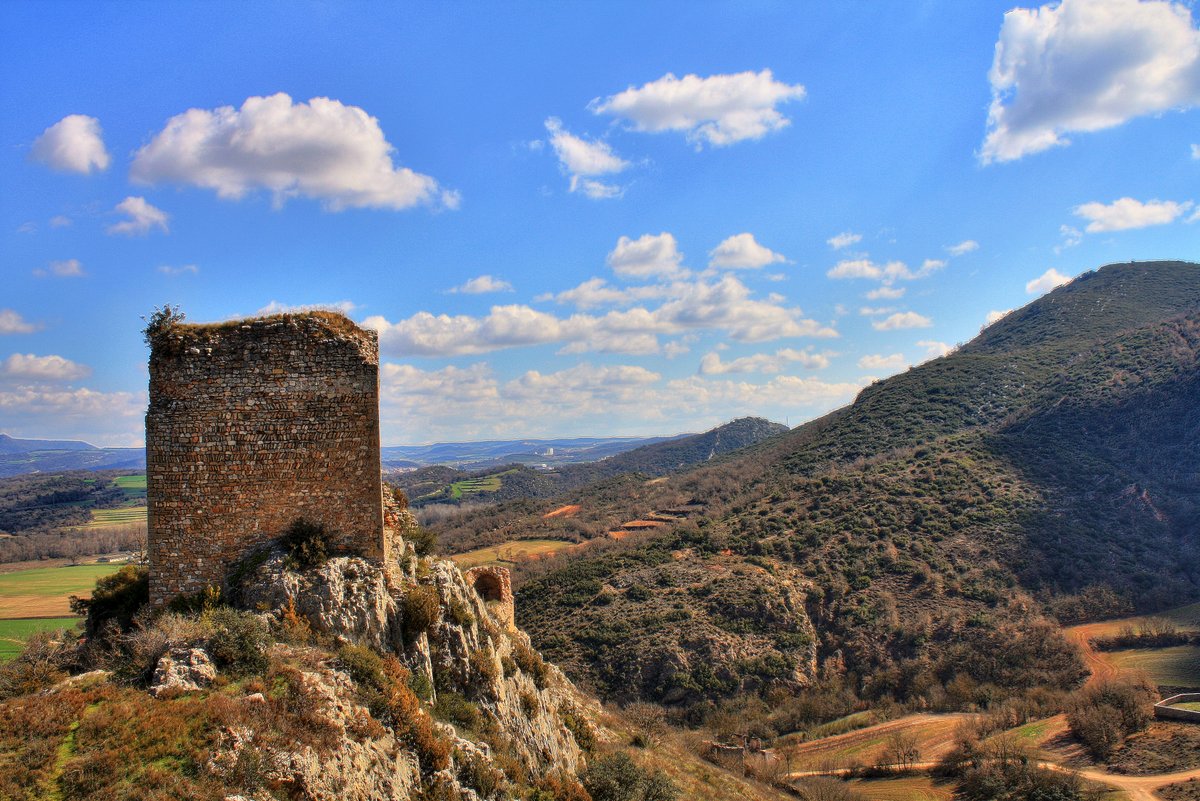
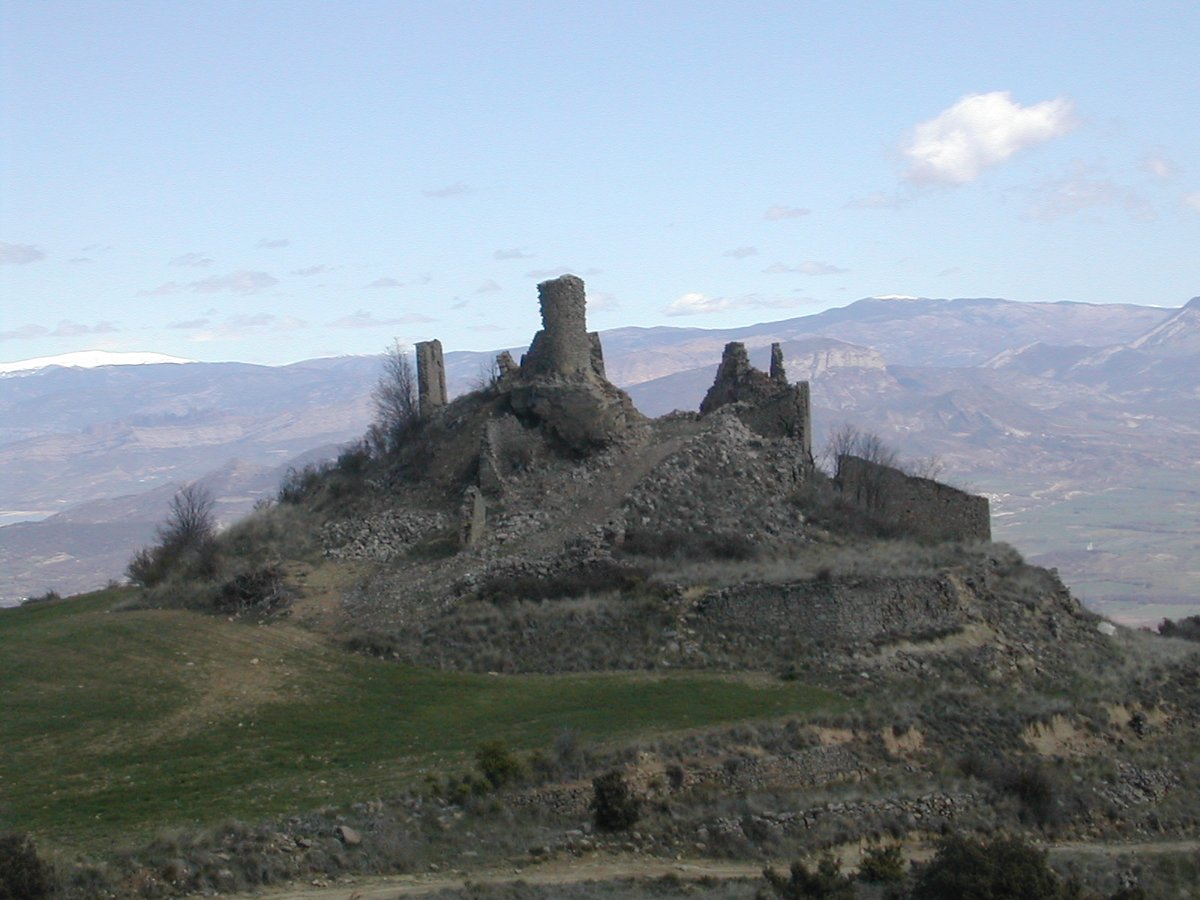
Situated on the southern foothills of the Montsec de Rúbies, the Castell de Cabrera stands as a defensive structure featuring a trapezoidal layout. Its walls reach a thickness of roughly 80 centimetres and consist of irregular, unworked stones. Visitors can observe stones placed vertically imitating an «opus spicatum».
The history of the site is documented starting in 1051, when Arnau Mir de Tost sold the land to Guillem de Meià. The property remained with the Meià family until it passed to the Cervera-Meià family, who held it until Dolça de Cervera gave it to her son Pere II d'Ayerbe in 1311. In 1312, Pere II d'Ayerbe exchanged his Catalan lands to Jaume II for castles in Aragon, which were then incorporated into the royal holdings. In 1314, a donation to the monastery of Santa Maria de Meià was confirmed, and in 1317, a judge ruled in favor of the monastery against a claim by the castlé de Peralba.
This specific ownership meant the castle avoided the fate of its neighbors in the Meià basin. While other nearby fortifications joined the Marquisate of Camarasa, Cabrera remained an outlier under the monastery's control until the extinction of jurisdictional lordships. It continued under the domain of the monastery even as the population of the surrounding area began to decline.
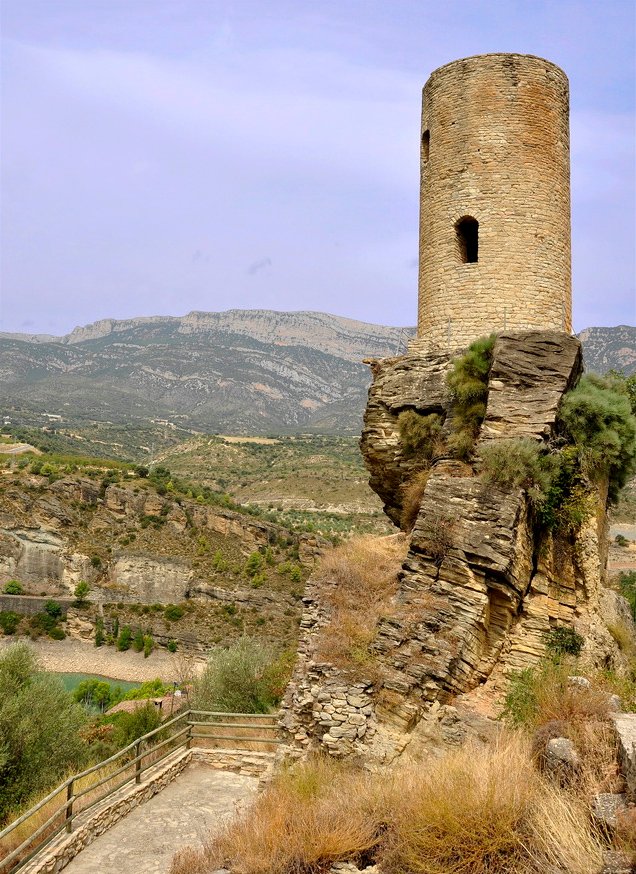
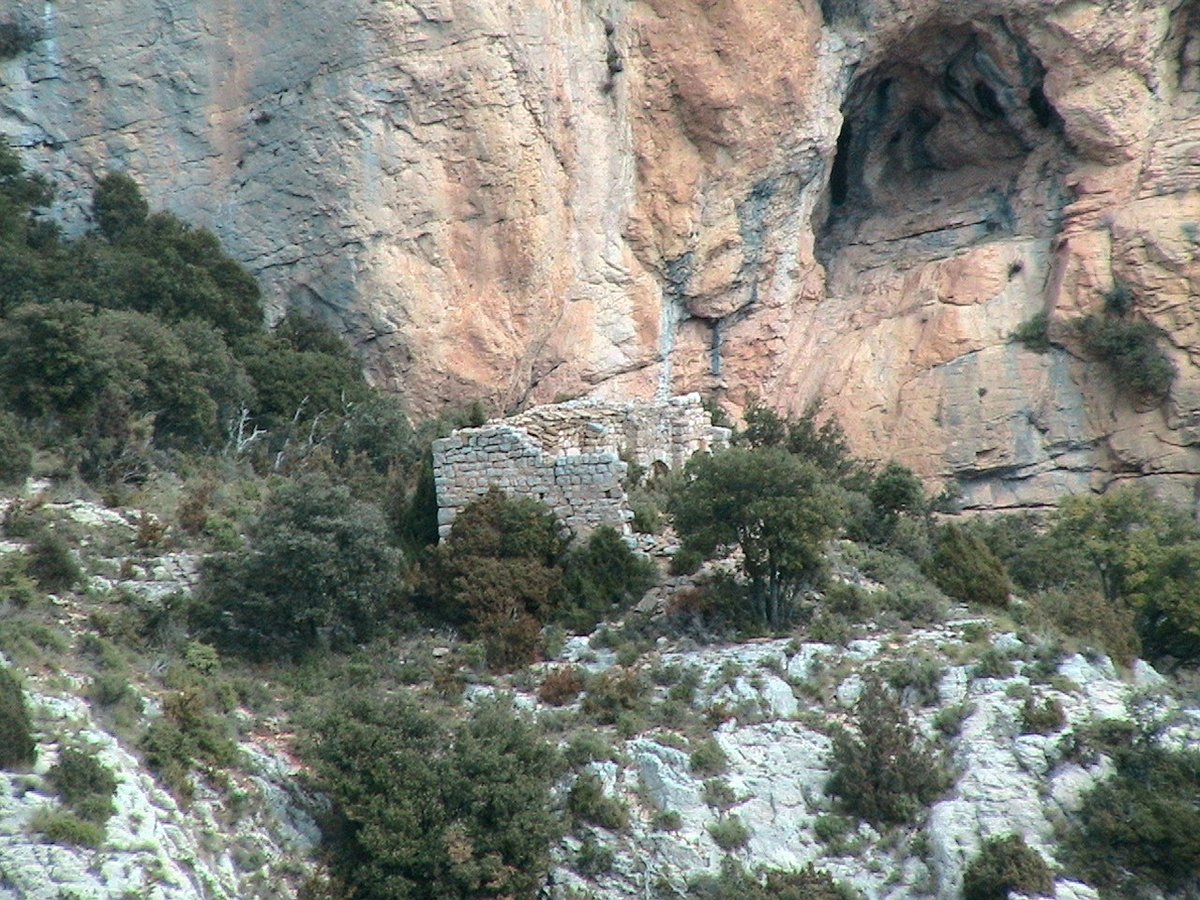
Located in the valley of Peralba, the ruin persists as a landmark. The structure preserves its ground floor and an upper level as a type of castle from the late medieval period, comparable to the fortified houses of the region. It is open to the public as a cultural heritage site, inviting closer study of the stone masonry that has endured since the 12th or 13th century.
Sources: Wikipedia, OpenStreetMap, Wikidata, Wikimedia Commons
Written by Nik Frost
Discuss this with the author and others
No comments yet. Be the first to start the conversation.