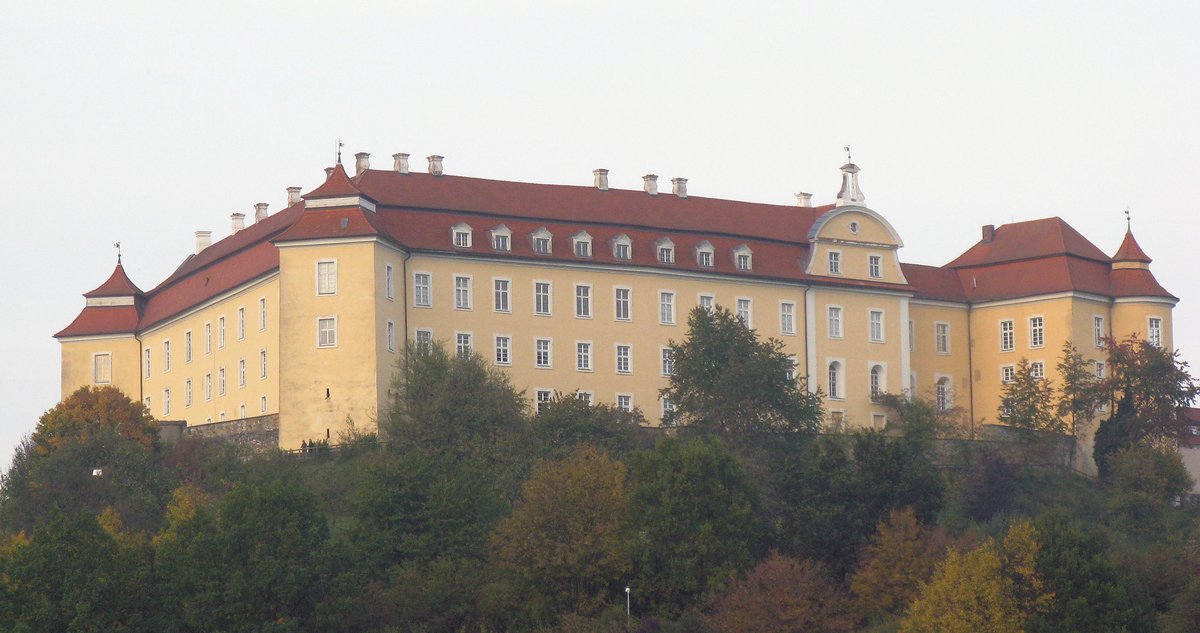
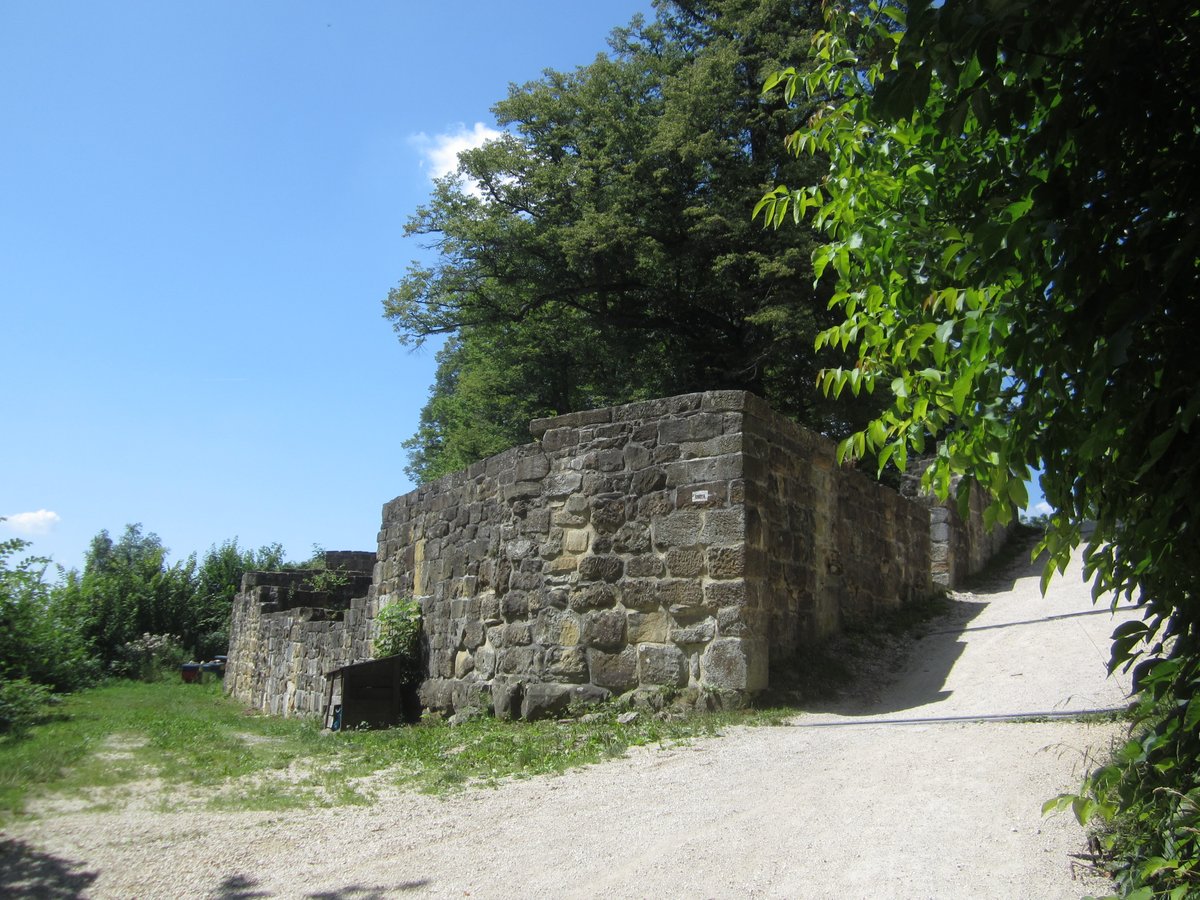
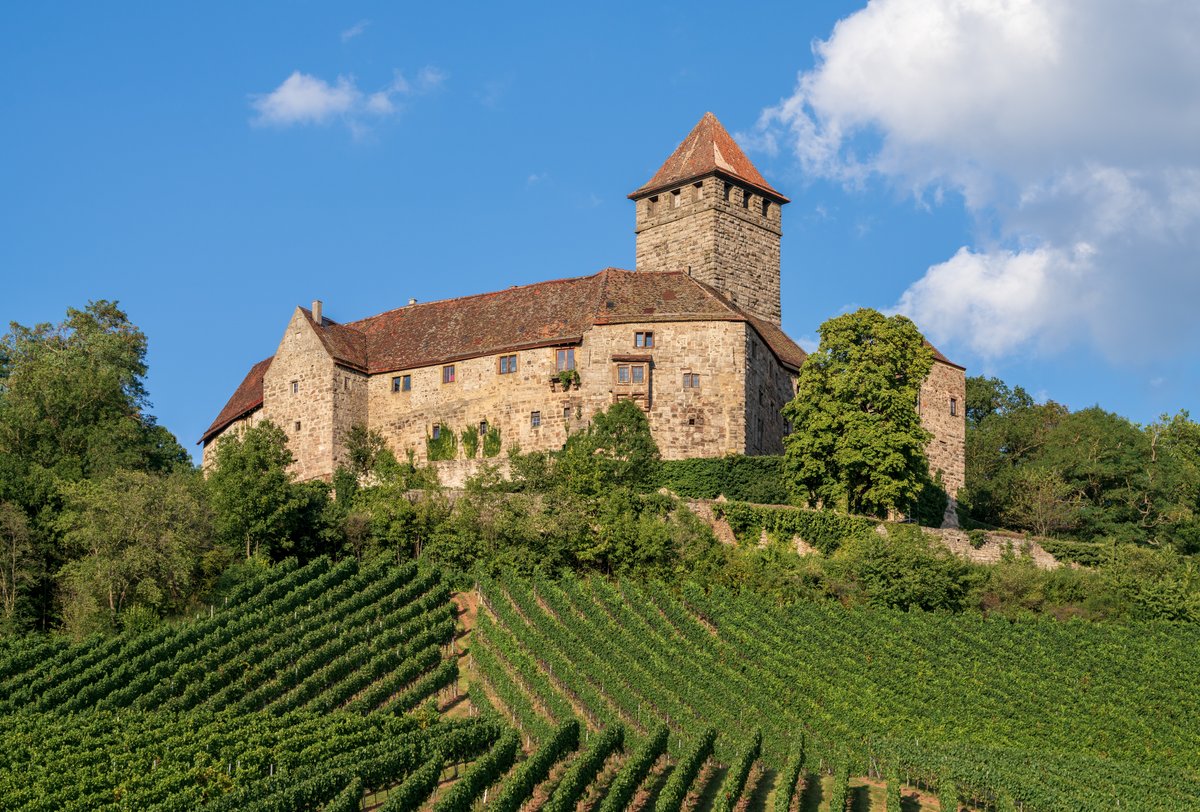
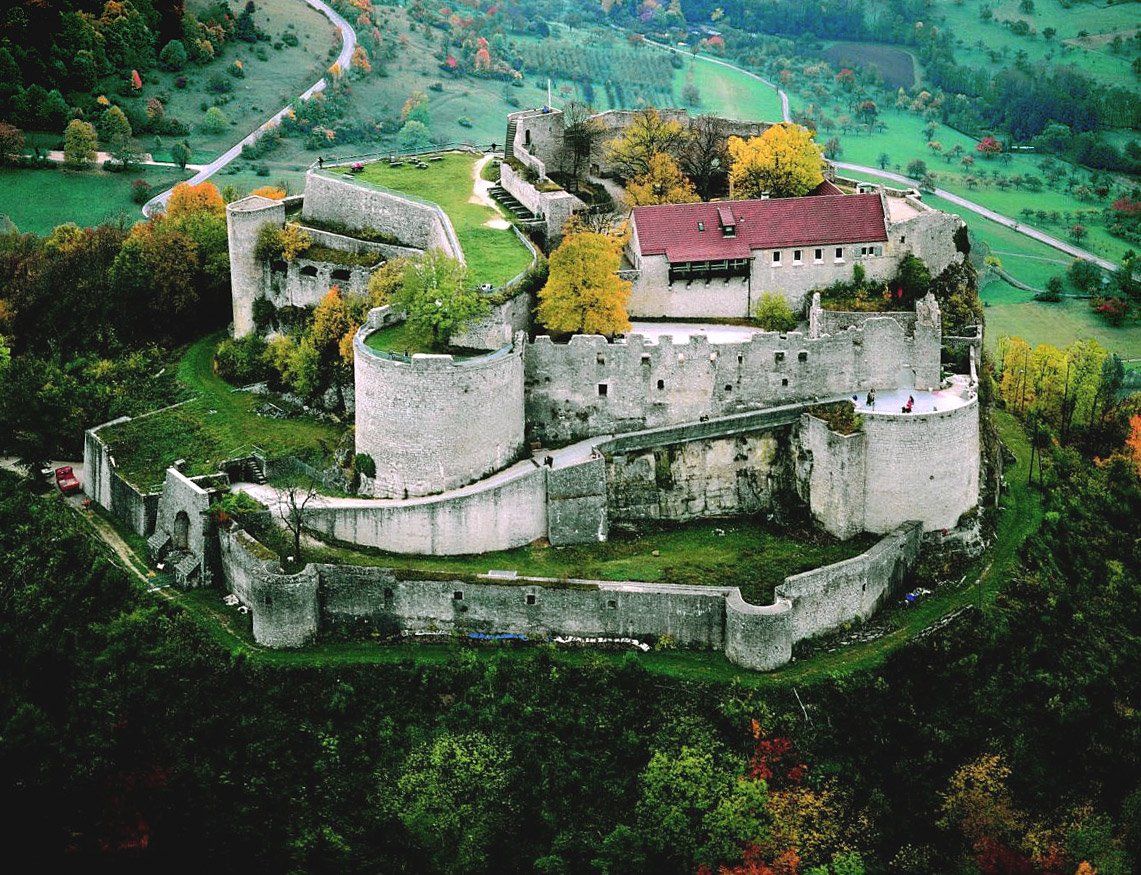
Perched 505 m above the old town of Ellwangen, the castle surveys a landscape of scattered fruit trees. Long before royal grace, it stood as a Wehrburg. Abbot Kuno I. built this fortified site around 1200 to shield the monastery. By 1266, documents named it castrum Ellwangen. For centuries, the Prince-Proosts held authority here, and by 1460, the building served as their residence and seat of authority.
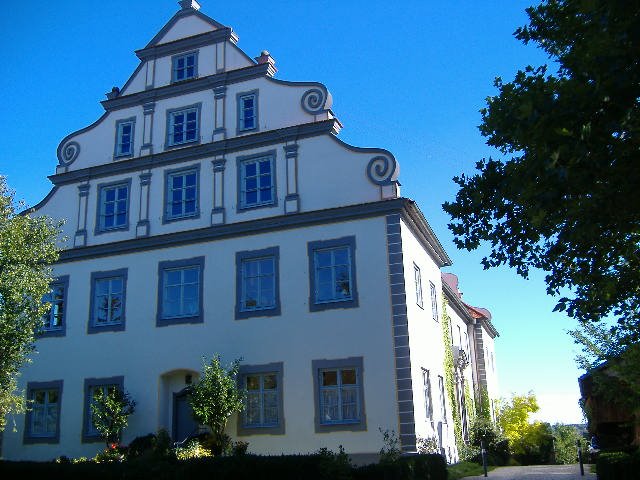
During the early 1600s, the complex was reshaped. Between 1603 and 1608, Johann Christoph von Westerstetten transformed the site into a Renaissance castle, adding the arcade courtyard and four corner towers. This era of development was interrupted in 1720 when a devastating fire charred the structures. Recovery arrived in grand form when Franz Ludwig von der Pfalz, Archbishop and Elector of Trier, commissioned a Baroque reconstruction. Master builders Franz Keller and Franz Josef Roth designed uniform Mansard roofs and a magnificent Throne Hall, while a grand staircase with a double flight was completed in 1726.
By the early 19th century, the castle welcomed fame. Kurfürst Friedrich turned the building into his residence starting in 1802 during secularization. King Friedrich I of Württemberg later established a throne hall here and used the building for the government of Neuwürttemberg between 1803 and 1806. Later, the exiled King of Westphalia, Jérôme Bonaparte, resided with his wife Katharina, daughter of the King of Württemberg. They glazed windows and galleries, adding a domestic layer to the royal grandeur. Today, the palace remains a visible landmark beside the Schönenbergkirche. The gatehouse contains heavy grates that could be lowered, machicolations (Pechnasen), and loopholes for archers, while a baroque rose garden (Basteigarten) is accessible through it in summer. In the chapel, a rare altarpiece depicts a pentagonal tower, a ghost of the 1720 fire.
Sources: Wikipedia, OpenStreetMap, Wikidata, Wikimedia Commons
Written by Aurora
Discuss this with the author and others
No comments yet. Be the first to start the conversation.