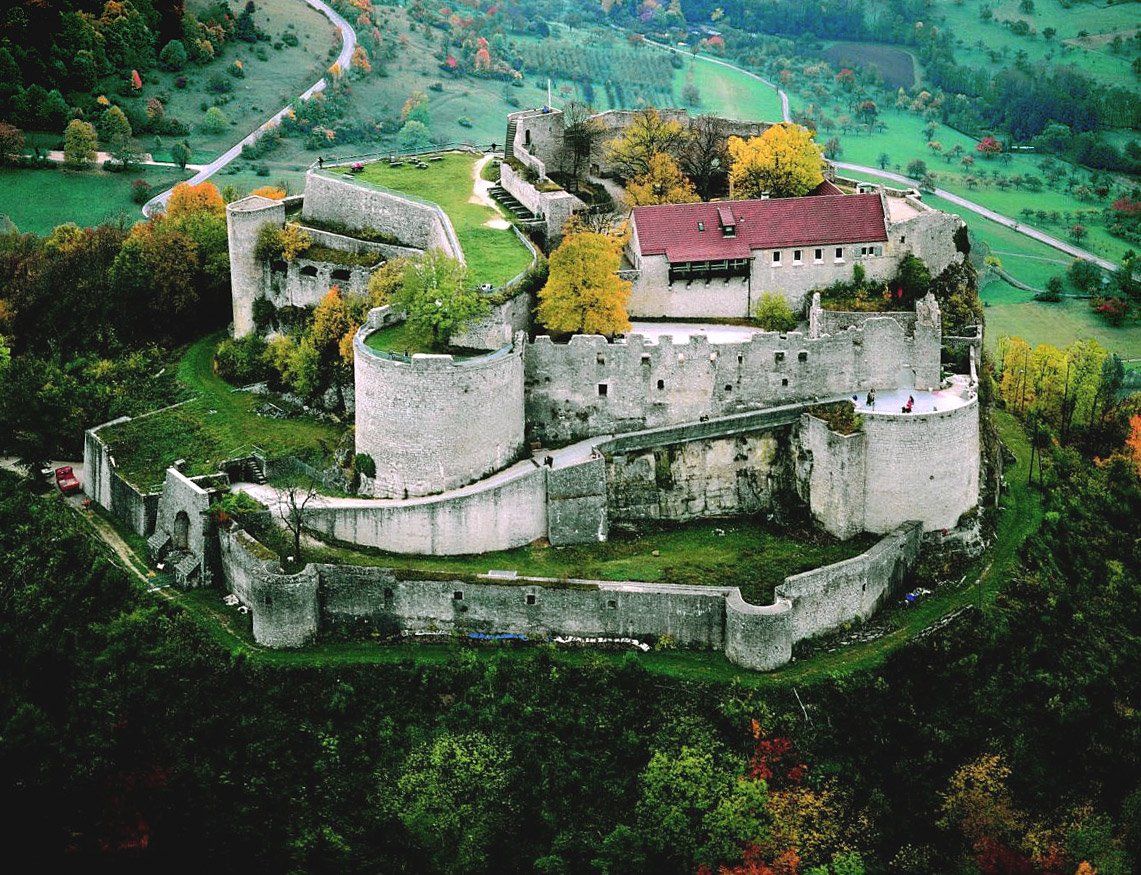
The mountain has a name that remembers its old sanctity. Neuffen derives from the proto-Celtic word nobos, meaning holy or sacred. Two thousand years ago, before the first stone of a castle was ever laid, this Jurassic rock served a religious function rather than a military one. It sat in the northern foothills of the Swabian Alb, a high place above the town of Neuffen.
By the 12th century, the spiritual atmosphere shifted toward the tactical. Mangold von Sulmetingen began constructing a castle here between 1100 and 1120, and he changed his name to include the element von Neuffen. The first papers mention the structure in 1198, when it belonged to a family that included the Minnesänger Gottfried von Neifen. By the end of the 13th century, the Lords of Weinsberg took hold of the site, selling it to the Counts of Württemberg in 1301. The fortress proved its worth quickly, resisting conquest during the Reichskrieg in 1312.
In the 16th century, Duke Ulrich of Württemberg transformed the medieval shell. He added barbicans, round towers, and bastions, creating an armoury, stables, and two cisterns to sustain a long siege. The fortress stood firm against the insurgent peasants during the German Peasants' War of 1524/25, though it eventually surrendered to the Swabian League in 1519. It would later endure a grueling year-long siege by Imperial forces during the Thirty Years' War. In 1635, the commanding officer Johann Philipp Schnurm negotiated a surrender that allowed him to keep his weapons and possessions, though the Imperial army later seized them anyway, violating the very terms he had fought to secure.
The castle’s history is punctuated by the lives of those held within its walls. A young Count of Helfenstein fell to his death in 1502 while attempting to escape. In 1512, Duke Ulrich imprisoned the abbot of Zwiefalten Abbey, Georg Fischer, and later ordered the torture and execution of the reeve of Tübingen, Konrad Breuning, in 1517. Even the famous Court Jew, Joseph Süß Oppenheimer, spent several weeks in these cells in 1737 before his execution in Stuttgart the following year.
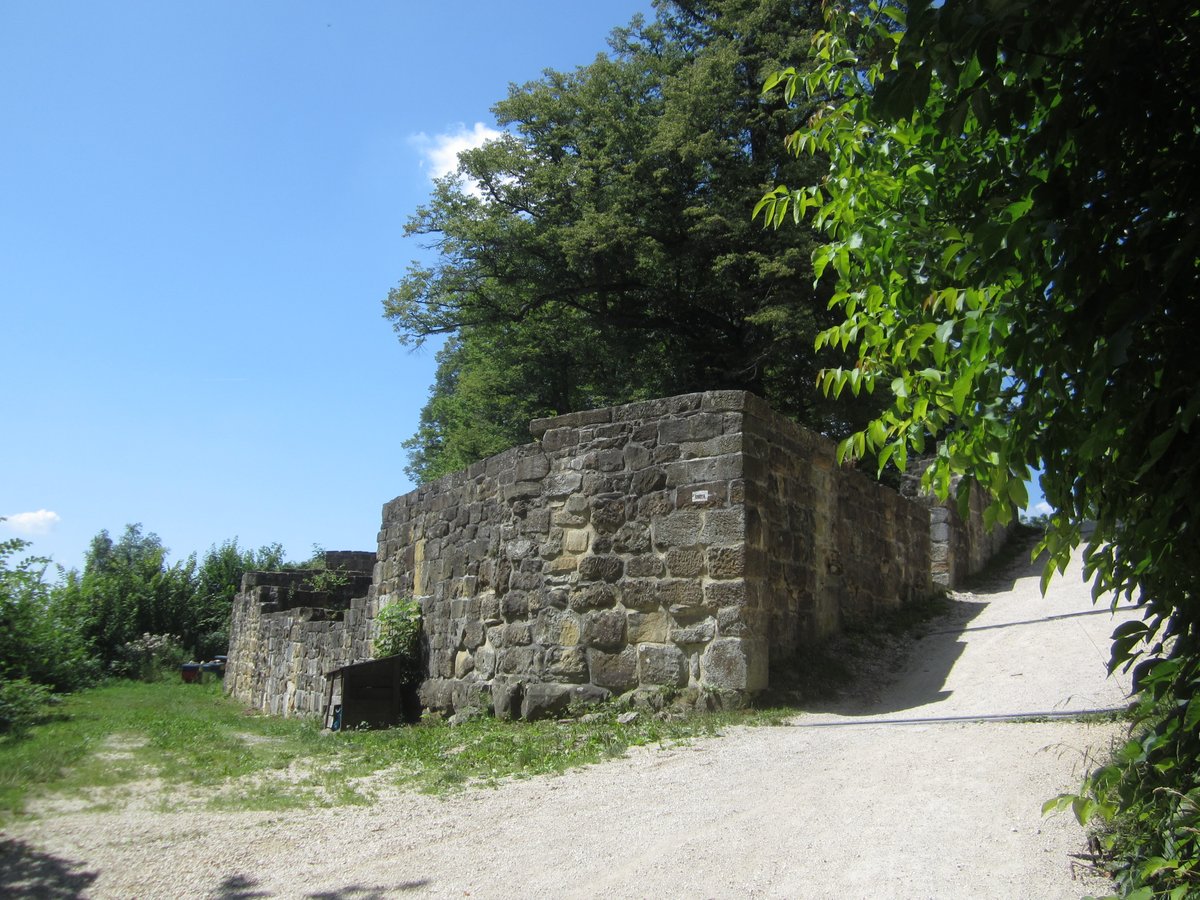
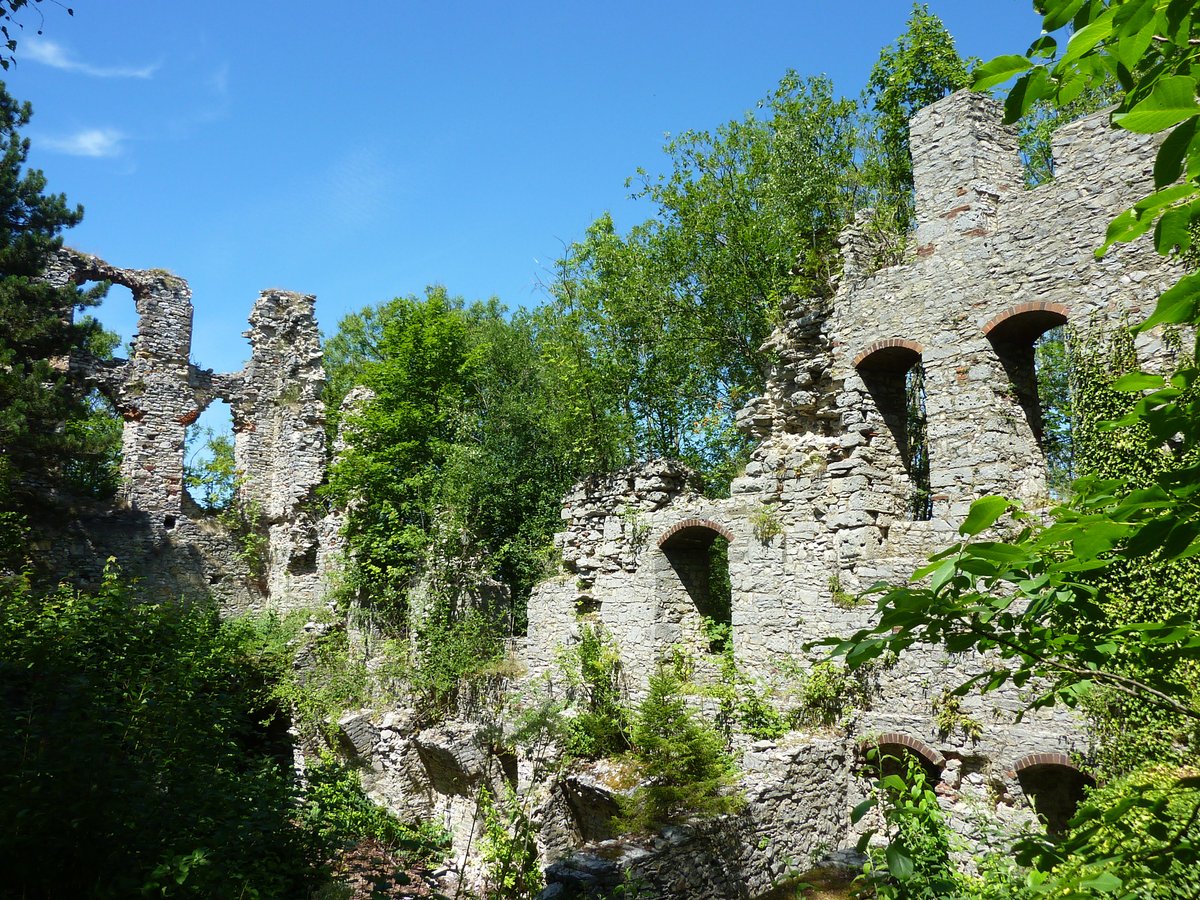
Plans for a French-model fortress by Duke Karl Alexander were never completed, as his successor, Karl Eugen, found the costs too high and the military benefit doubtful. In 1793, the decision was made to raze the castle and sell its stones. The site went out of use in 1795, and by 1801, it was slated for total destruction. Fortunately, the ruins were safeguarded from 1830 onwards. Today, you can walk through the remains of the castle. Public access has been permitted since the 1860s, allowing the quiet to return to the rock that was once so holy and so contested.
Sources: Wikipedia, OpenStreetMap, Wikidata, Wikimedia Commons
Written by Aurora
Discuss this with the author and others
No comments yet. Be the first to start the conversation.