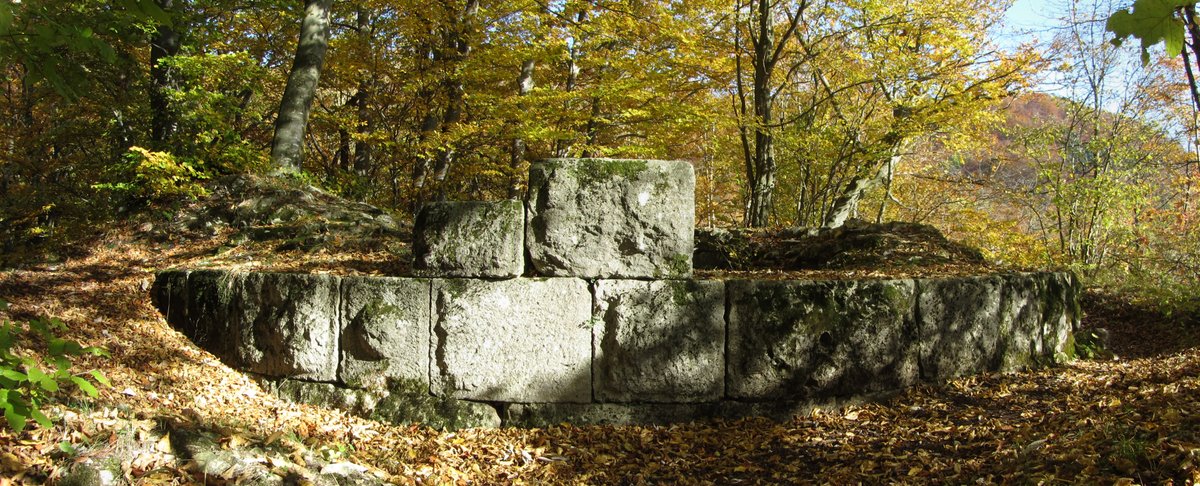
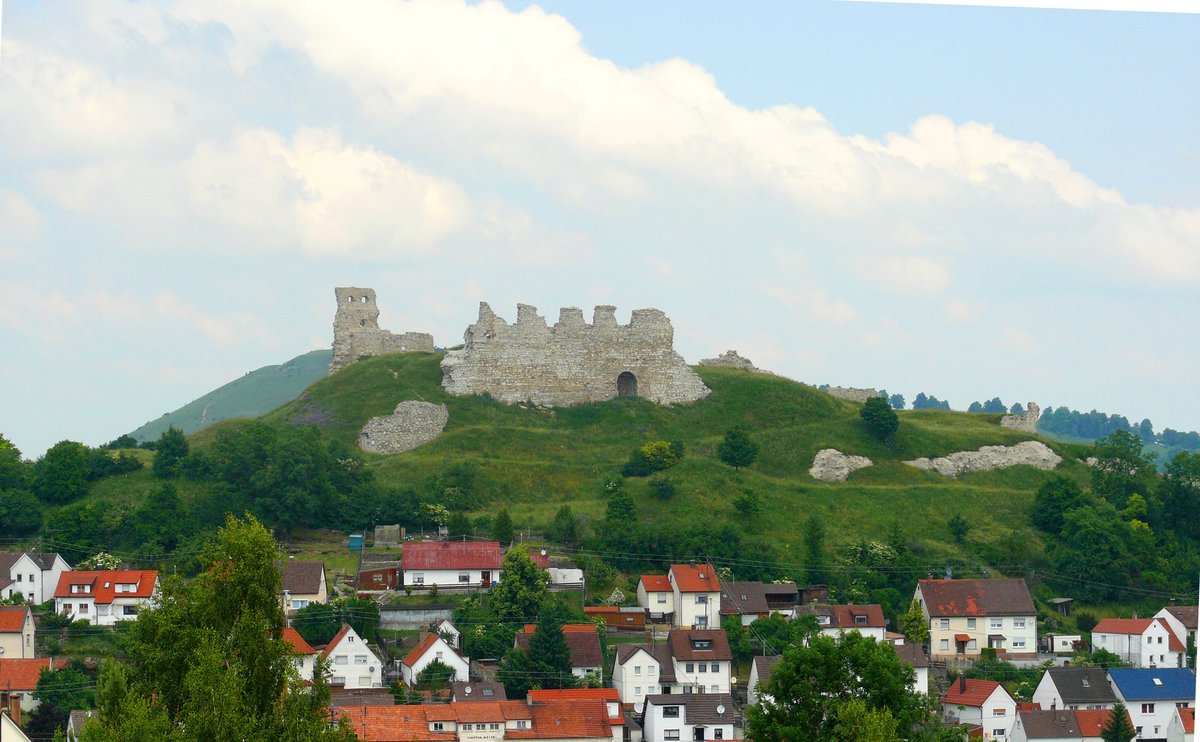
High on a western-facing mountain spur called Graneggle, the remains of Burg Granegg hold their ground at 688 metres above sea level. It sits on a 200-metre stretch of land. From this vantage point, the castle once commanded the nearby Christental pass, located roughly 100 metres away near the Reiterleskapelle.
Construction is placed in the 13th century based on the use of buckelquader, boss-faced stones. The specific dates and names of the first owners are unknown. The Lords of Stoffel from a nearby hamlet are occasionally mentioned as possible owners, as are the Lords of Holtz. The Lords of Holtz were vassals of the Rechberg family and owned properties in places like Tannweiler, Wißgoldingen, Winzingen, and the Christental. Neither claim has been proven, leaving the castle's origins unconfirmed.
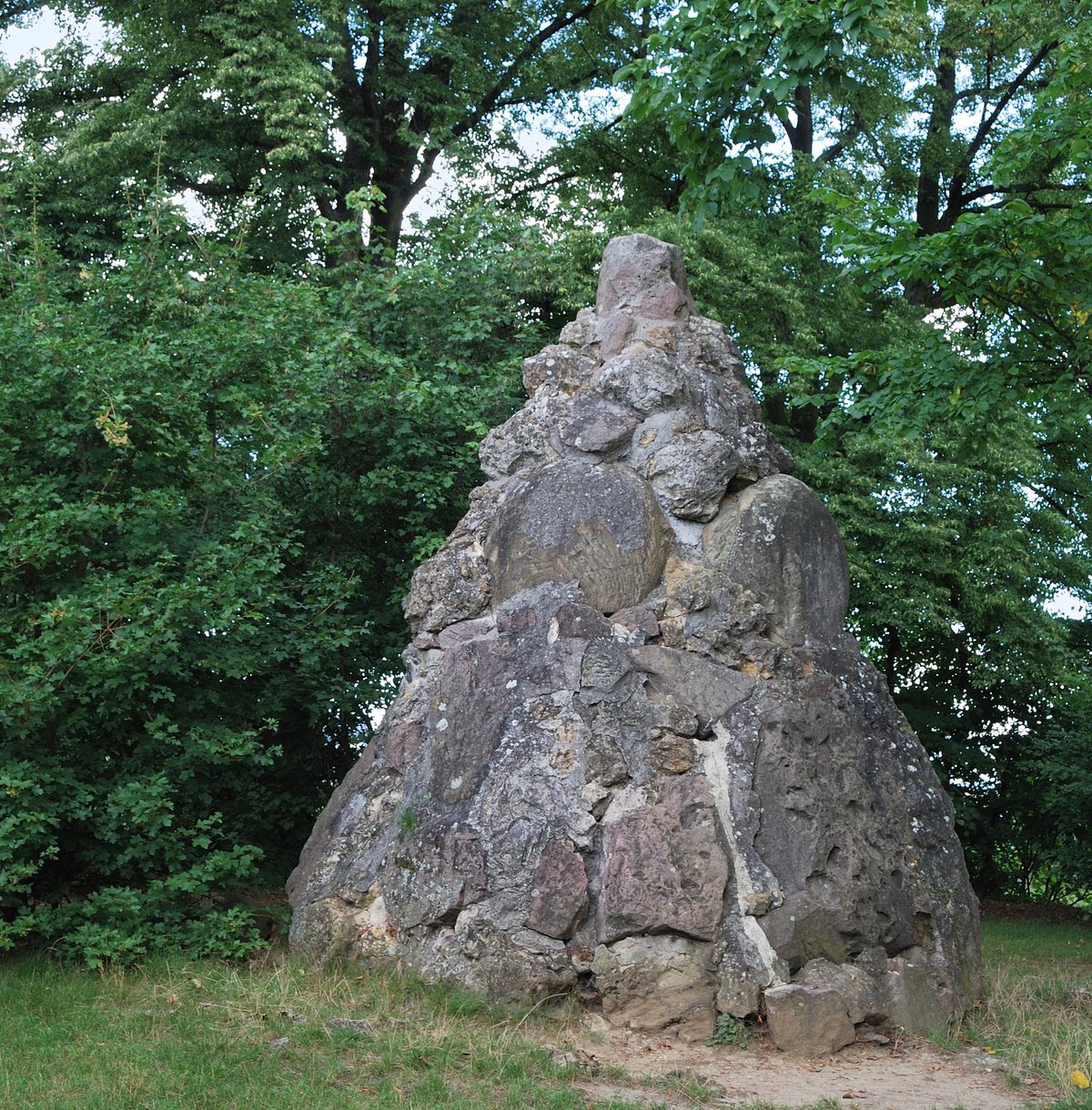
The architectural layout was one of compact defense. The complex measured 60 metres by 22 metres, separated from the Kalten Feld by a 4-metre-deep moat. There is no evidence of an outer bailey, suggesting a lean, functional fortress. The most enduring feature is the foundation of the round keep, or Bergfried. It had an outer diameter of 8.62 metres and an inner diameter of 3.62 metres, with walls reaching a thickness of 2.50 metres. The Weißjura stones of the keep were reportedly used as building material in neighboring villages in the past.
The castle was likely abandoned no later than the 14th century. It was not recorded on Balthasar Riecker's 1572 scouting map. It was only when the chronicler Friedrich Vogt of Schwäbisch Gmünd wrote in 1674 that the ruins were first mentioned.
Today, the site is mostly forested. Individual wall remains exist on the currently wooded area. Even as late as 1885, remains of a cellar vault with a cellar staircase were reportedly visible. Now, the foundations of the keep remain as a skeleton of stone watching over the pass.
Sources: Wikipedia, OpenStreetMap, Wikidata, Wikimedia Commons
Written by Aurora
Discuss this with the author and others
No comments yet. Be the first to start the conversation.