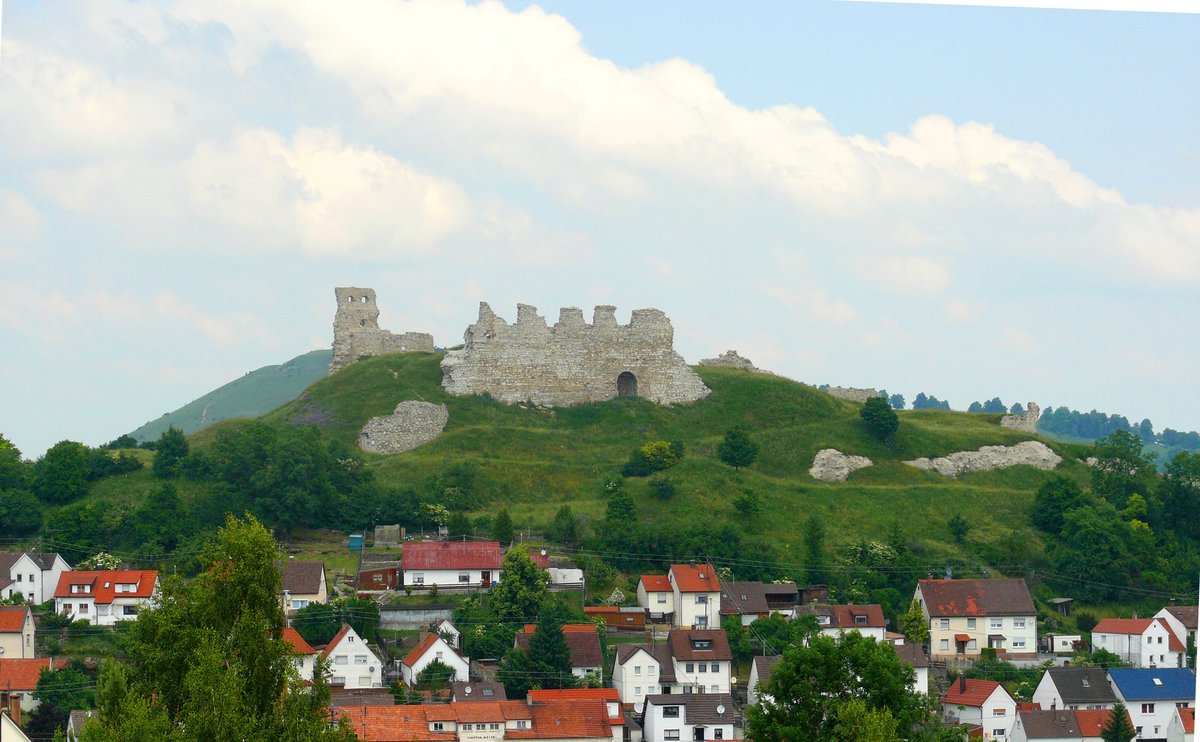
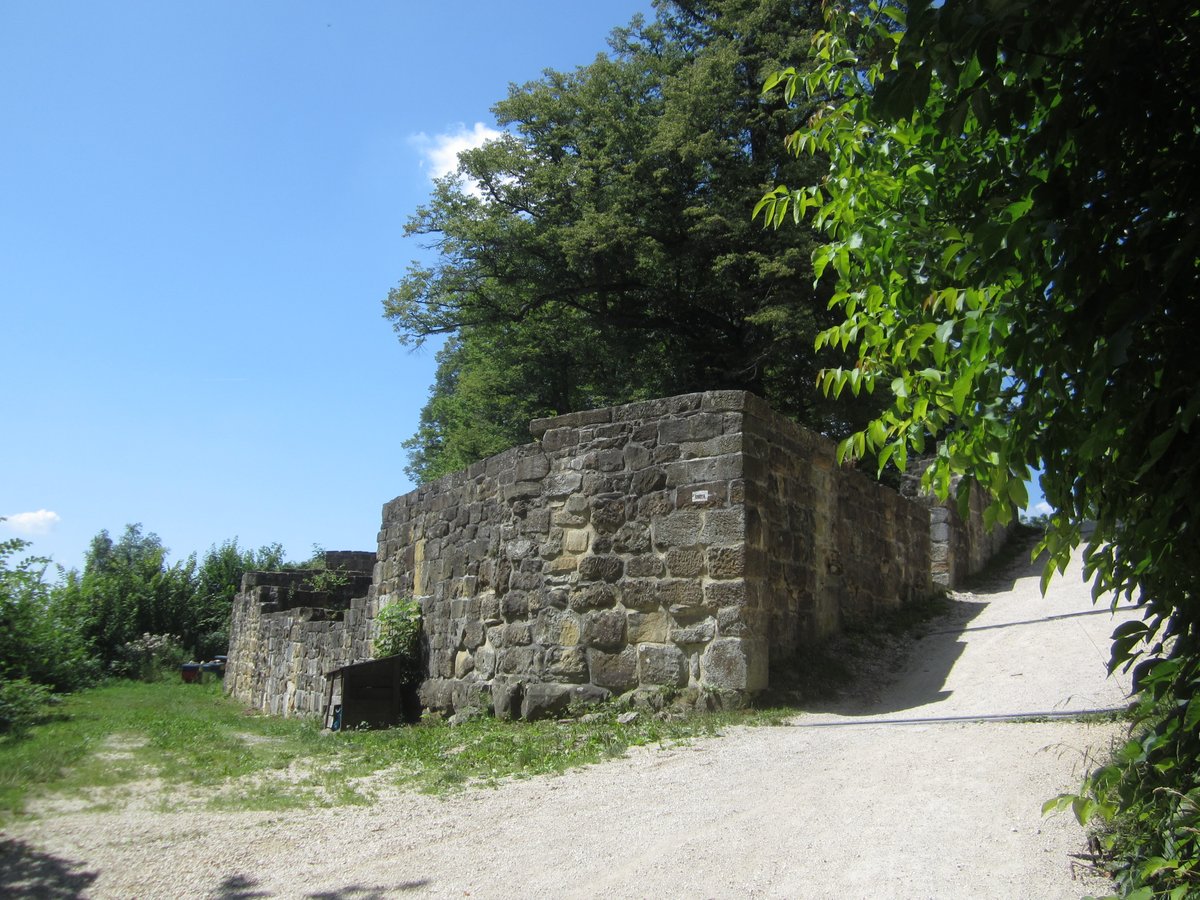
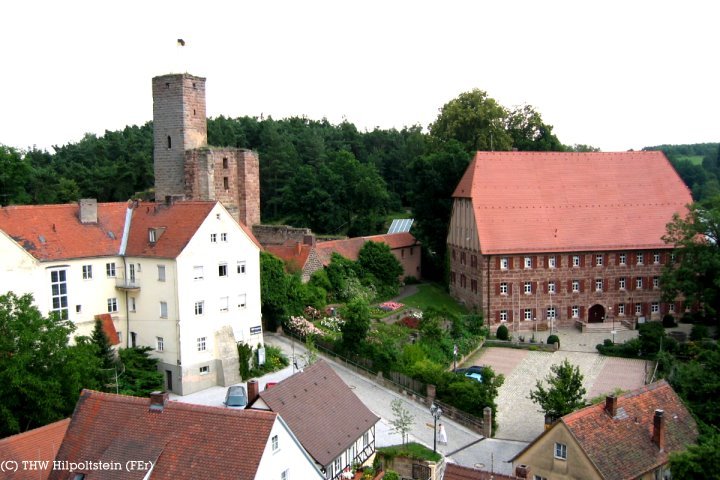
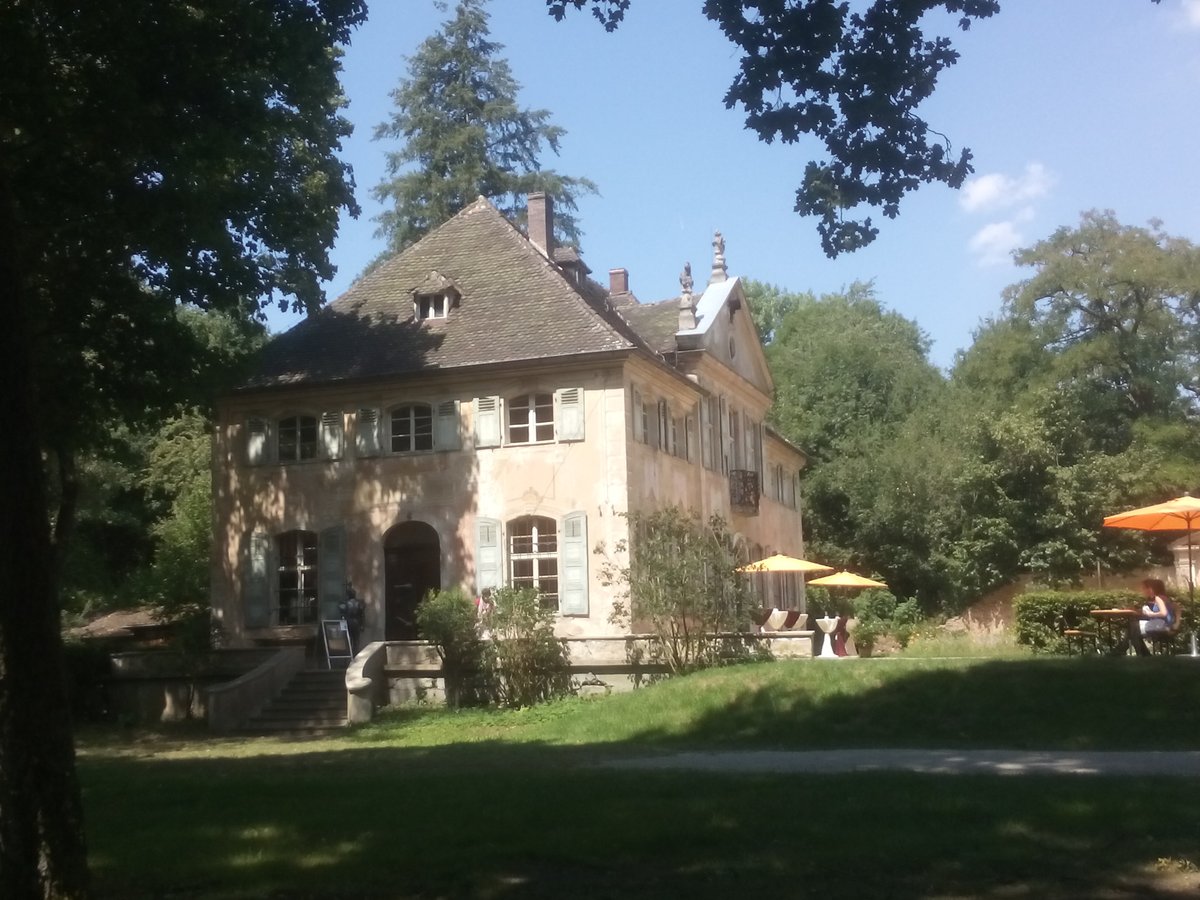
High above the Bopfinger district, a limestone cone rises from the edge of the Ries. At 579 meters, the ruins of Burg Flochberg remain - a skeleton of a high medieval peak castle that commanded the landscape for centuries. Large wall remains still cling to the rock, weathered by time but speaking clearly of the power once held here.
In 1150, King Konrad III wrote to his sister-in-law, the Byzantine Empress Irene. In his letter, he called this place 'castellum nostrum Flochperhc' - our castle Flochberg. During his reign, the Battle of Flochberg took place on these grounds. It was here that his thirteen-year-old son, Heinrich Berengar, defeated Welf VI. The victory ended a decades-long struggle between the Staufen and Welf houses.
In 1188, Emperor Friedrich I Barbarossa included the castle and all its accessories in a marriage contract for his son. It was intended as a dowry for Berenguela of Castile. The union was a grand design, yet it never came to fruition. Between the autumn of 1191 and the start of 1192, the marriage was annulled by the Archbishop of Toledo and a papal legate. The reason was simple: the bride had opposed the union, leaving the castle on the limestone cone as a ghost of a wedding that never happened.
In 1153, the noble Willingus used the byname von Flochberg. In 1270, a noble named Marquard appeared with the byname, and in 1293, the noble brothers Albert and Konrad von Flochberg were mentioned. However, the castle faced a period of ruin before 1338. It likely fell victim to the violent disputes over the Staufen inheritance between Ludwig of Bavaria and Frederick of Austria. In 1330, the fief was granted to the Counts of Oettingen, who secured royal permission to refortify the site. By 1338, the inhabitants were back inside the walls, rebuilding what the previous wars had torn down.
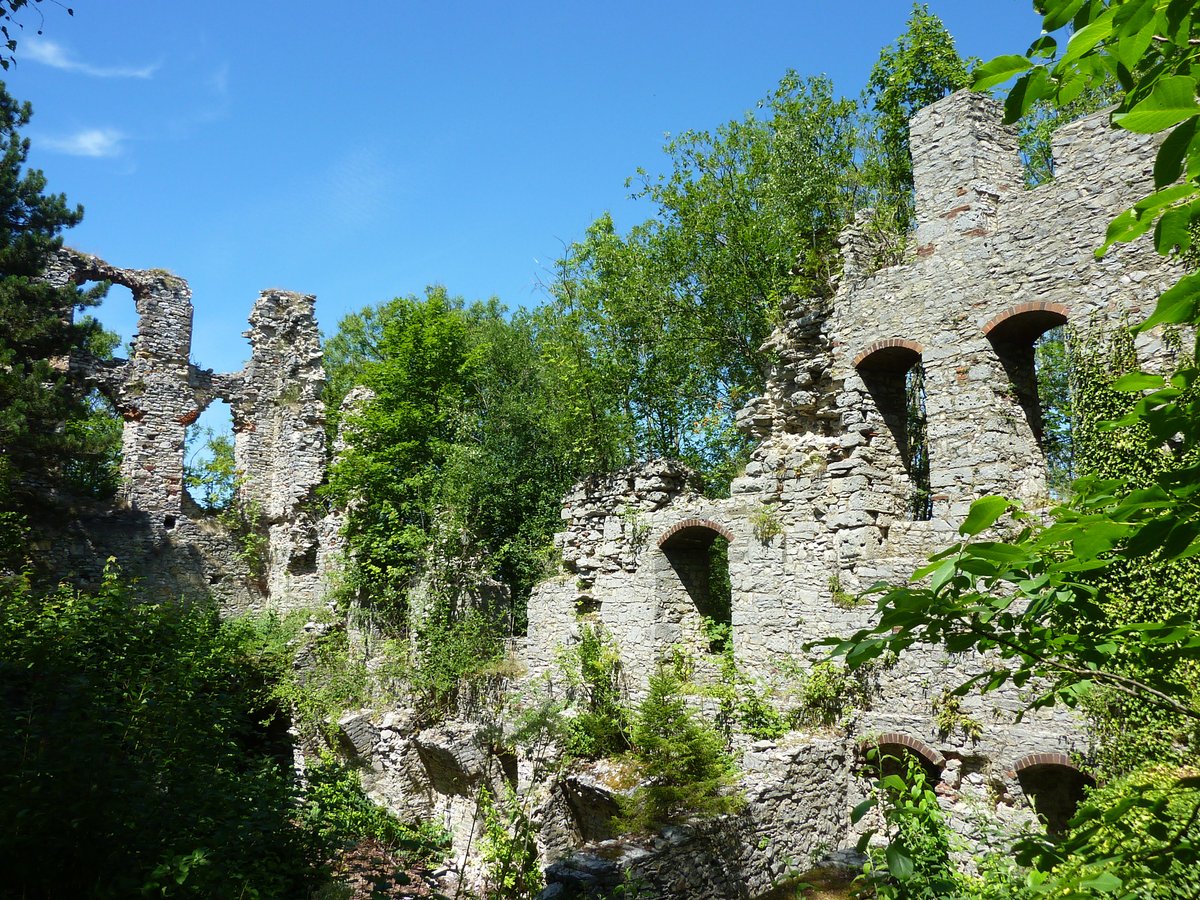
For centuries, the Counts of Oettingen held the castle, and it served as the seat for their bailiffs. Even the great Emperor Karl V stayed within these walls in 1547 during the Schmalkalic War. Later, during the Thirty Years' War, imperial troops occupied the site, only for forces to arrive and deal a heavy blow. This damage mostly affected the core castle and the bergfrets, the sturdy keep towers. Only the St. Nikolaus chapel remained largely intact, its roof being renewed in 1682.
By the late 17th century, the castle was transitioning from a seat of power to a resource for the common folk. The estate was divided into smaller parcels as early as 1689. Peddlers and traveling people began to use the ruins as a stone quarry, pulling at the very masonry that had once defended the land. In 1743, the chapel organ was sold off to a monastery in Donauwörth. Today, the chapel stands as a quiet survivor among the broken walls, a small sanctuary on a hill that once watched over the fate of empires.
Sources: Wikipedia, OpenStreetMap, Wikidata, Wikimedia Commons
Written by Aurora
Discuss this with the author and others
No comments yet. Be the first to start the conversation.