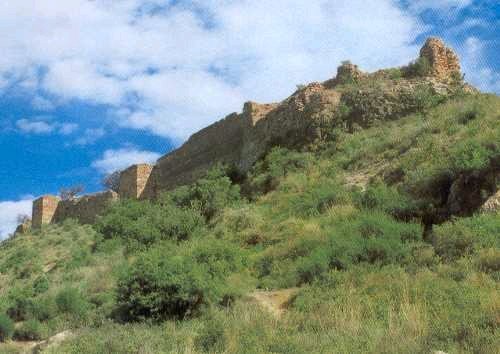

Situated atop a hill in the Valley of Nules, the Vilavella Castle played host to a diverse array of occupants over the centuries. Today, it remains in a state of ruin, a silent sentinel standing guard over the changing landscape. But the castle's history is far richer and more complex than its current state. The castell de la Vilavella was built on the ruins of Iberian and Roman settlements, and it is believed to be the original settlement of modern Nules, with Roman remains of a sanctuary discovered.
The village of Vilavella was a Muslim settlement from the 10th century, and it was conquered by Christians during the Christian reconquest of Borriana in 1238. Jaume I of Aragon gave Vilavella to Guillem de Montcada in 1251, and it was later passed to the Montcada family's son Guillem Ramon. Ramon of Montcada sold Vilavella, its castle, and territory to Gilabert de Centelles in 1314. The castle was destroyed by Pere I of Castilla in 1364, but it was reconstructed in the 15th century.
A new chapel was installed in the central tower of the castle in the 15th century. The castle has a pavement decorated with the Centelles coat of arms and the phrases 'Cent dol·lors a un plaer' and ‘Comtes vells, baralla nova'. In the 1481 the castle stood inhabited and with open doors, marking the beginning of its state of abandonment. Today, the castle stands in a state of total abandonment and ruin.
Sources: Wikipedia, OpenStreetMap, Wikidata, Wikimedia Commons
Written by Nik Frost
Discuss this with the author and others
No comments yet. Be the first to start the conversation.