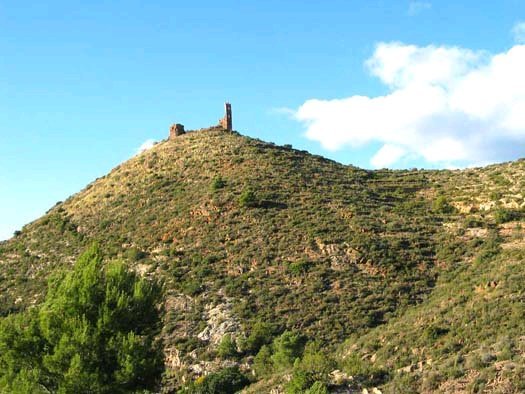

The Castle of Azuébar, located in the province of Castellón, is a fortress with a rich and storied past. Constructed in the 12th century, the castle originally boasted Muslim architecture but has undergone subsequent transformations by Christian rulers. Its architectural details showcase the unique blending of Islamic, Christian, and Iberian influences. The castle sits atop a promontory overlooking the confluence of the ramblas of Almedíxer and Azuébar and the valley below, evidence of its strategic significance.
The castle was donated by Jaime I in 1238 to Juan Gonzálvez de Heredia. The fortress has four documented historical changes from King Jaime I, as mentioned in records first published by José Martí Coronado in the Boletín de la Academia Valenciana de Genealogía y Heráldica. It features three towers with square bases, with two levels built on mampostería, and walls constructed with tapial. Inside the castle, two rectangular cisterns with arched rooftops are recognized. The Castle of Azuébar is a Bien de Interés Cultural de la provincia de Castellón.
Sources: Wikipedia, OpenStreetMap, Wikidata, Wikimedia Commons
Written by Nik Frost
Discuss this with the author and others
No comments yet. Be the first to start the conversation.