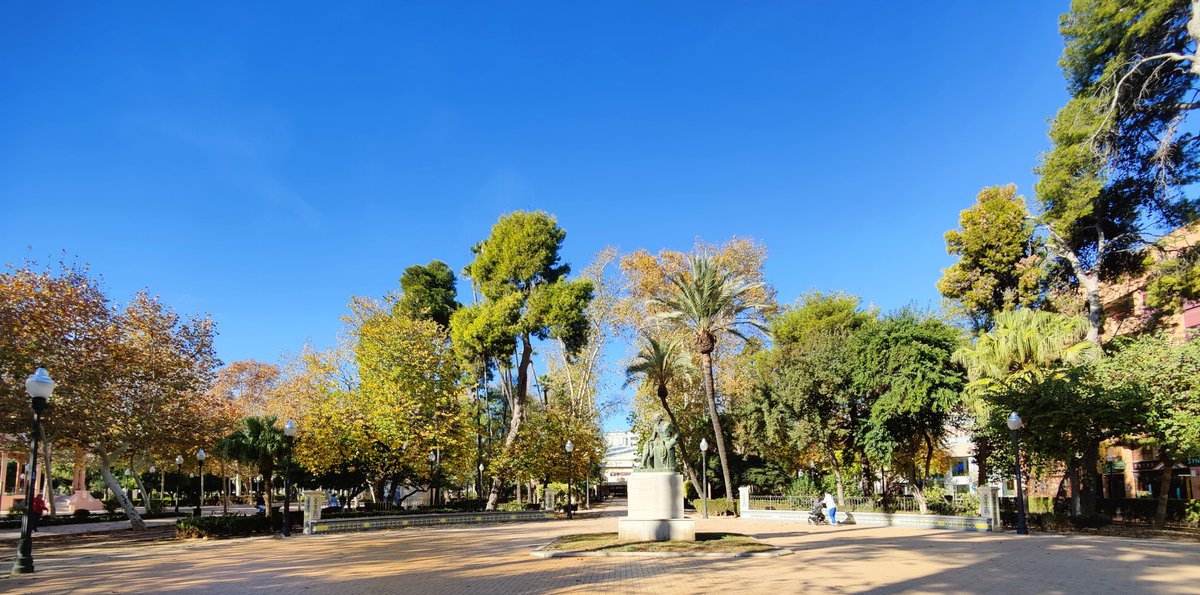

For centuries, the land that now houses Castellón's Ribalta Park served as a passageway for people on their way to the town, and later as a cemetery. But after the arrival of the railway in 1862, the authorities in Castellón saw an opportunity to present their city to the new travelers in style. Six years later, in 1868, the garden known as Parc Ribalta was created next to the railway station, transforming land that had been a cemetery, a vineyard, and two fields into a stunning garden that would make a lasting impact on the city.
The garden was the solution to address the demand of the government to provide work for the unemployed. Its design was accomplished by engineer Luis Alfonso Brull, and Tomás Clará Ferrer was in charge of park gardening. The old cemetery's avenues were used as much as possible for the park, almond trees were planted in the park, and pine trees were transplanted from the Pinar del Grao to the park. Parc Ribalta was created after the Third Carlist War in 1876.
It was named after the painter Francisco Ribalta, although he was not actually born in Castellón. Since its creation, Ribalta Park has been the epicenter of social and cultural life in Castellón. It has hosted numerous events, concerts, and sport activities. Its impression has transcended in local art, with numerous paintings and literary works dedicated to it. Parc Ribalta is considered the best example of 19th-century public park conserved in the Comunidad Valenciana.
Sources: Wikipedia, OpenStreetMap, Wikimedia Commons
Written by Nik Frost
Discuss this with the author and others
No comments yet. Be the first to start the conversation.