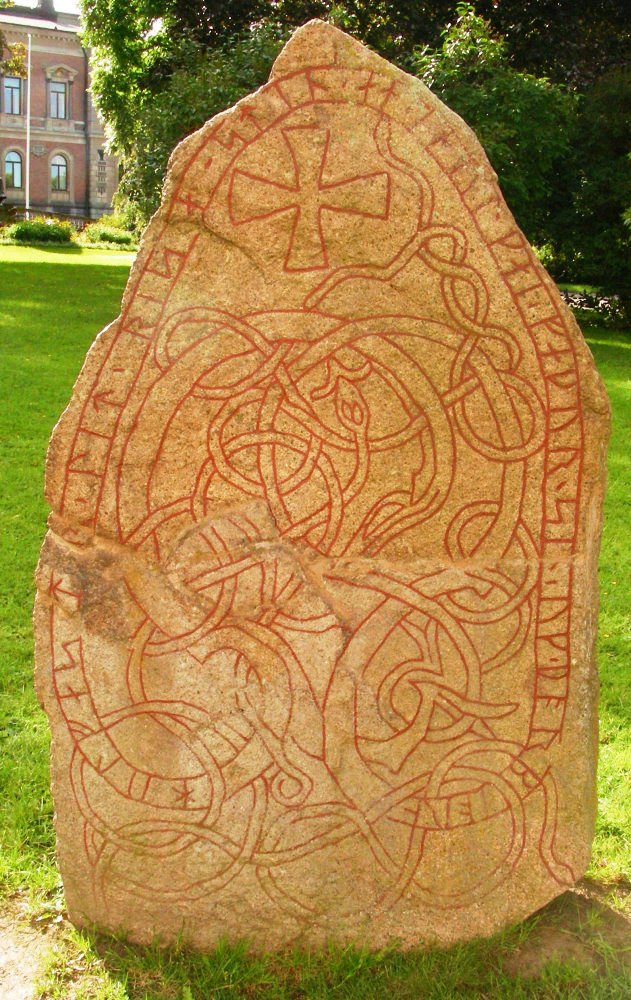

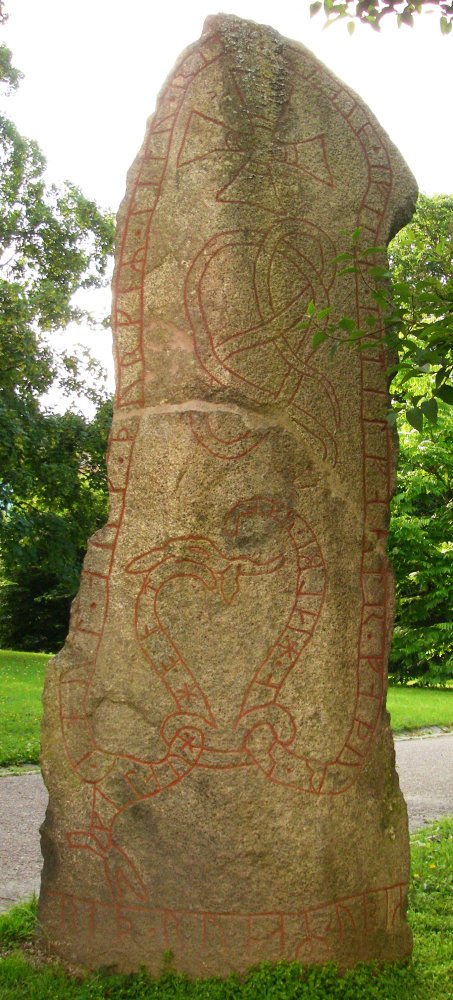
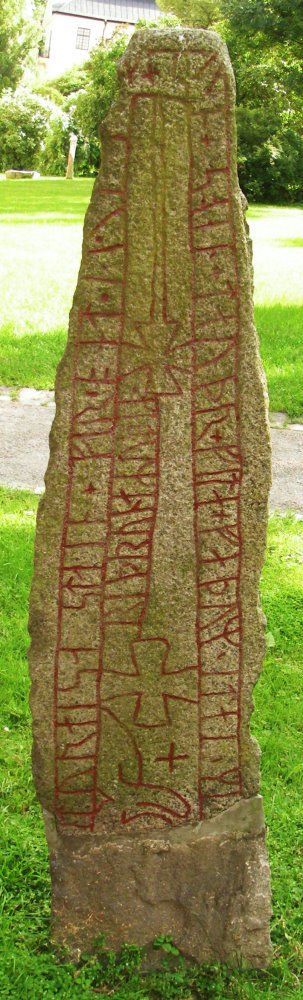
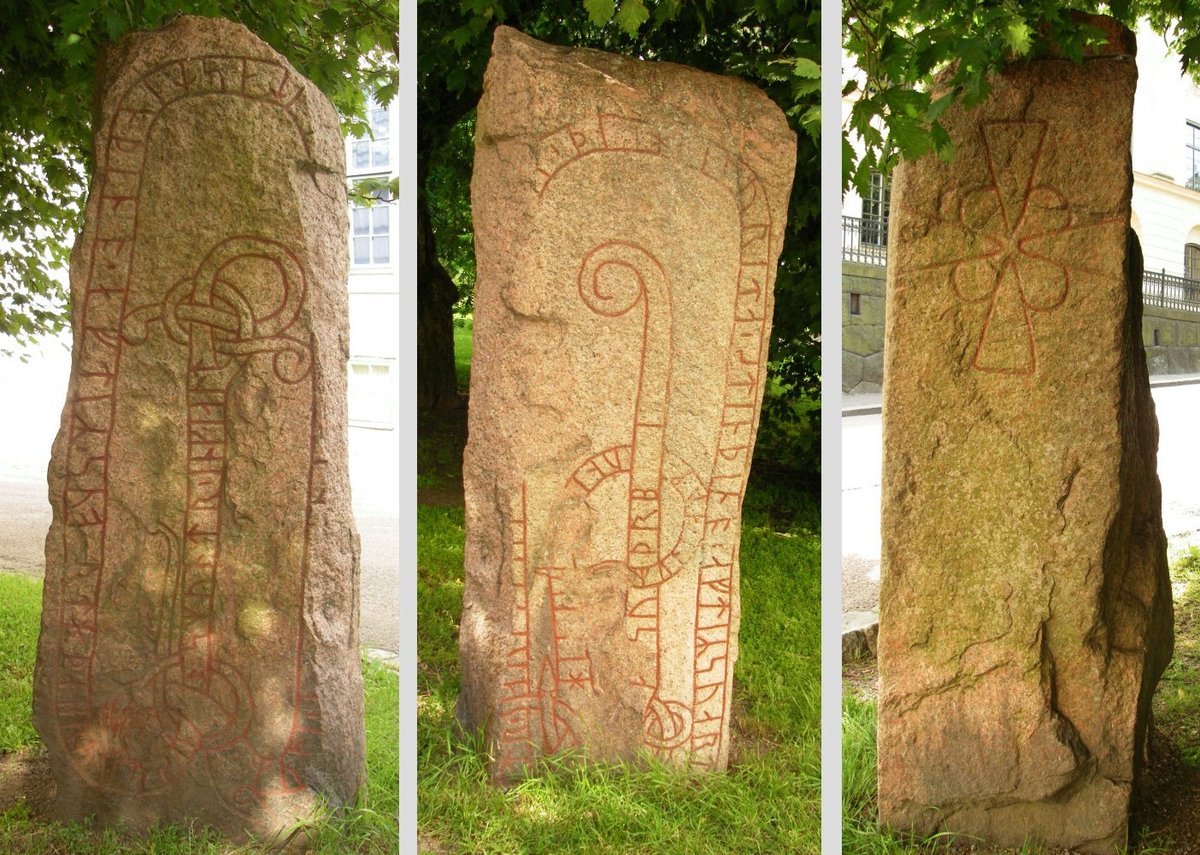
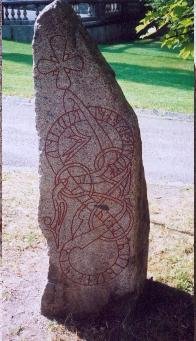
In Universitetsparken, Uppsala, stands the runestone Upplands runinskrifter 938. While its original place is unknown, it likely originated in the Torget district or was transported there in the 1200s to a building belonging to the Uppsala Franciscan monastery. Today, it stands with eight other runestones: U 489, U 896, U 932, U 937, U 939, U 940, U 943 and U 1011.
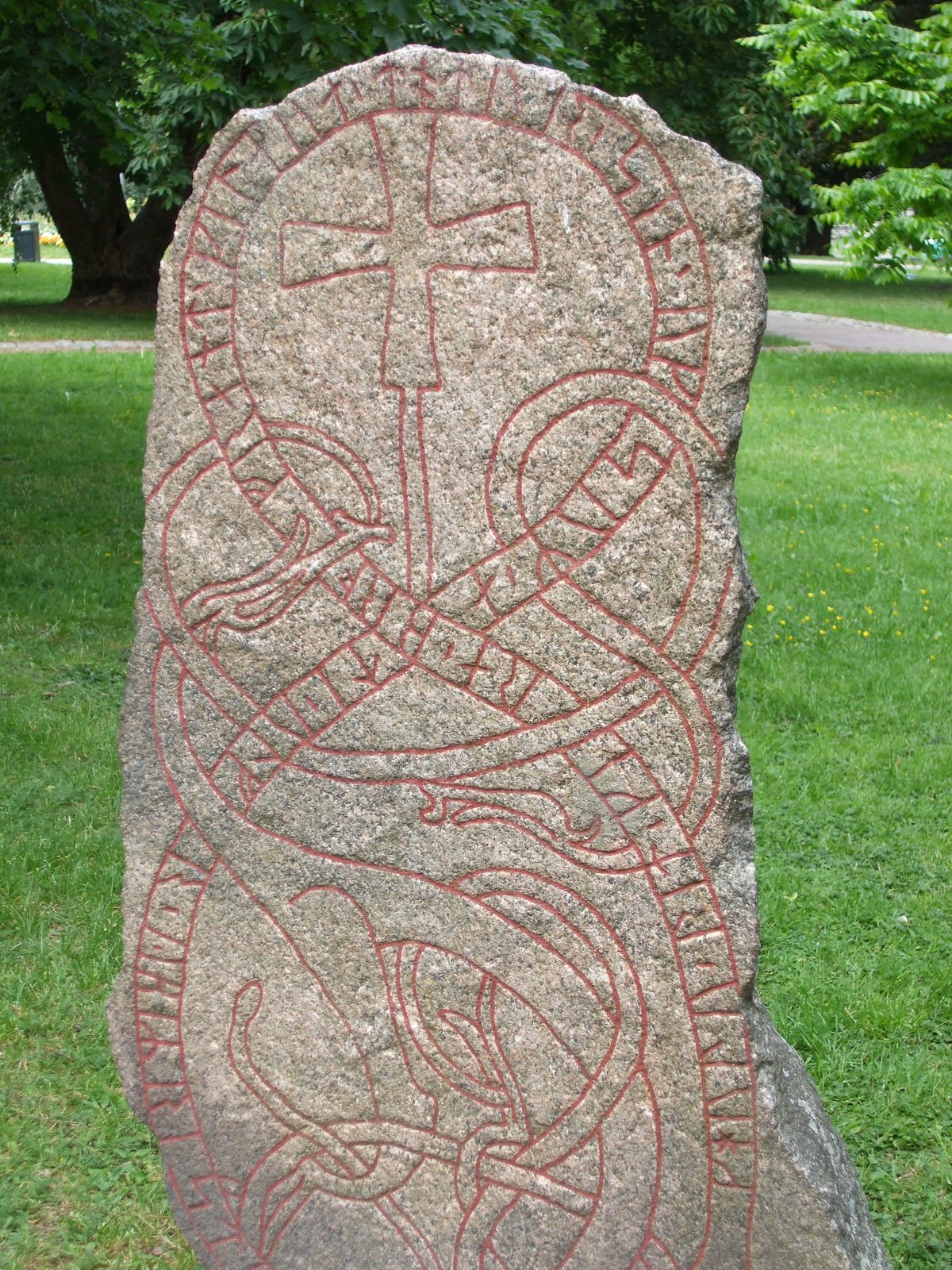
The stone was carved in the 1000s and is attributed to the known runemaster Öpir according to the Samnordisk runtextdatabas. It is horizontally divided into two joined pieces and decorated with an intricate ornament featuring a round animal and three snakes. A cross is visible on the upper part of the carving. The inscription begins at the head of the round animal and ends at the tail.
During the Middle Ages, the stone was located in the Franciscan monastery at Gamla torget. It was rediscovered in 1910 during excavations for the Centralbadet and moved to its current location. The brief text leaves the relationship between Torbjörn, Holmfast, and Holmfast's father Igulger unclear. It is probable that Torbjörn and Holmfast moved the stone together, though they were not brothers; hence, Torbjörn's name was placed last in the carving to avoid confusion.
Runor: ᚼᚢᛚᚠᛅᛋᛏᚱ᛫ᛚᛁᛏ᛫ᚱᛁᛋᛅ᛫ᛋᛏᛁᚾ᛫ᛅᛏ᛫ᛁᚼᚢᛚᚴᛅᛁ᛫ᚠᛅᚦᚢᚱ᛫ᛋᛁᚾ᛫ᚢᚴ᛫ᚦᚭᚱᛒᛁ᛭ᚱᚾ Translitterering av runinskriften: hulfastr ' lit ' risa ' stin ' at ' ihulkai ' faþur ' si(n) ' uk ' þorbiorn Normalisering till runsvenska: Holmfastr let ræisa stæin at Igulgæiʀ, faður sinn, ok Þorbiorn Översättning till nusvenska: Holmfast lät resa stenen efter Igulger, sin far, och Torbjörn.
Sources: Wikipedia, OpenStreetMap, Wikidata, Wikimedia Commons
Written by Nik Frost
Discuss this with the author and others
No comments yet. Be the first to start the conversation.