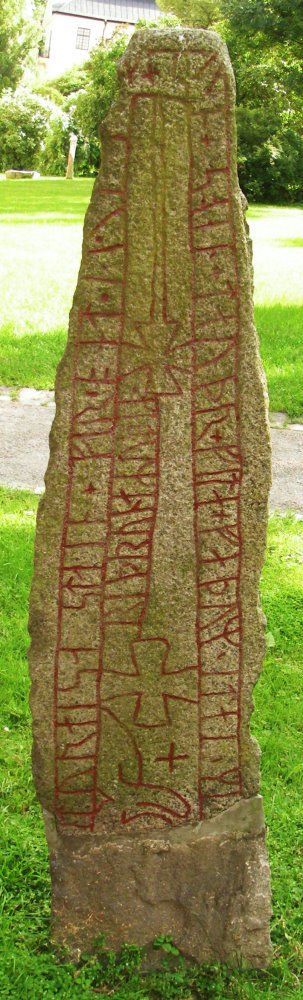

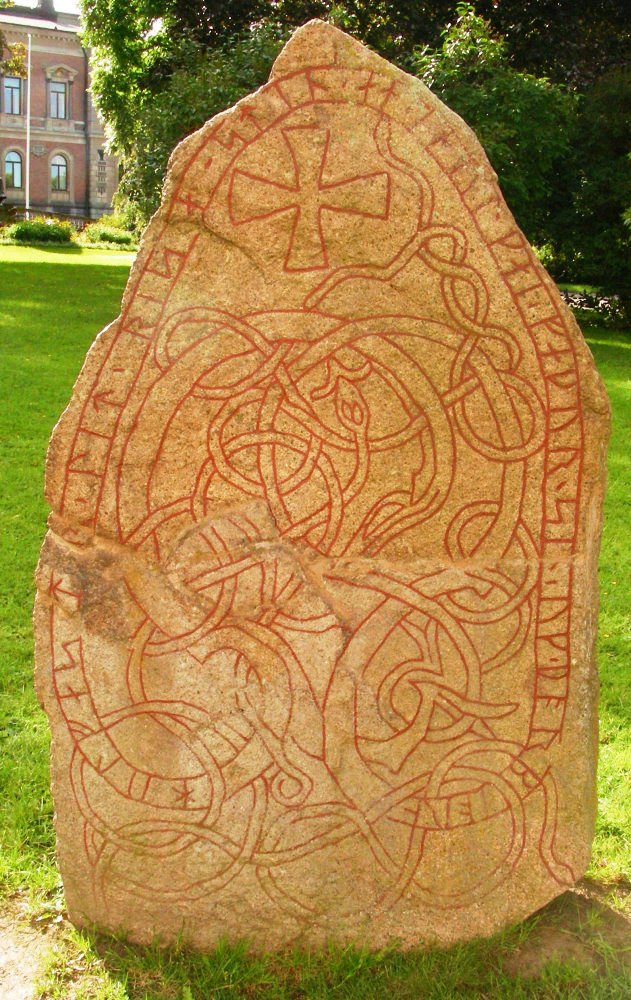
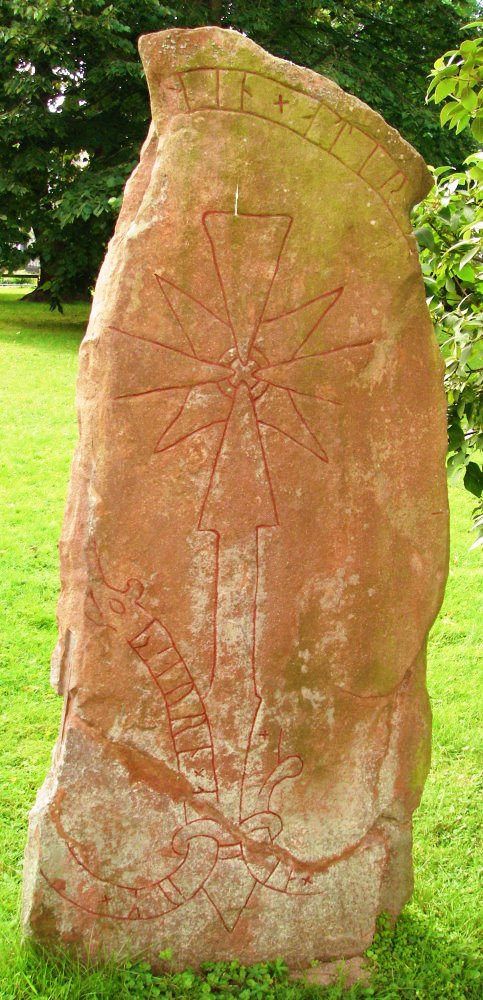
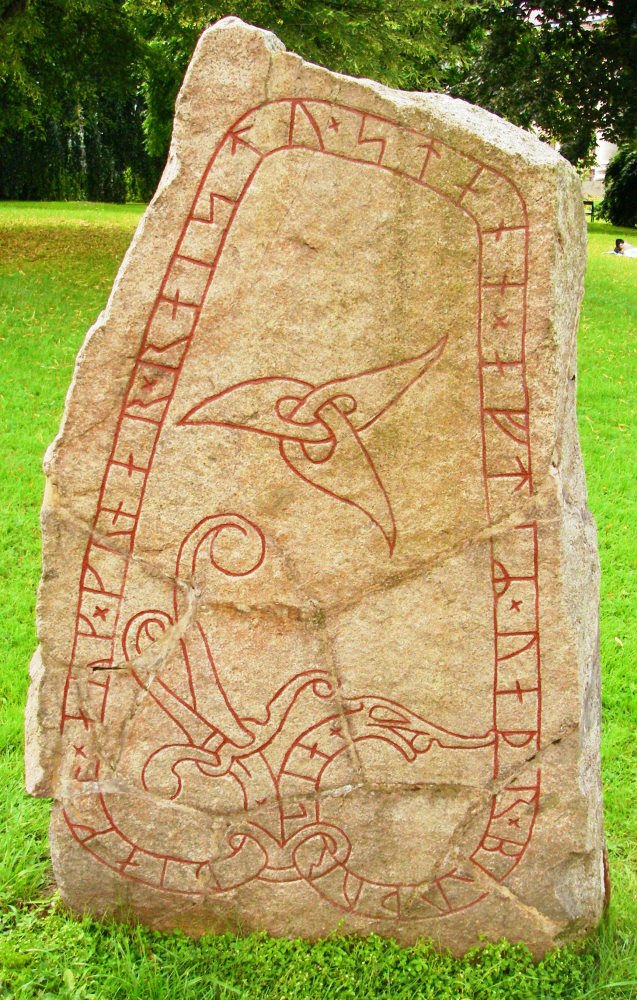
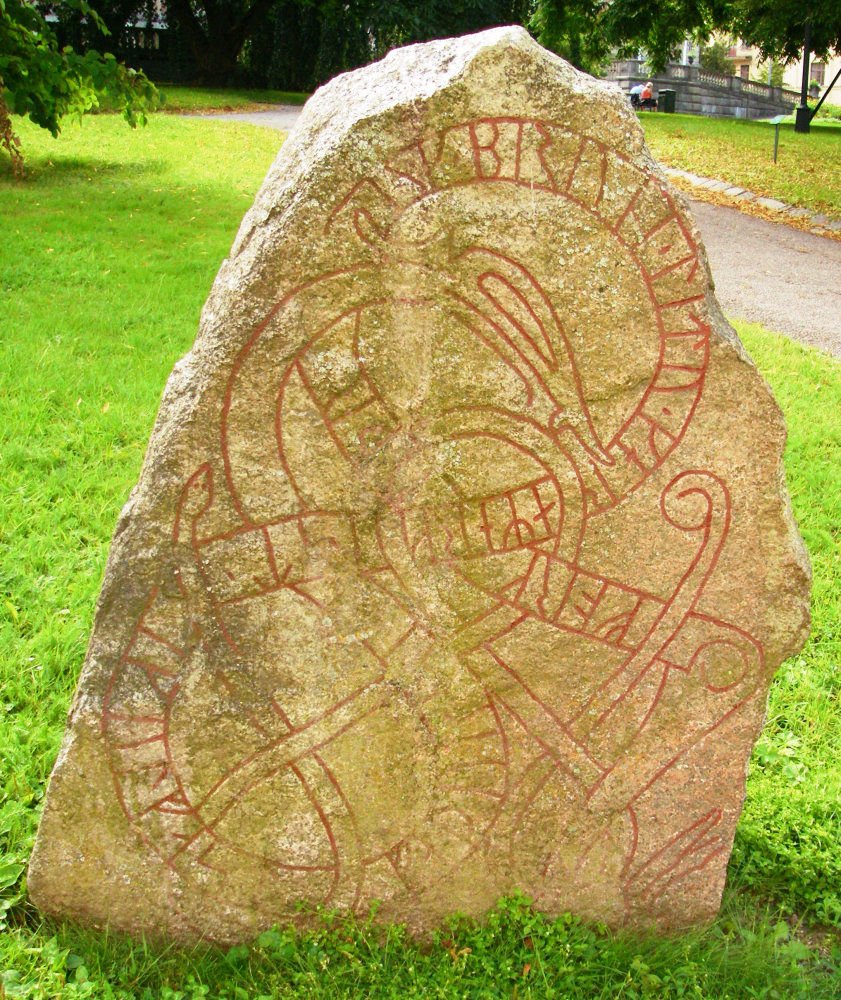
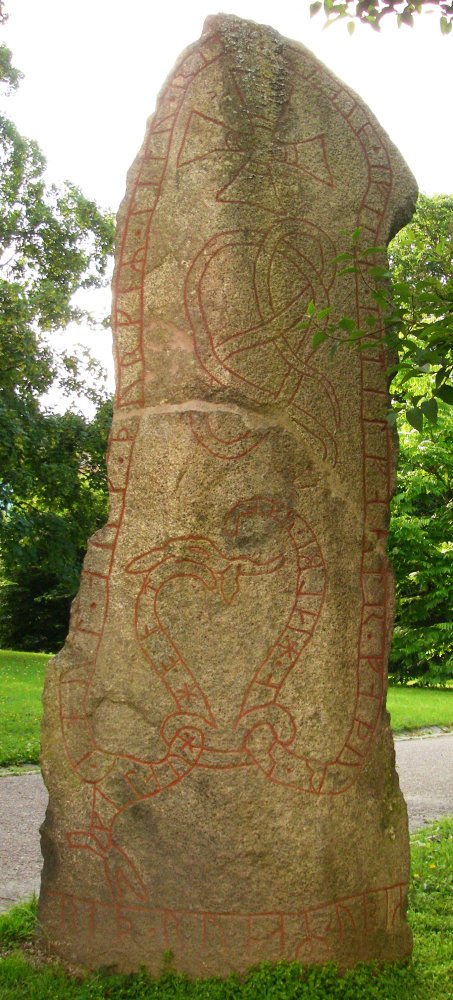
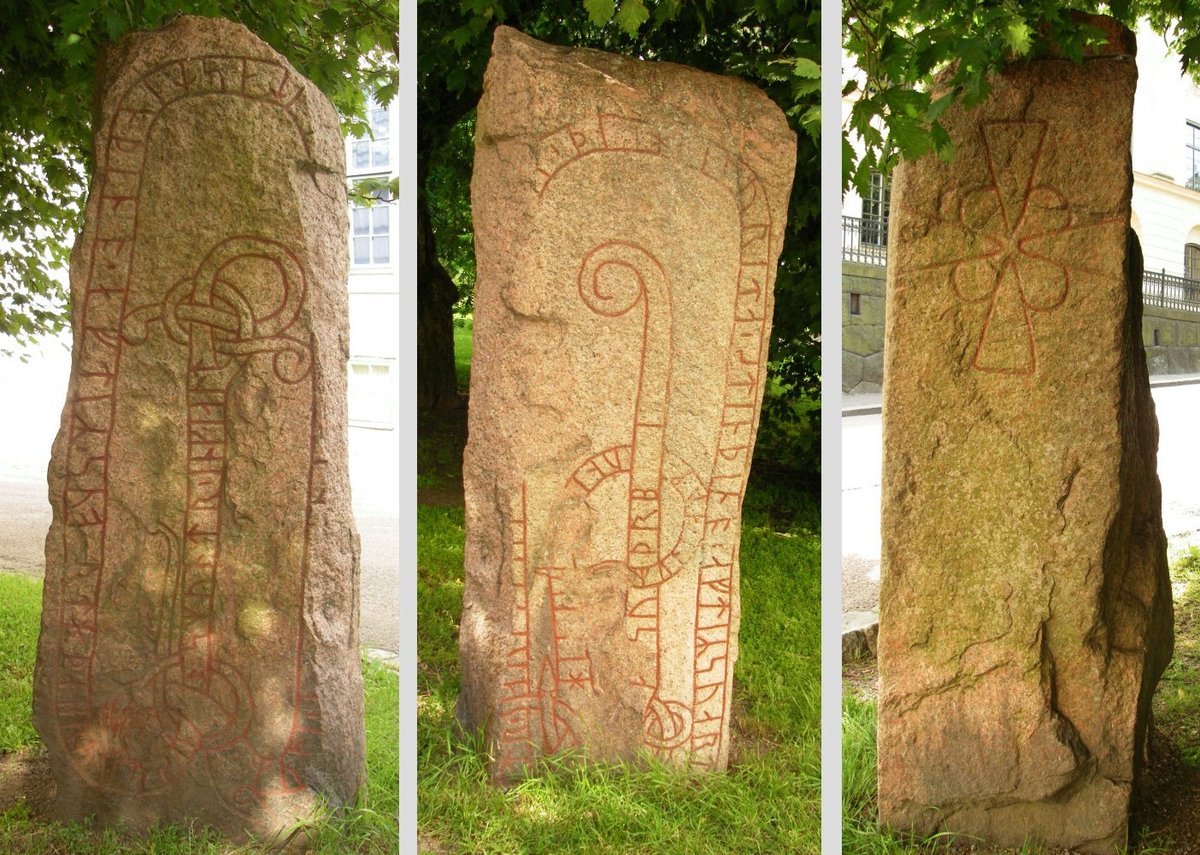
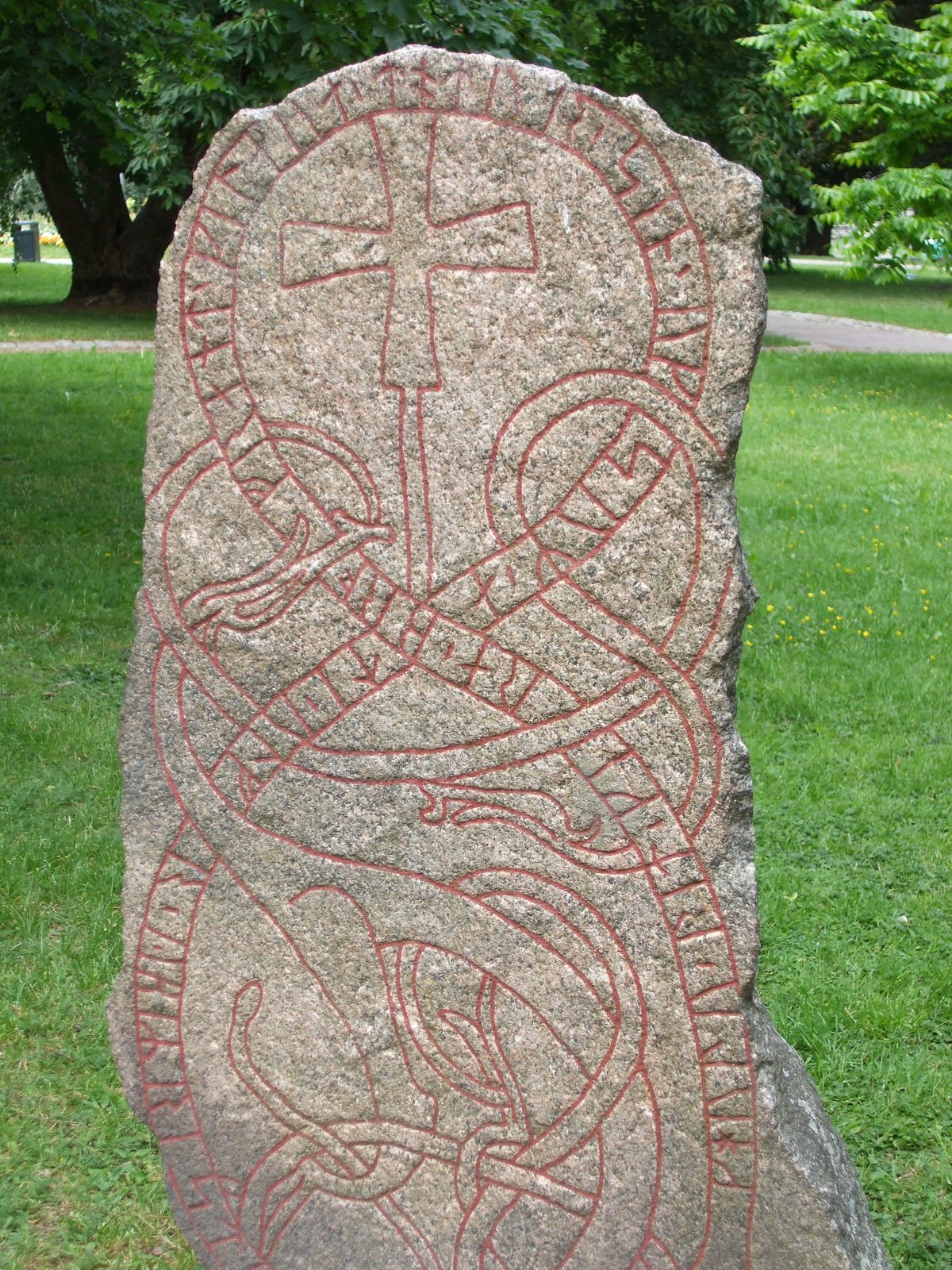
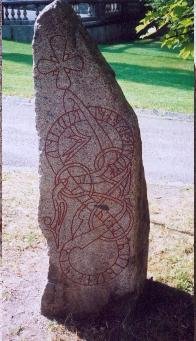
This 1.7 meter granite memorial stands today in the University Park of Uppsala. It began its journey at Håga before moving across the world in the 19th century. In 1867, it was exhibited at the Exposition Universelle in Paris with U 489 from Morby and U 1011 from Örby. It later returned to Sweden where the university eventually raised it for the public to see.
The runes are carved in the Ringerike style. They follow the edge of the narrow stone and tell the story of parents who commissioned a memorial for their son, likely named Eyndar. The text specifies that he died in Denmark while wearing hvitavadhum - an Old Norse phrase usually translated as meaning "in christening robes."
Experts identify the work of the runemaster Öpir, who was active in Uppland from the late 11th to the early 12th centuries. This stone and U 940 are stylistically unlike any of the other inscriptions signed by Öpir. The inscription features runic text bands with attached serpent or beast heads depicted in profile.
Sources: Wikipedia, OpenStreetMap, Wikidata, Wikimedia Commons
Written by Nik Frost
Discuss this with the author and others
No comments yet. Be the first to start the conversation.