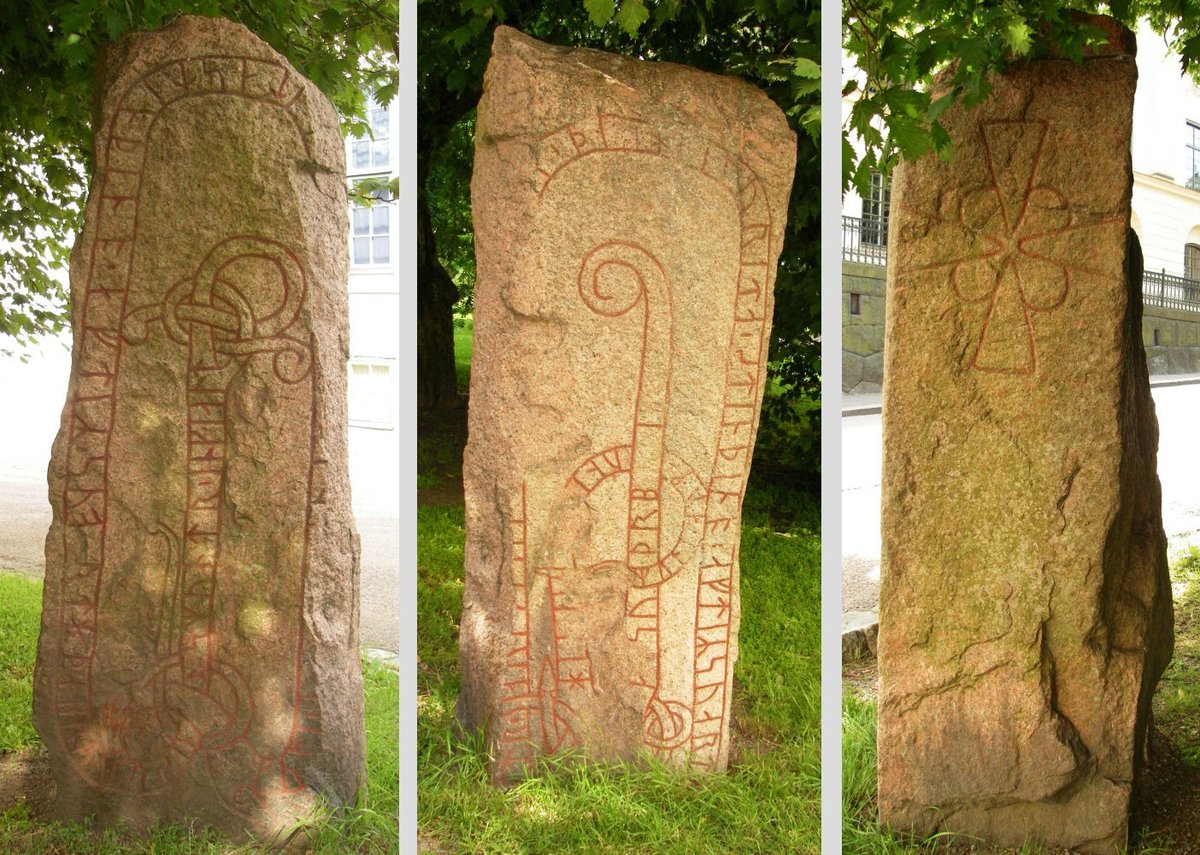

U 932, the Rundata designation for a Viking Age runestone, was created by the runemaster Åsmund. It was first depicted in 1643, then later built into the foundation wall of Uppsala Cathedral. This runestone is inscribed on three sides: two sides contain runes, and the third depicts a Christian cross. A large section of the runic inscription has been destroyed. It is classified as being in runestone style Pr3 or Pr4, also known as the Urnes style. The runestone, which was later found under the Uppsala Cathedral foundation wall, bears the place name Suðrbý, which refers to the modern hamlet of Söderby, located in Näs parish (or Danmark parish, if the earlier parish designation is referenced). However, little remains of this ancient village today.
Sources: Wikipedia, OpenStreetMap, Wikidata, Wikimedia Commons
Written by Nik Frost
Discuss this with the author and others
No comments yet. Be the first to start the conversation.