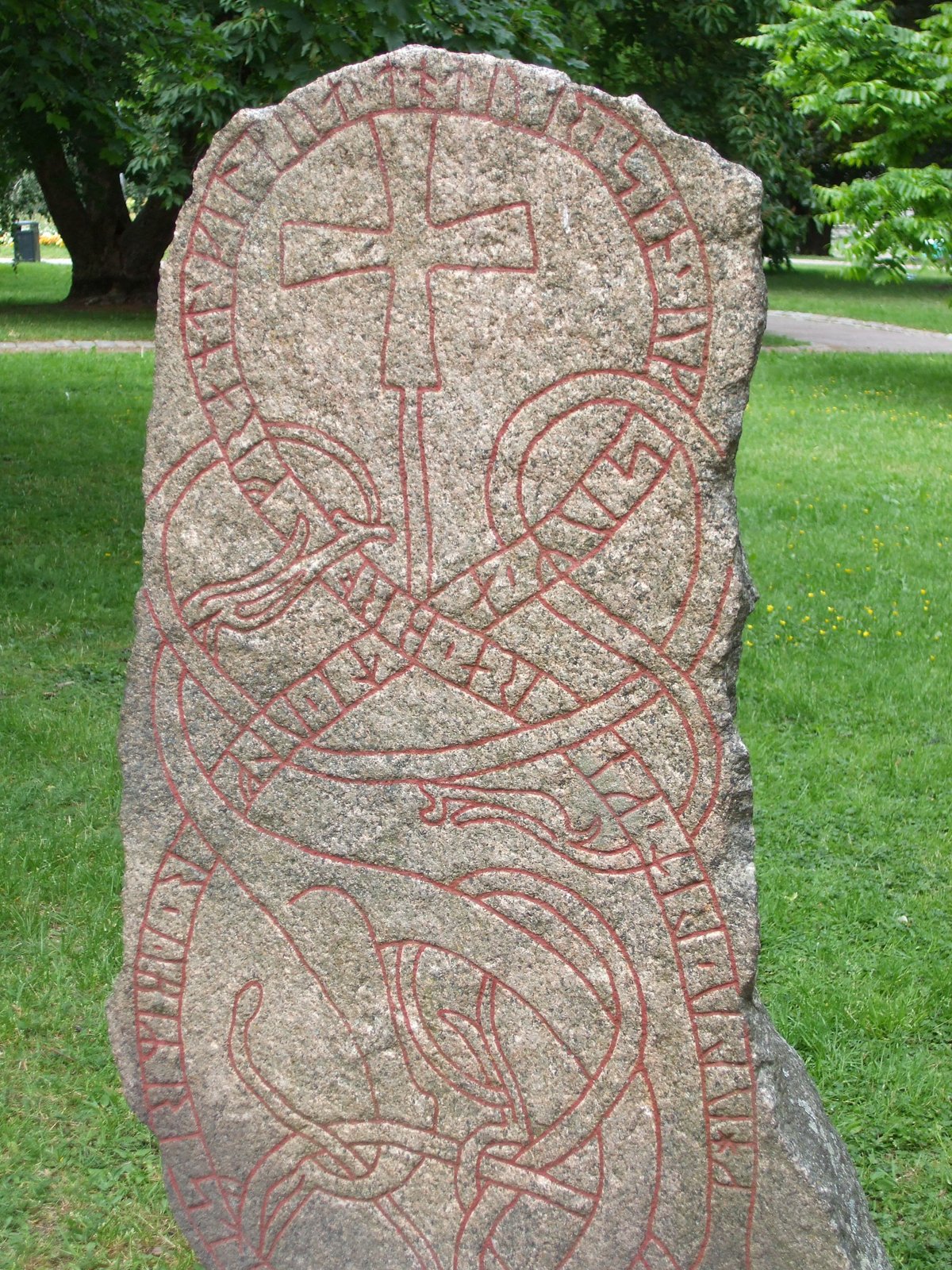

Uppland Runic Inscription 489 (U 489) is a historical treasure housing a Viking Age memorial inscribed on a stone slab located at the Universitetsparken (University Park), Uppsala, Sweden. This inscription is a tribute to a woman and is an exceptional testament to Viking Age culture, artistry, and social history. Although the husband of Gillaug, Ulfr, is not explicitly mentioned as a sponsor in the runic inscription, the tribute likely commemorates him as well.
The runestone was originally located in Morby, Uppland, Sweden, before being moved to the Exposition Universelle in Paris in 1867 and eventually re-located to its current position in Uppsala University Park. It showcases intricate carvings, including the image of a cross within a serpent band, a common element in runic stones during the 11th century when the stone was likely carved. The runestone is signed by the runemaster Öpir, who was active in the late 11th and early 12th centuries, and is classified as being carved in runestone style Pr4, also known as late Urnes style.
The animal heads are characterized by elongated forms, often seen in profile, with almond-shaped eyes and distinct patterns. Uppland Runic Inscription 489 is a unique relic that offers a glimpse into the past, and it remains easily accessible for visitors to explore and appreciate.
Sources: Wikipedia, OpenStreetMap, Wikidata, Wikimedia Commons
Written by Nik Frost
Discuss this with the author and others
No comments yet. Be the first to start the conversation.