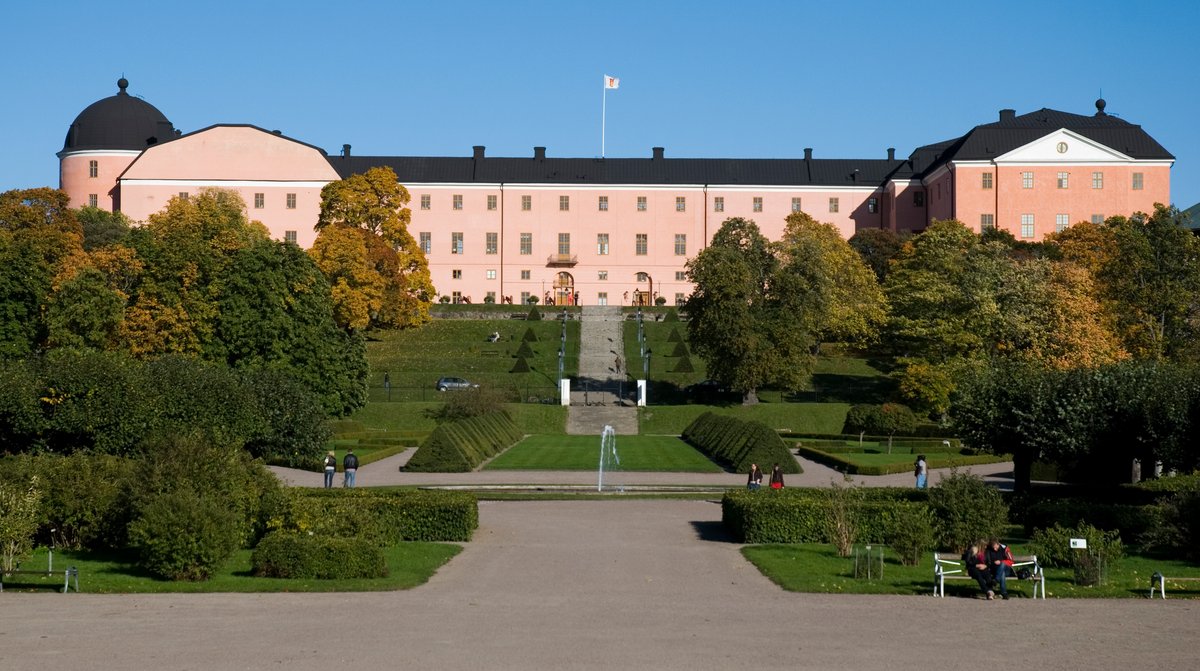

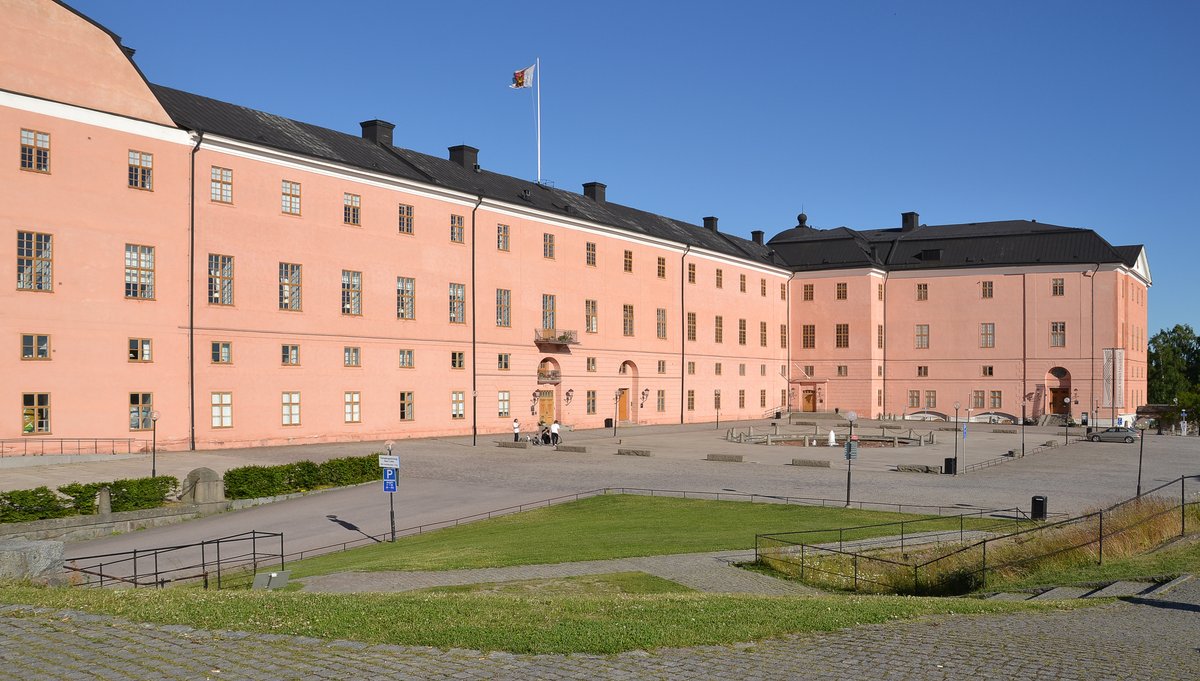
Construction on Uppsala Castle began in 1549 under Gustav I Vasa. It was designed as a defensive fortress atop the Kasåsen esker. The complex included royal apartments in the south-west corner and two large bastions on the western side. One of these, the Styrbiskop battery, was permanently trained on Uppsala Cathedral due to the hostility between the king and the church authorities at the start of his reign.
As Sweden became a major power, the castle underwent significant changes. King John III sought to transform the fortress into a representative Renaissance castle. However, a fire in 1572 heavily damaged the original royal apartments and the representative addition. Architect Franciscus Pahr planned a new south wing with royal apartments and a hall of state, while a later architect planned for a large north wing with towers to create a U-shaped castle.
Time and fire continued to leave their marks. In 1702, a massive fire swept through the city and destroyed much of the castle, damaging the south wing severely. Some stone from the damaged castle was taken to Stockholm to help rebuild the royal palace there. Reconstruction began between 1743 and 1762. Today, the structure is the official residence of the governor of Uppsala County and houses various museums.
Sources: Wikipedia, OpenStreetMap, Wikidata, Wikimedia Commons
Written by Nik Frost
Discuss this with the author and others
No comments yet. Be the first to start the conversation.