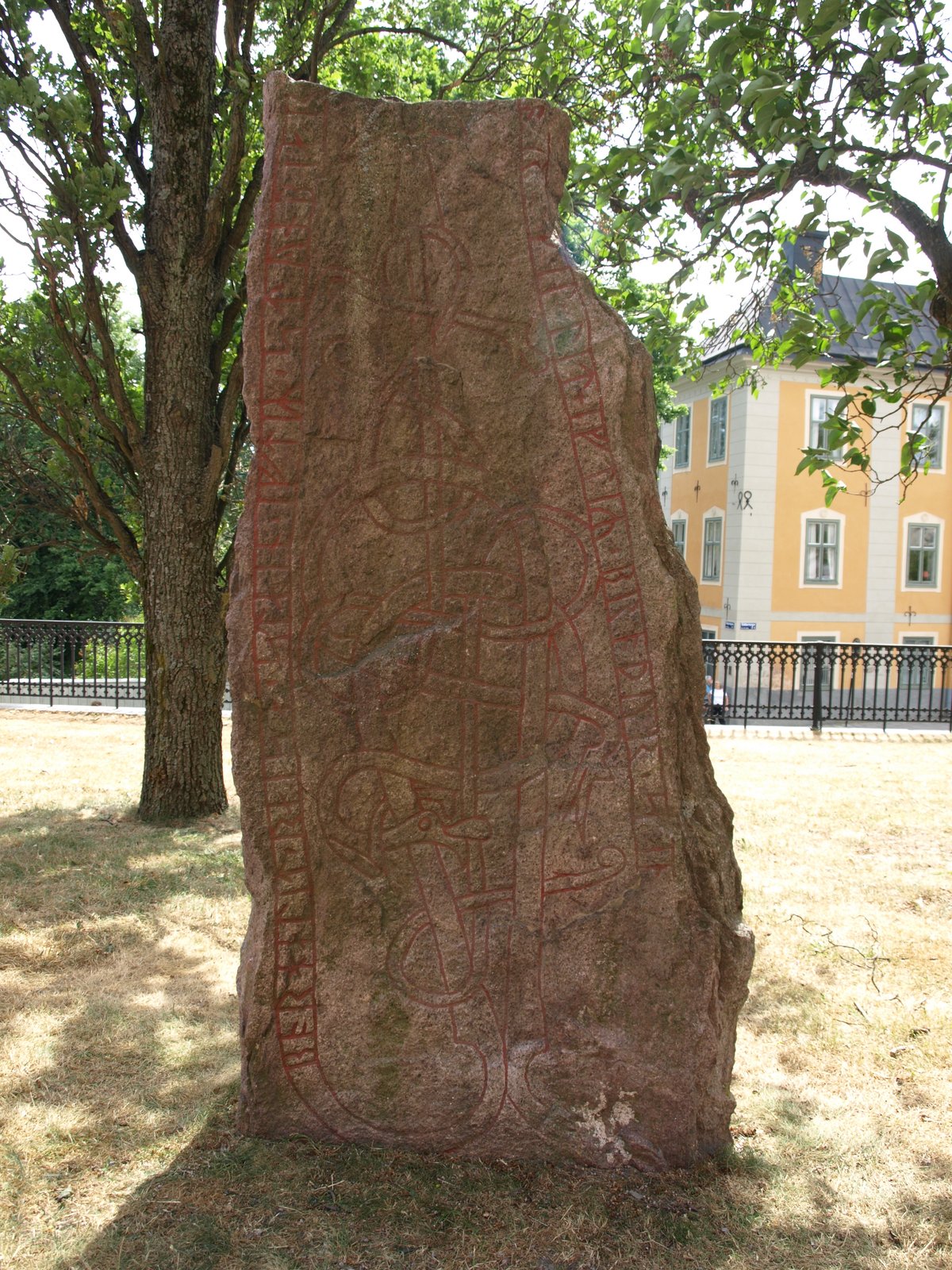

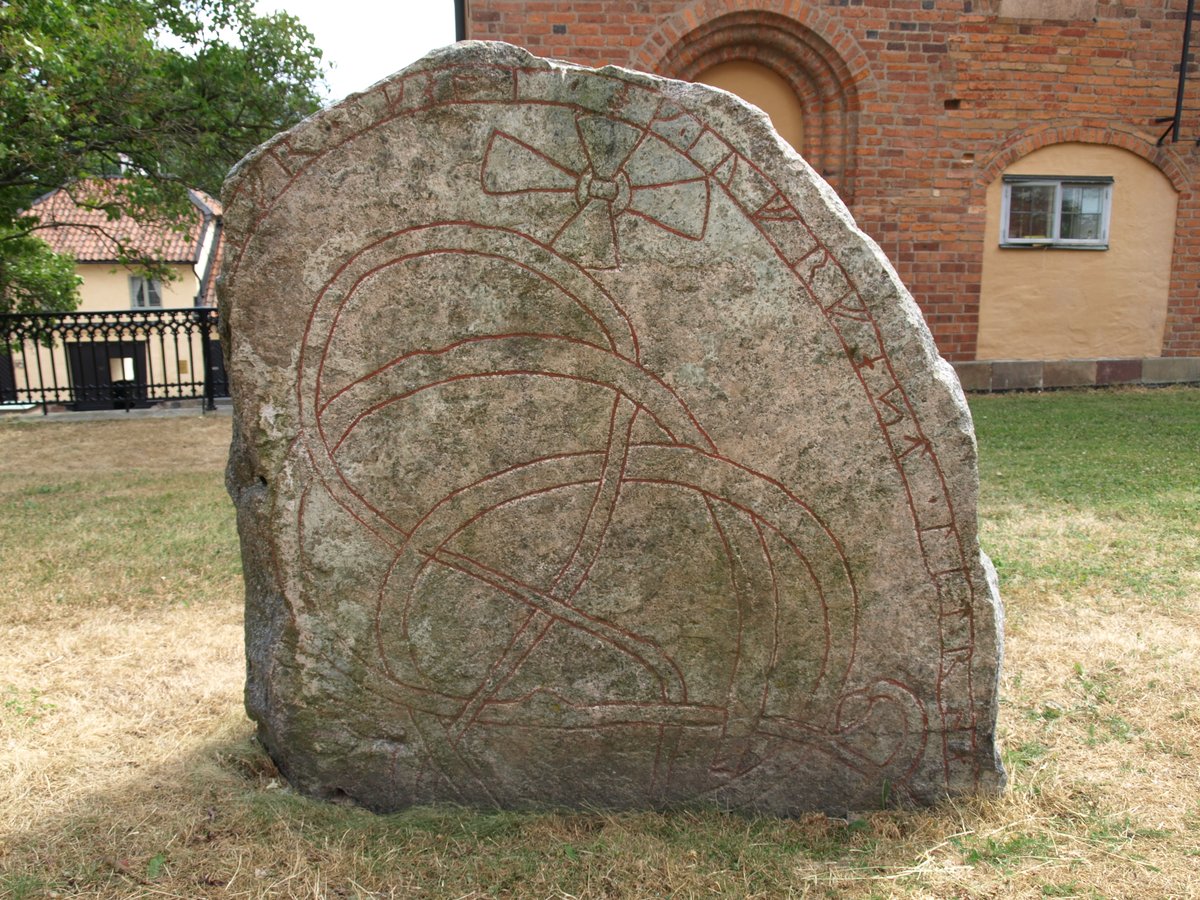
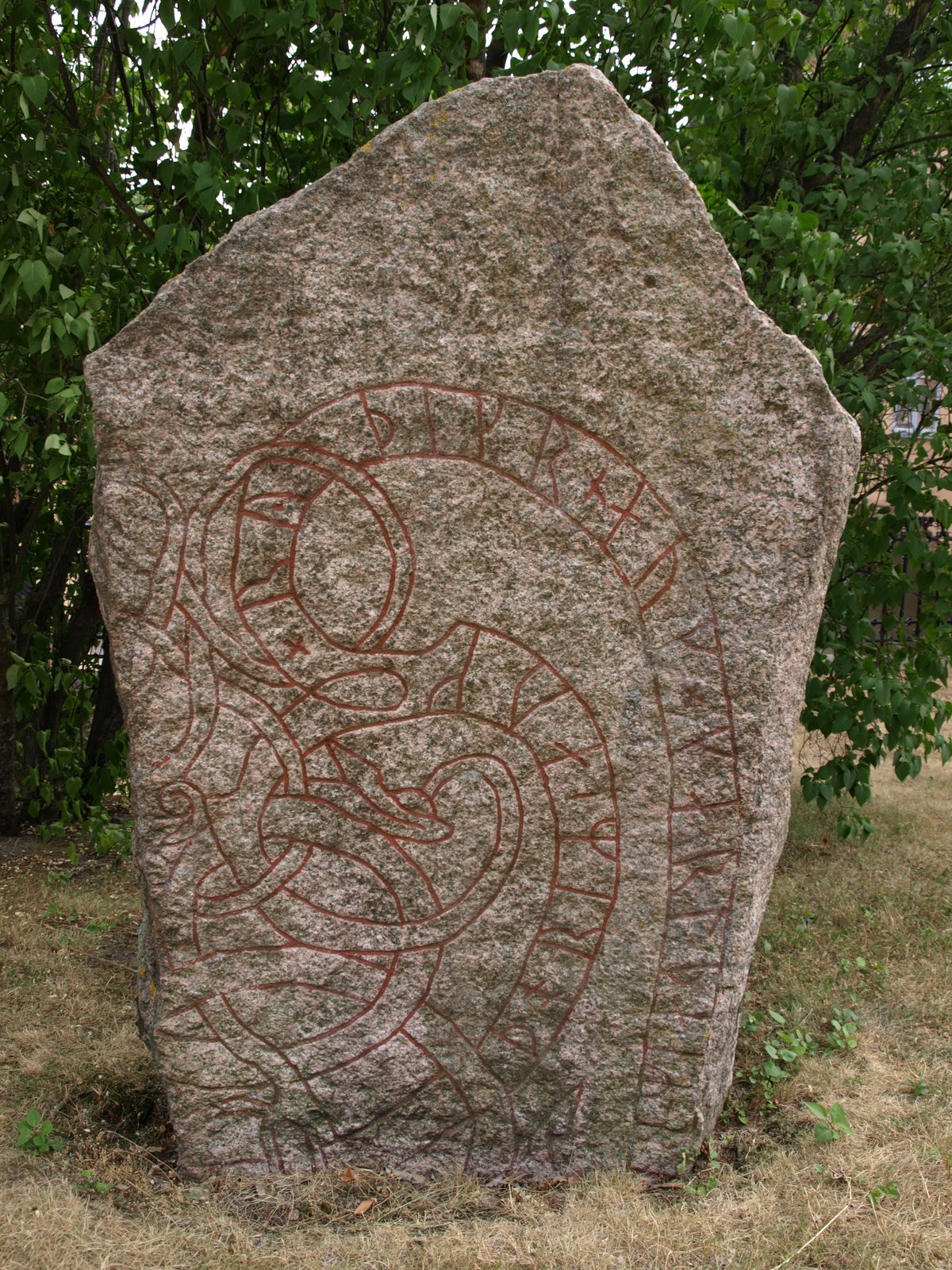
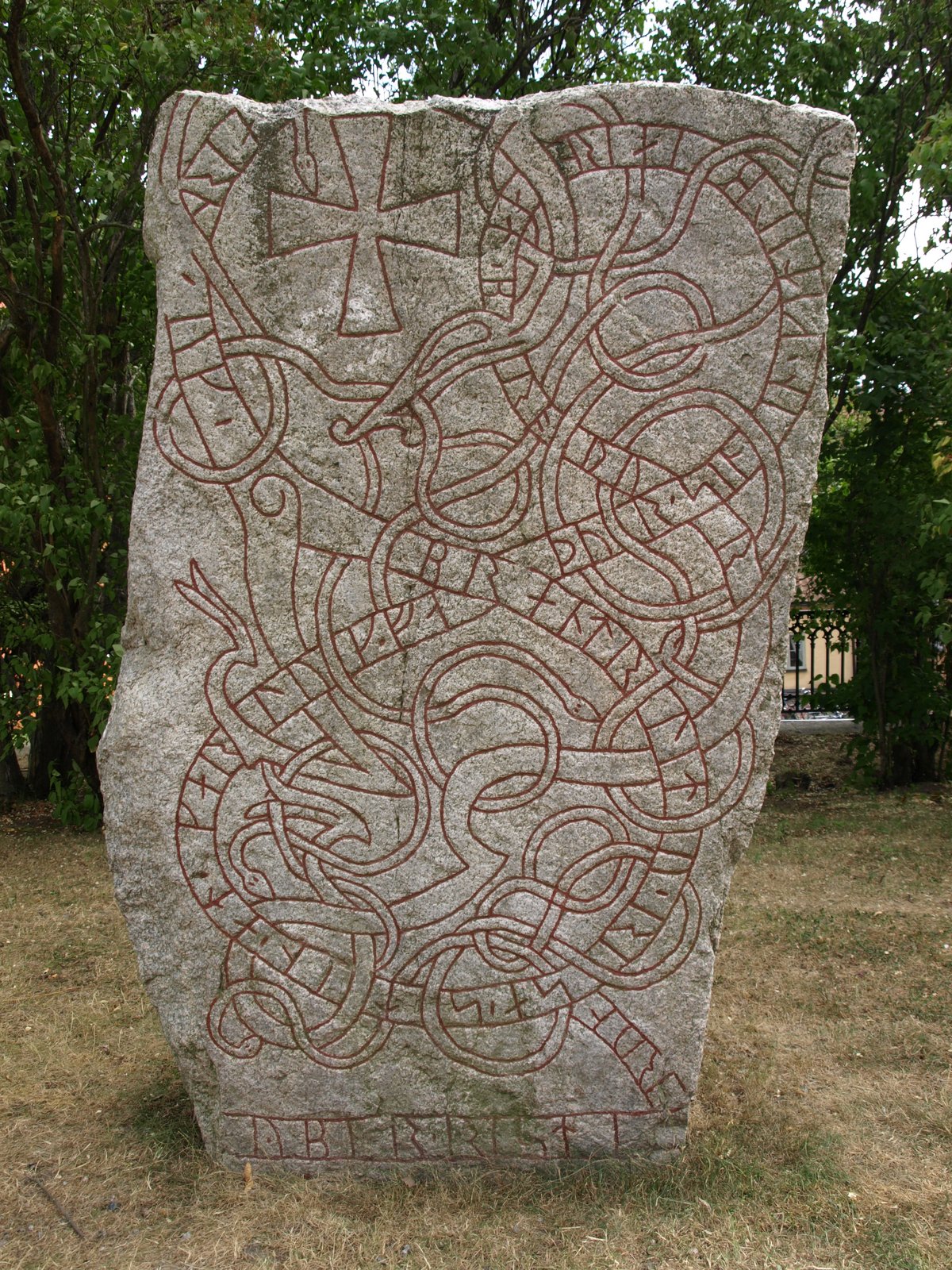
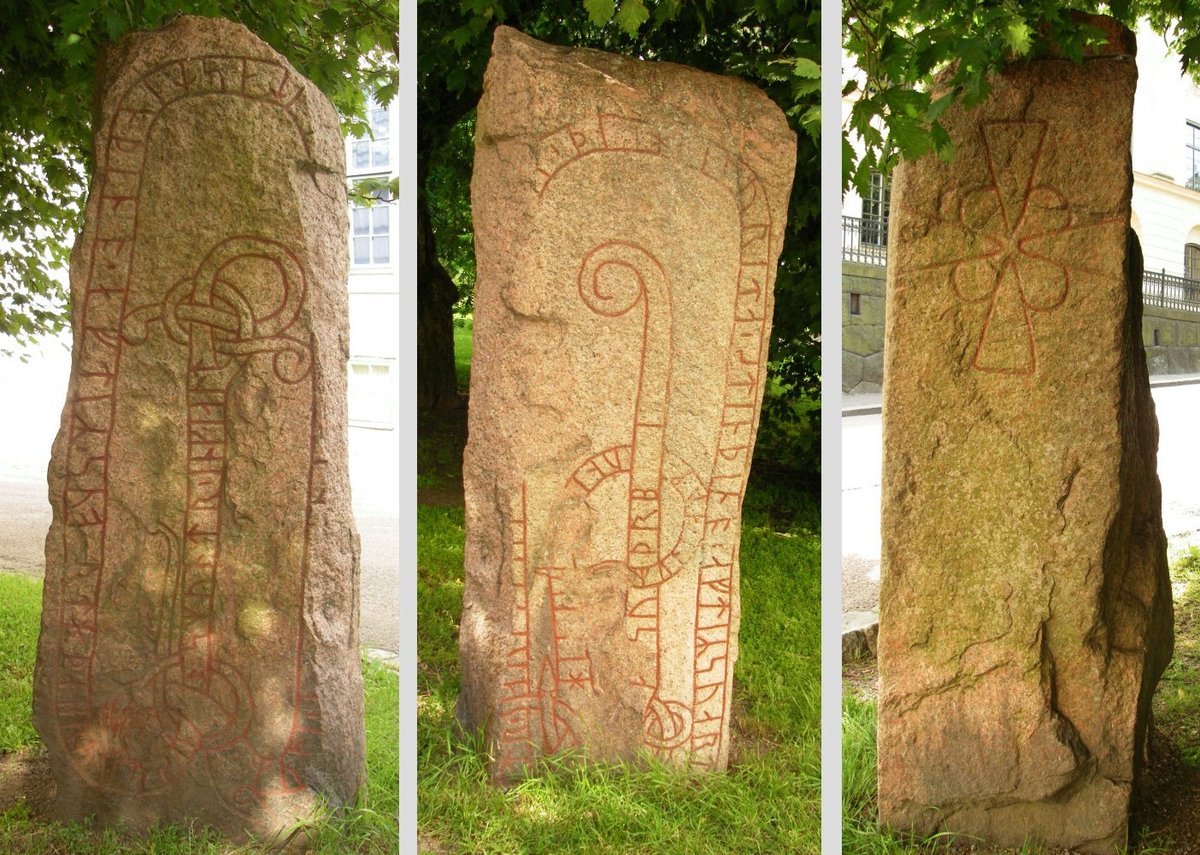
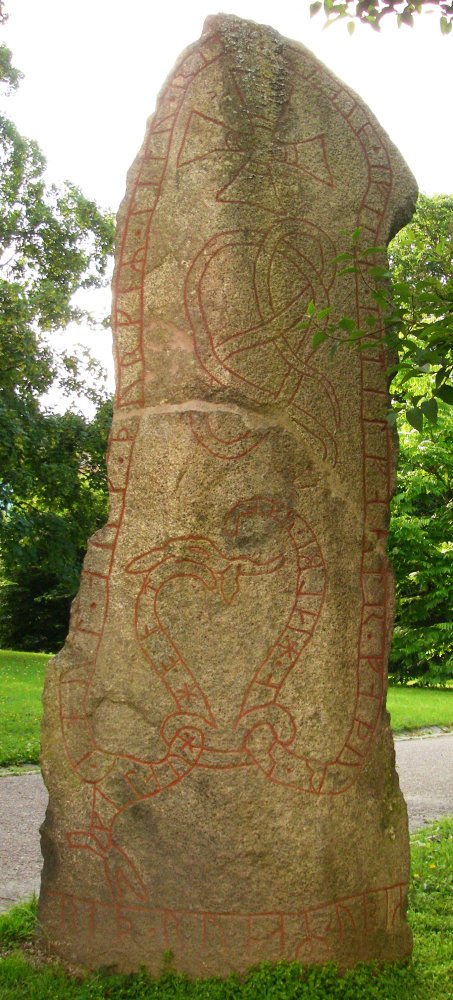
Look closely at this nearly two metre tall granite carving. It displays the intricate Pr5 style, commonly known as Urnes. The surface is dominated by slender animals that weave into complex patterns. You can see the profile of the animal heads clearly, featuring long almond eyes and curled noses.
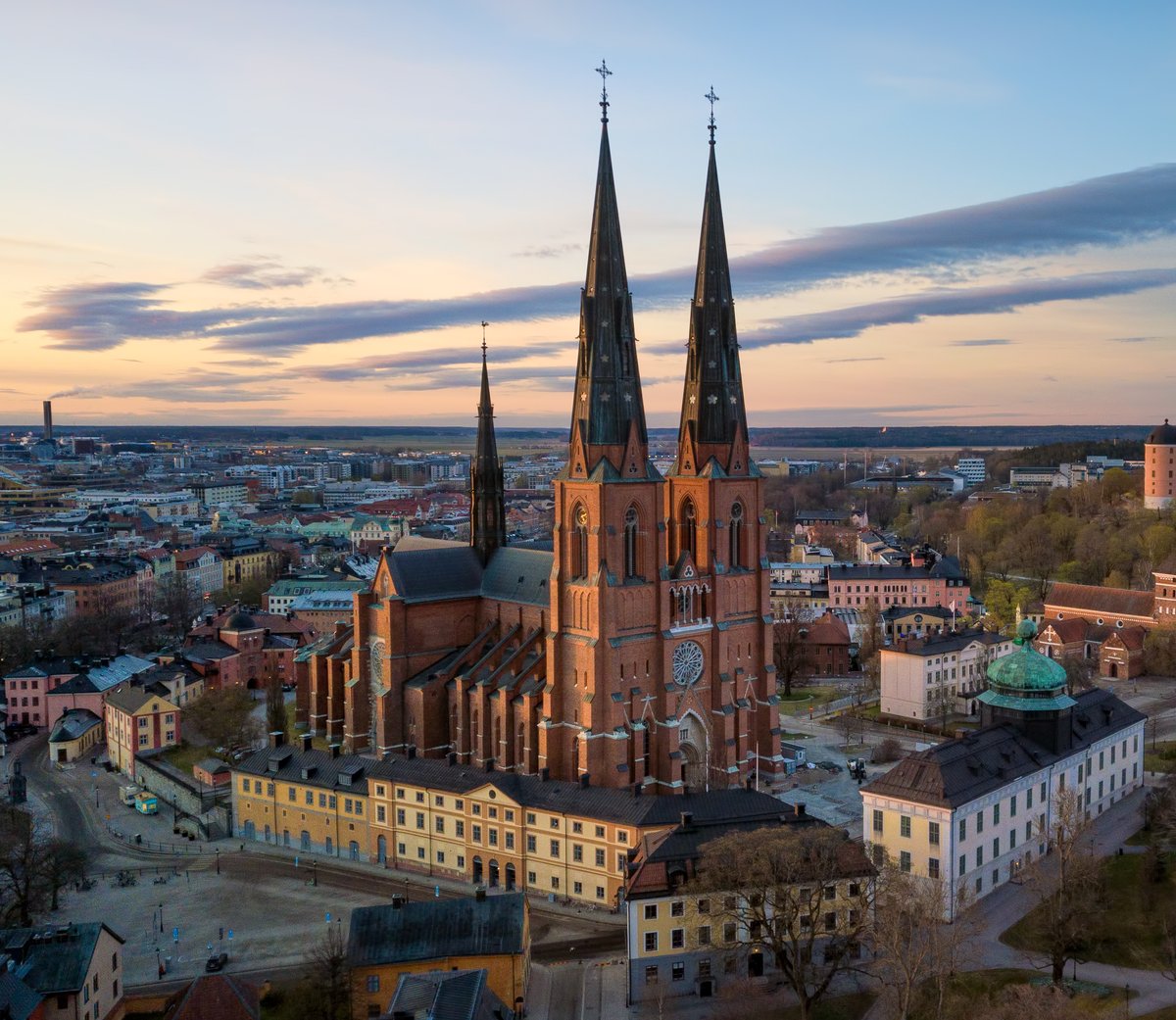
In 1866, laborers unearthed the memorial inside the foundation walls of the Uppsala Cathedral. Before their historical importance was understood, many runestones like this one were used in the construction of buildings, roads, and bridges.
The stone reveals a shared grief where Borga commissioned the stone for Stynbjǫrn, while Þorkell did the same for his brother. This runestone, attributed to the runemaster Öpir, consists of runic text in the younger futhark carved on an intertwined serpent.
You are welcome to observe this runestone today. It remains part of the collection at the Uppsala Cathedral for anyone who wishes to explore its history.
Sources: Wikipedia, OpenStreetMap, Wikidata, Wikimedia Commons
Written by Nik Frost
Discuss this with the author and others
No comments yet. Be the first to start the conversation.