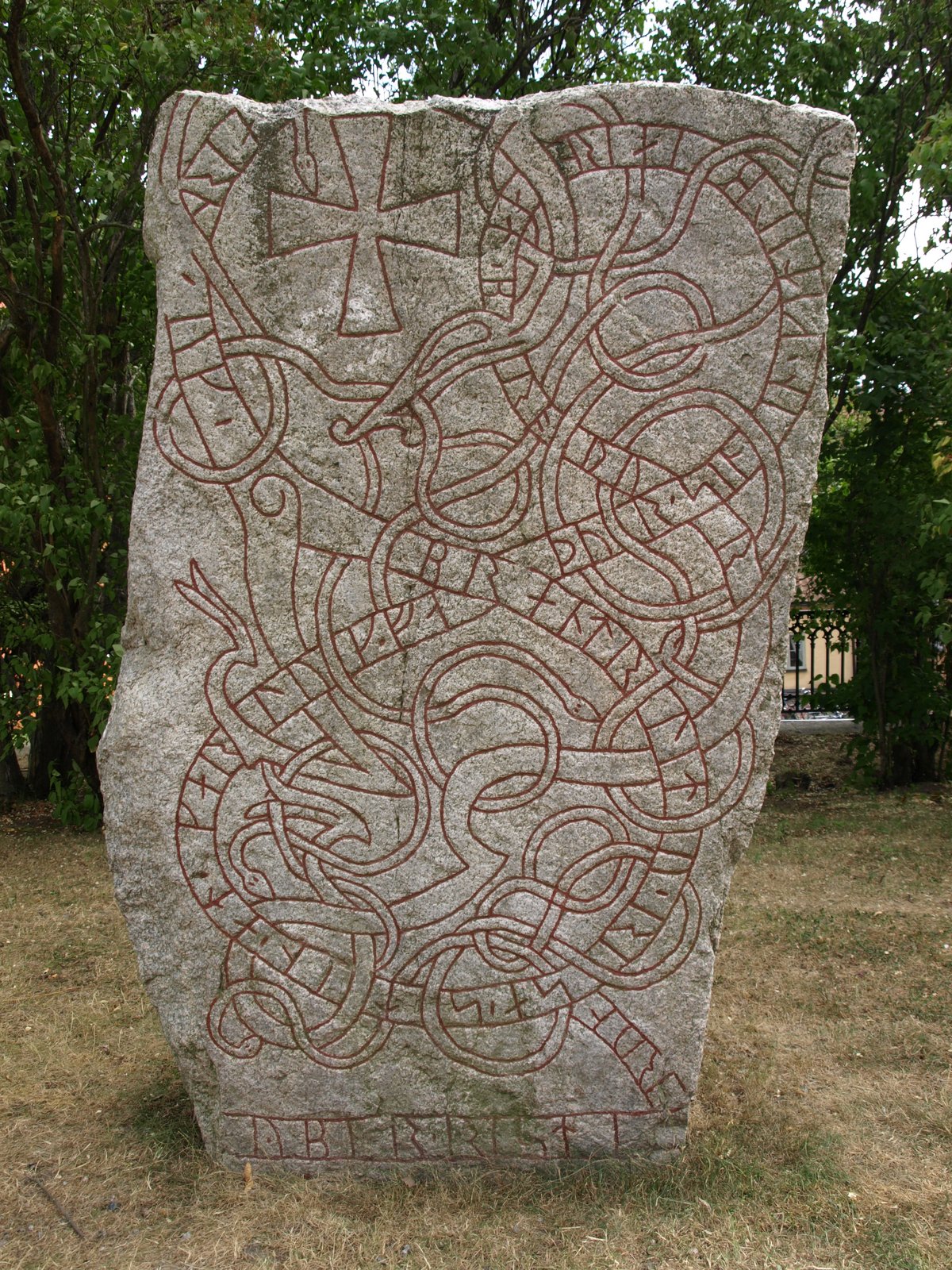

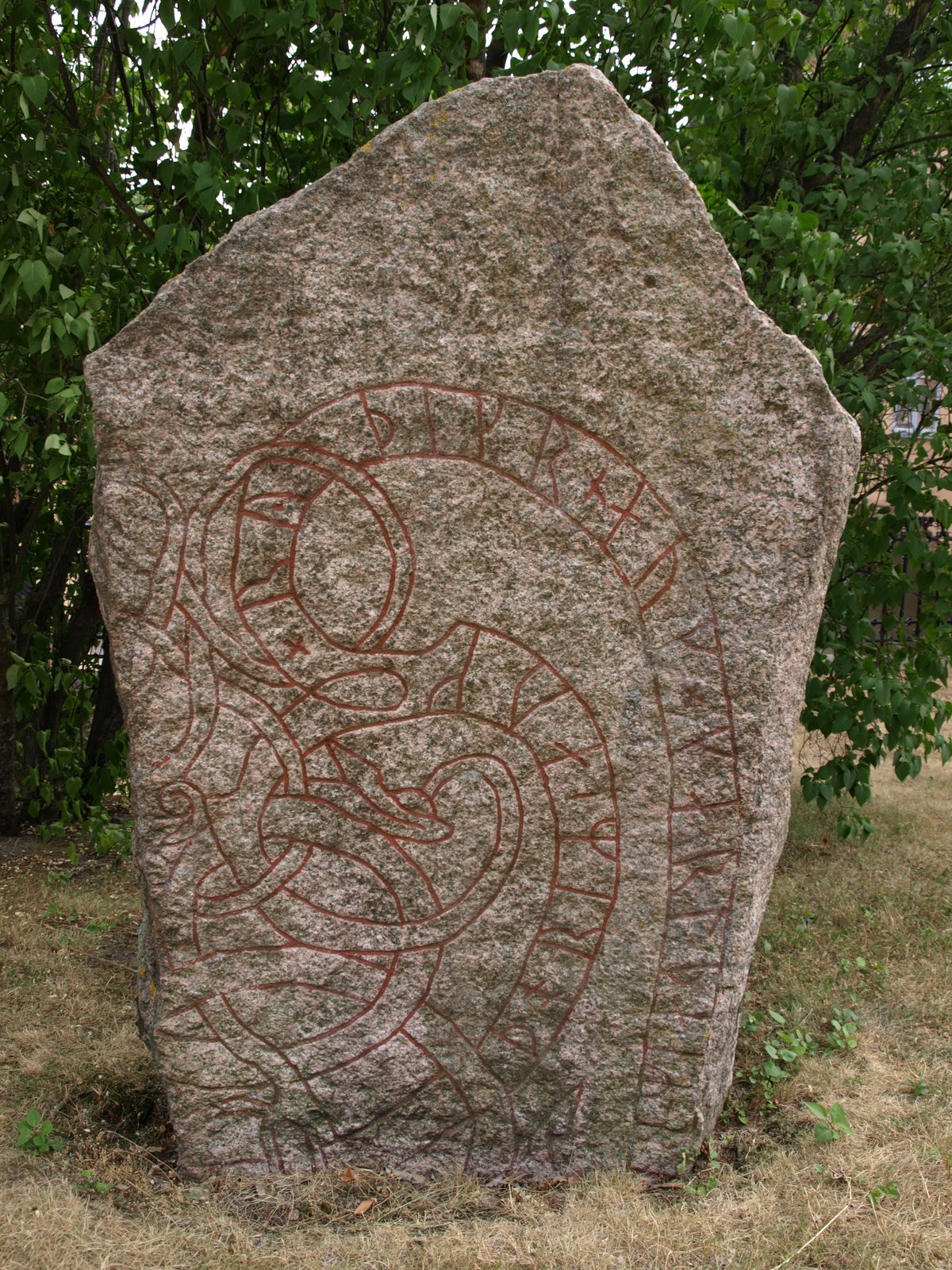
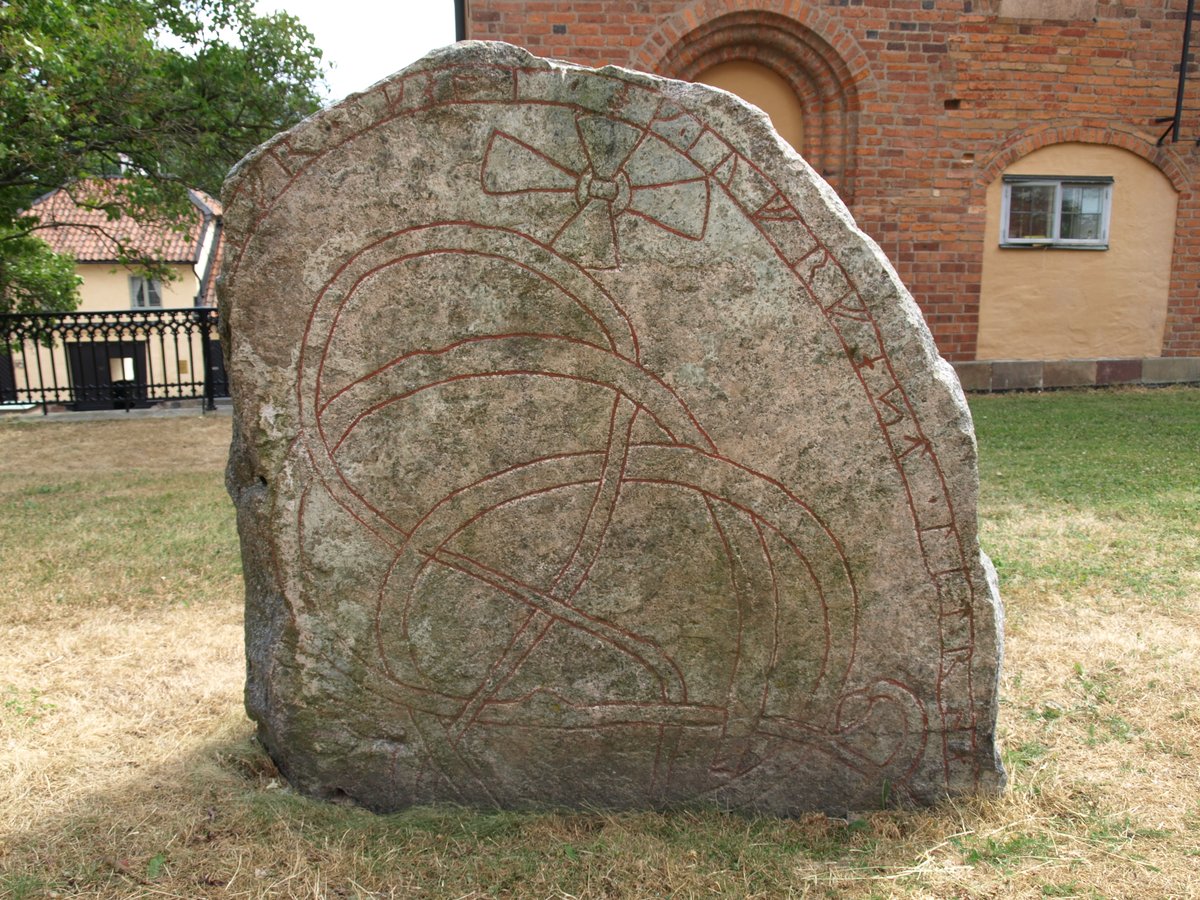
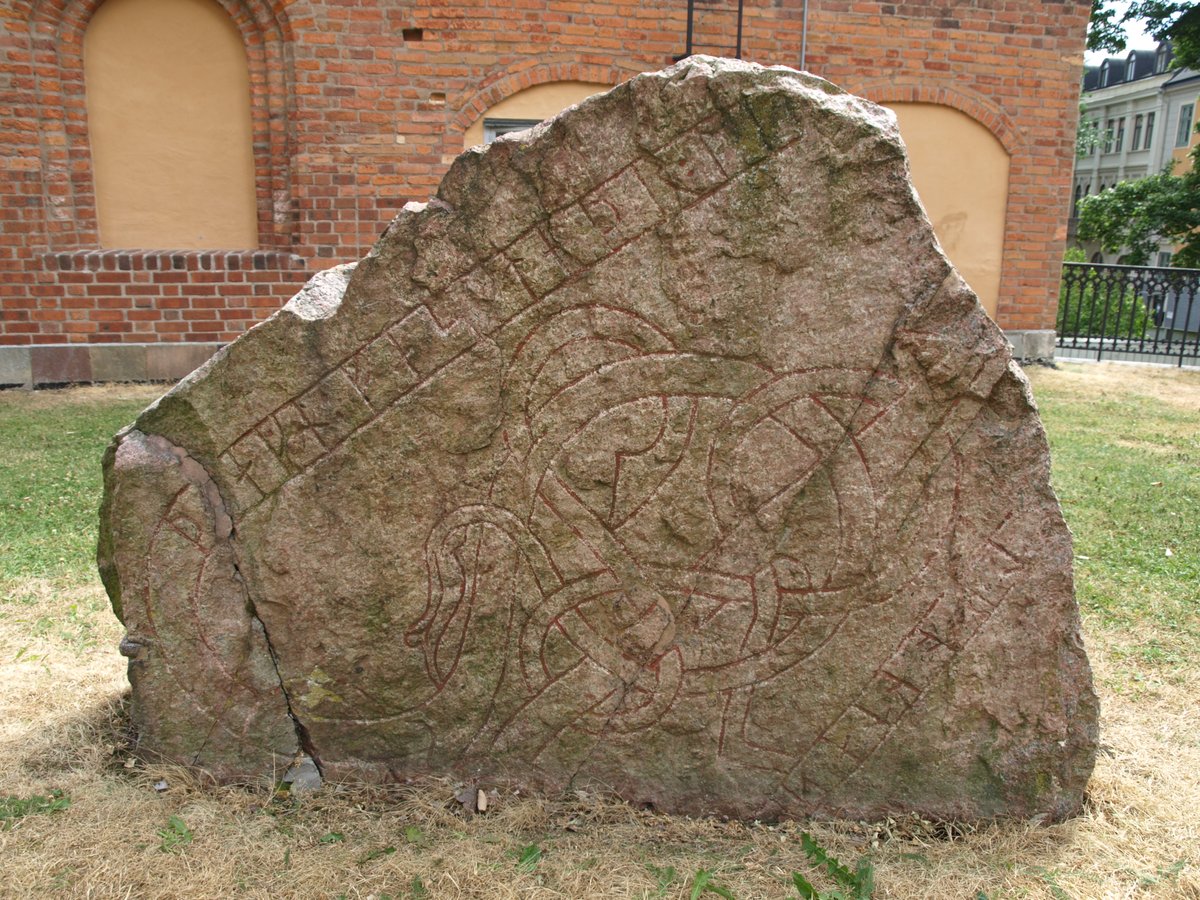
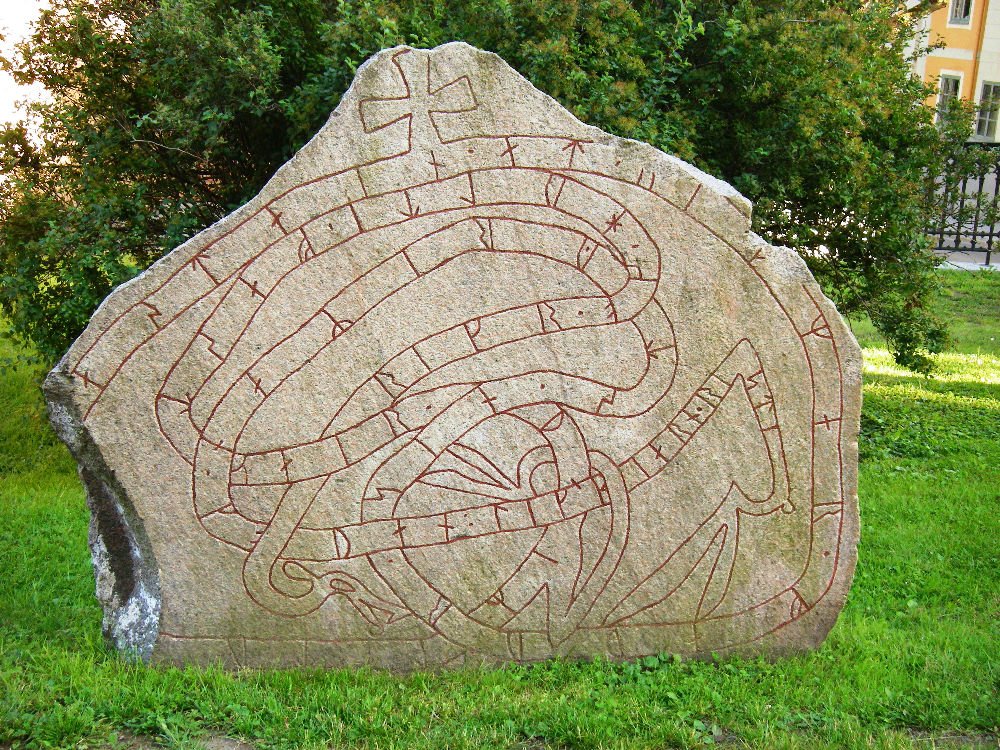
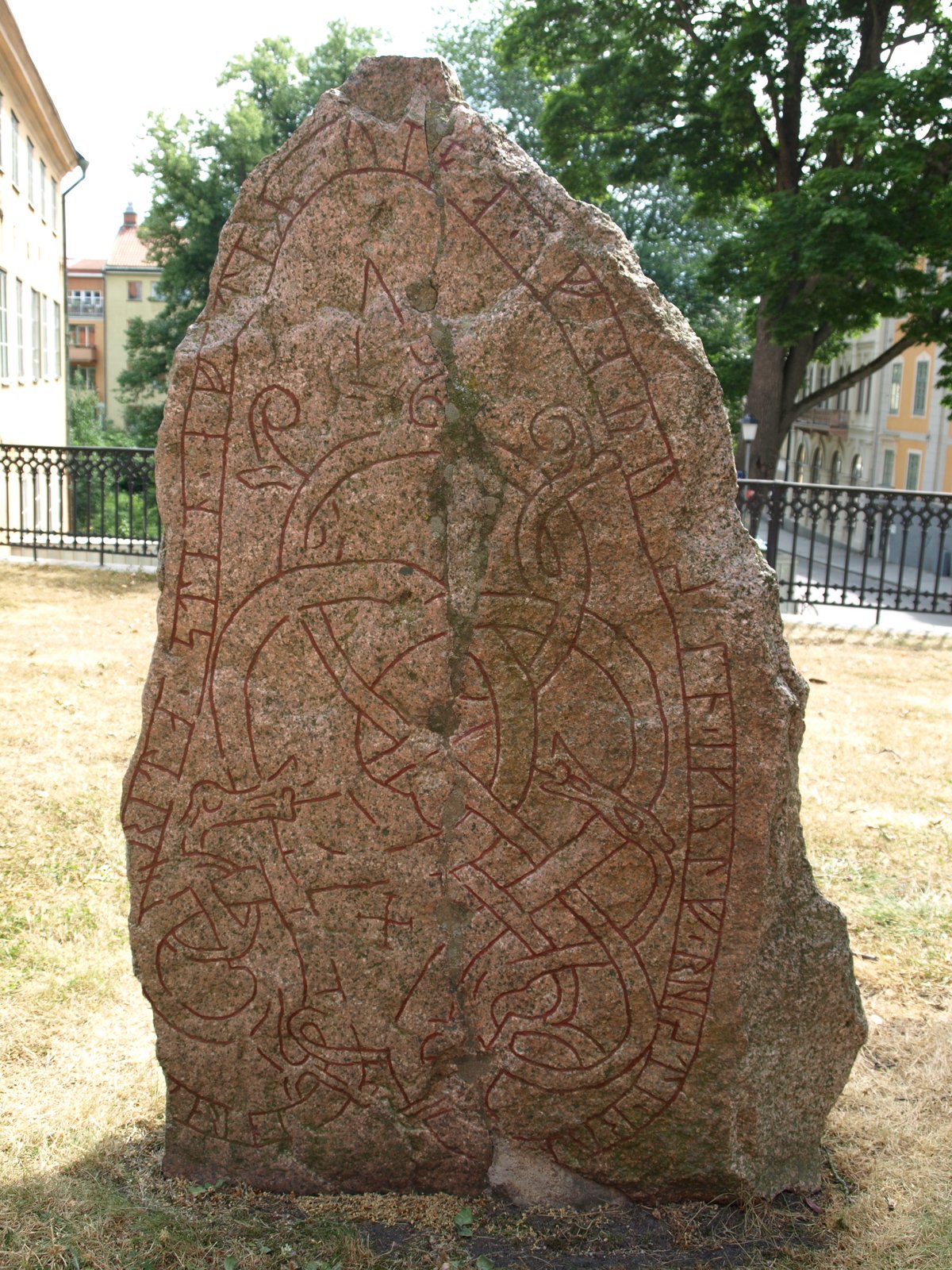
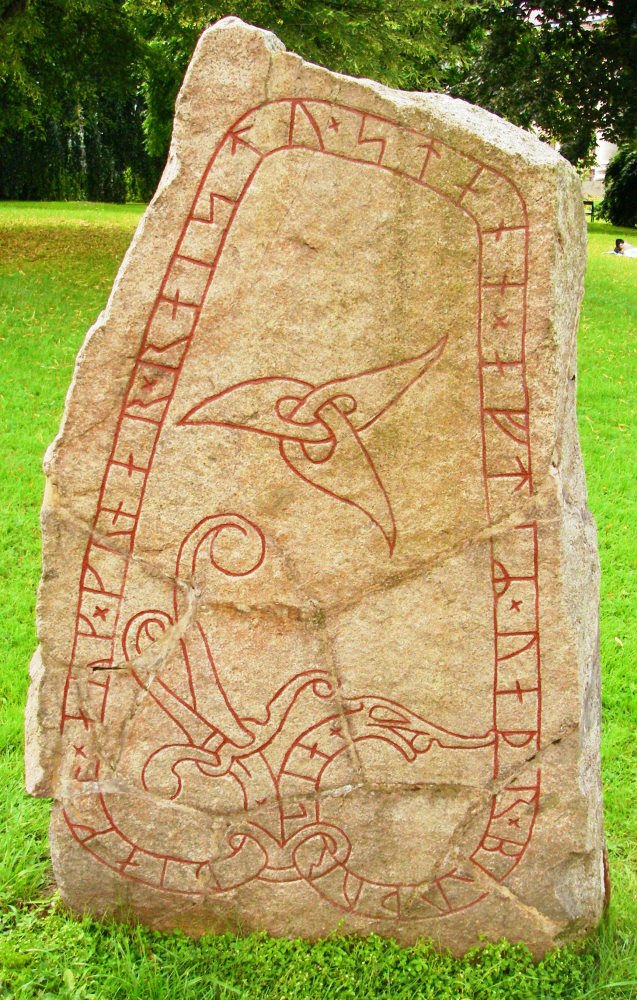
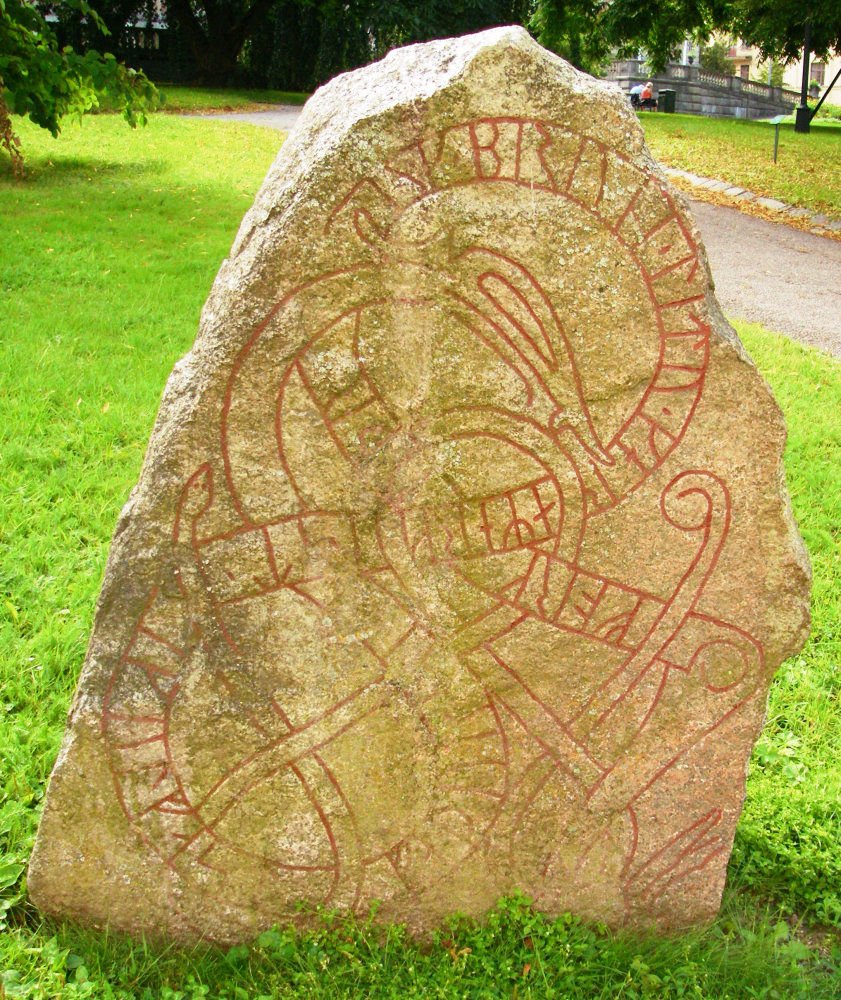
A slender, serpentine beast winds around a Christian cross to create a dense web of motion across the rock. This artifact exemplifies the Urnes style, an artistic tradition characterized by slim and stylized animals that are interwoven into tight patterns with curled noses and almond-shaped eyes.
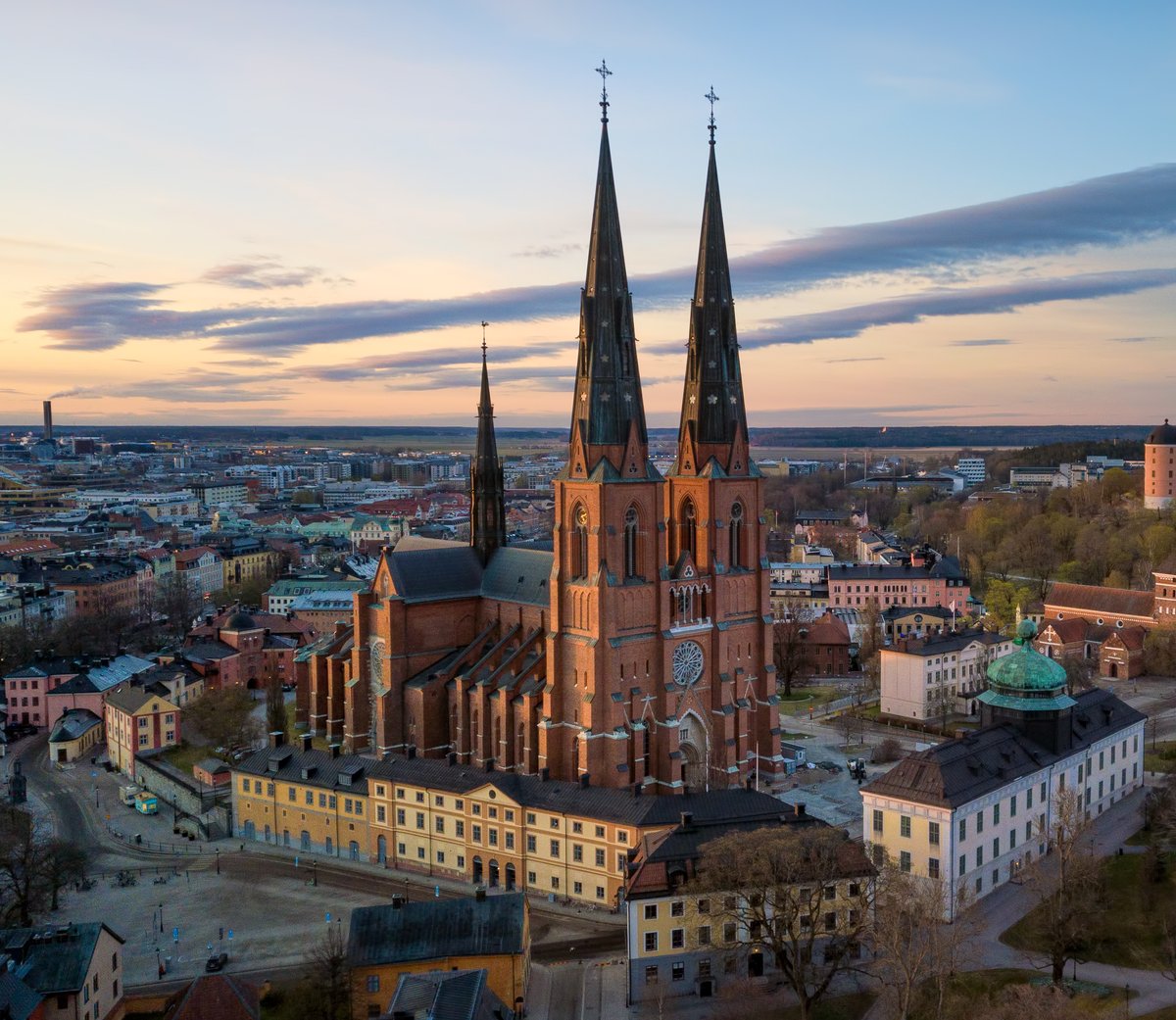
This stone was used as building material for the southern buttress of the Vasa burial chapel until 1975, when renovation efforts at Uppsala Cathedral revealed its presence. It was discovered as part of the building material for the chapel during the renovations.
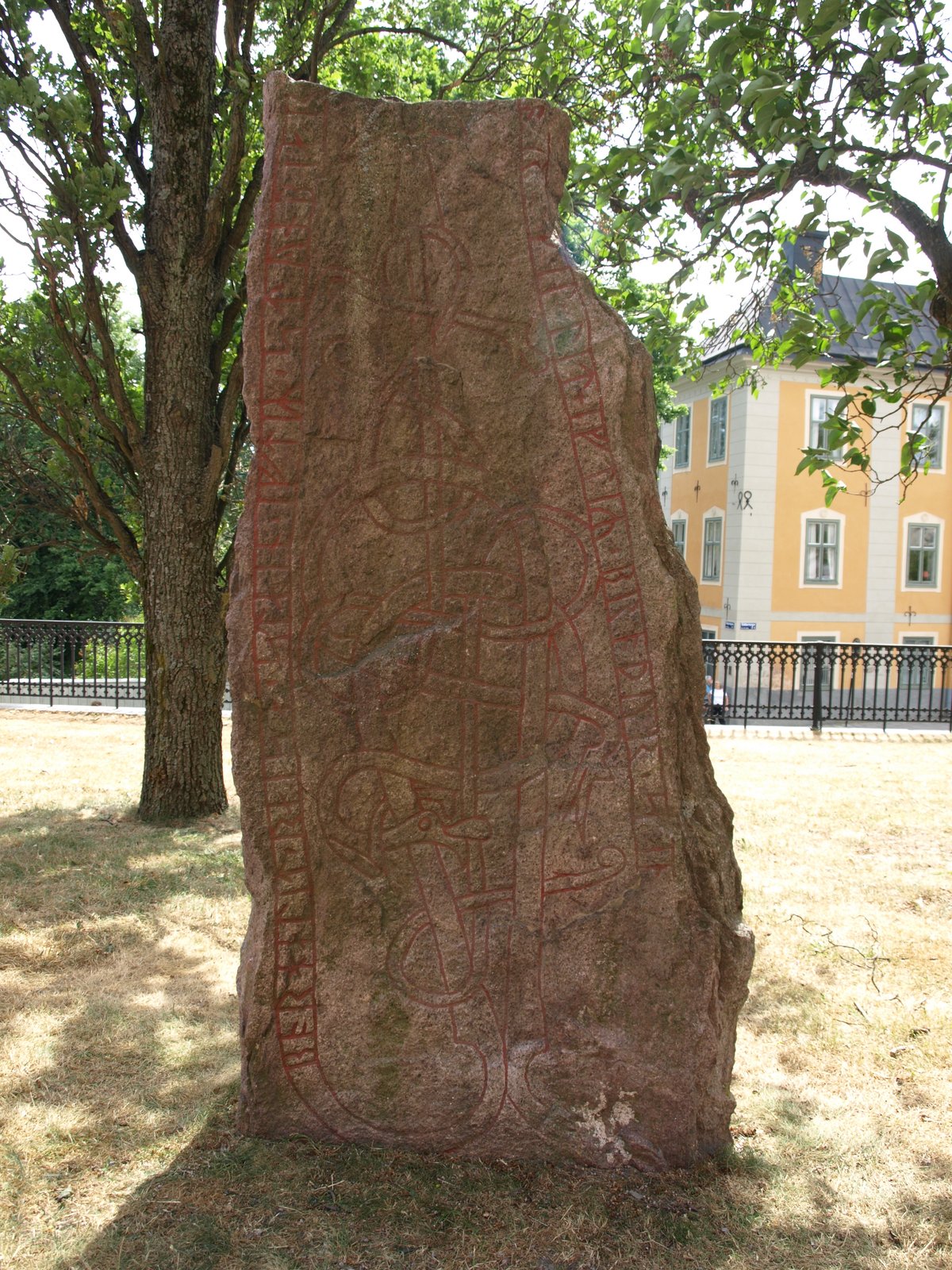
The runes state that Bjǫrn and Brandr had the stone raised in memory of Karlungr, their father, and Ketilbjǫrn in memory of his brother. Ketilbjǫrn's name means "Kettle Bear" and Karlungr means "Young Man." The runes were carved by the runemaster Öpir, who was active in the Uppland region during the late eleventh or early twelfth centuries.
Visitors can examine this inscription today within the Uppsala Cathedral. It is classified as runestone style Pr4, and the signature of the runemaster Öpir is located at the bottom of the inscription in a horizontal text band.
Sources: Wikipedia, OpenStreetMap, Wikidata, Wikimedia Commons
Written by Nik Frost
Discuss this with the author and others
No comments yet. Be the first to start the conversation.