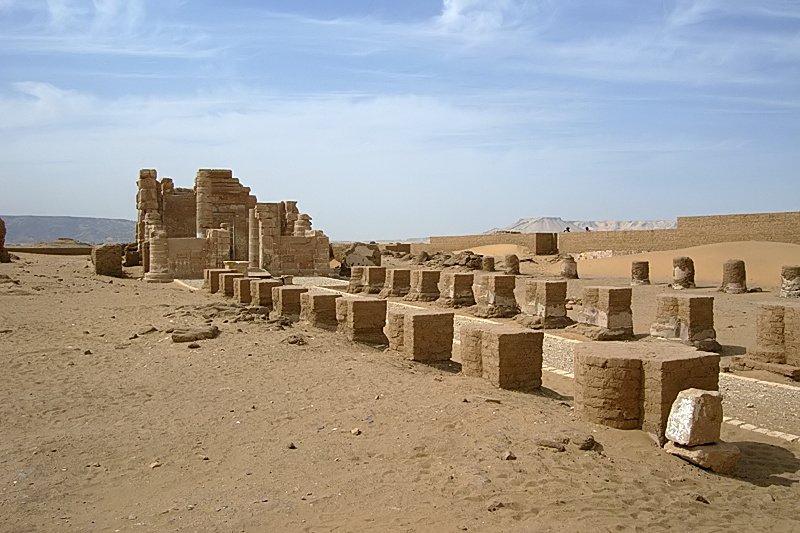

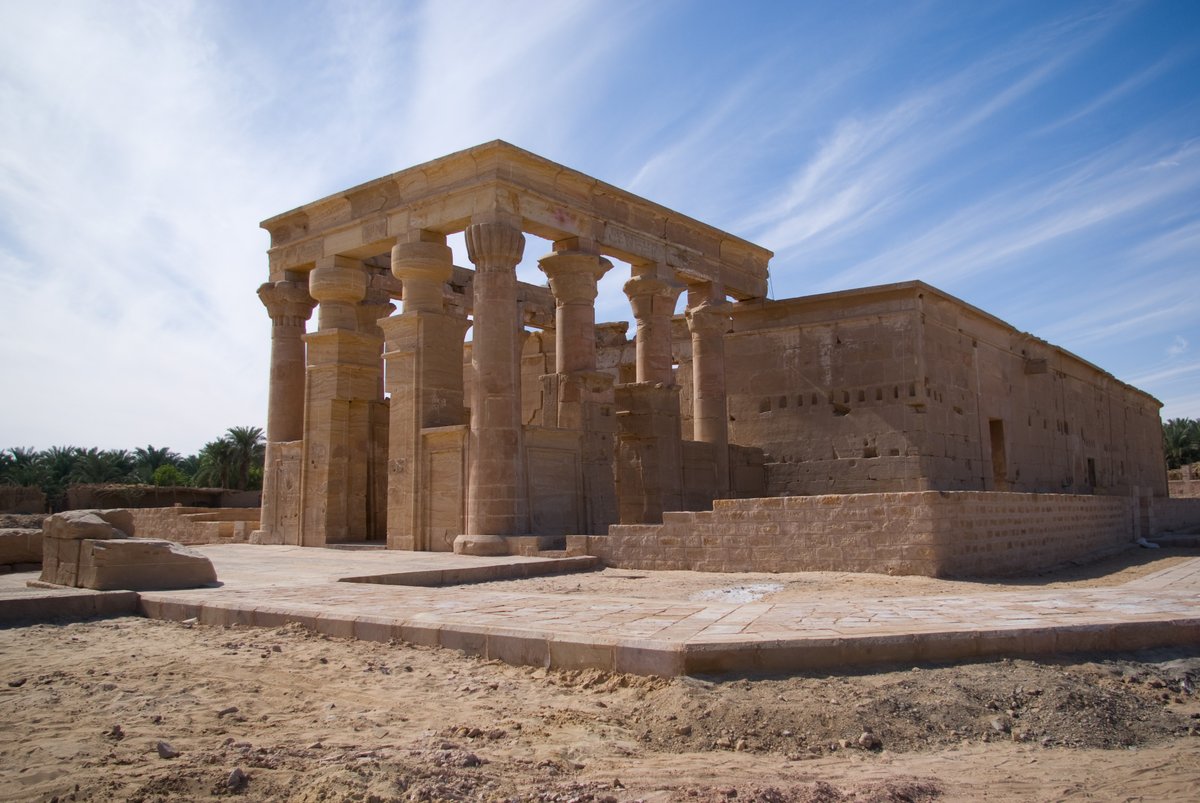
The sandstone temple of Deir el-Hagar was built during the reign of Nero (54-68 AD) and was decorated by subsequent emperors. Vespasian (69-79 AD) added decorations to the courtyard, Titus (79-81 AD) added the portico, and Domitian (81-96 AD) decorated some entrances and the archaeological gate. The temple contains cartouches of the four emperors, and other Roman rulers contributed to its decoration, with the last inscription dating back to the third century AD.
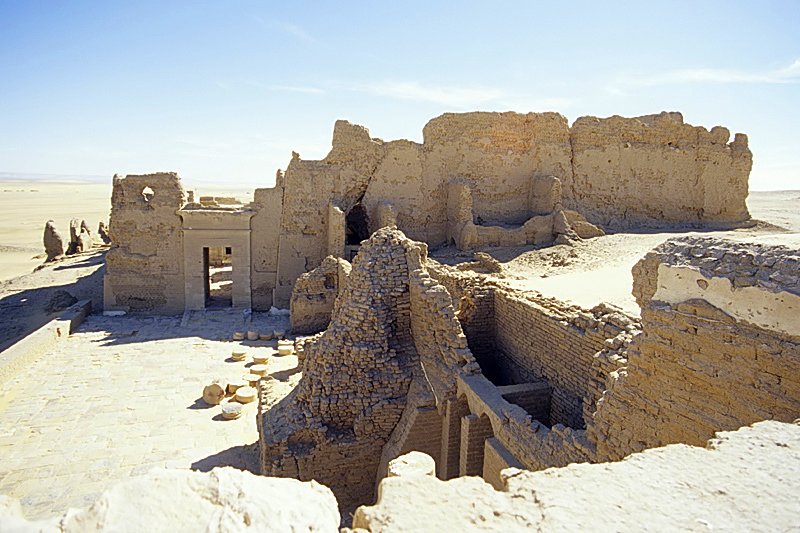
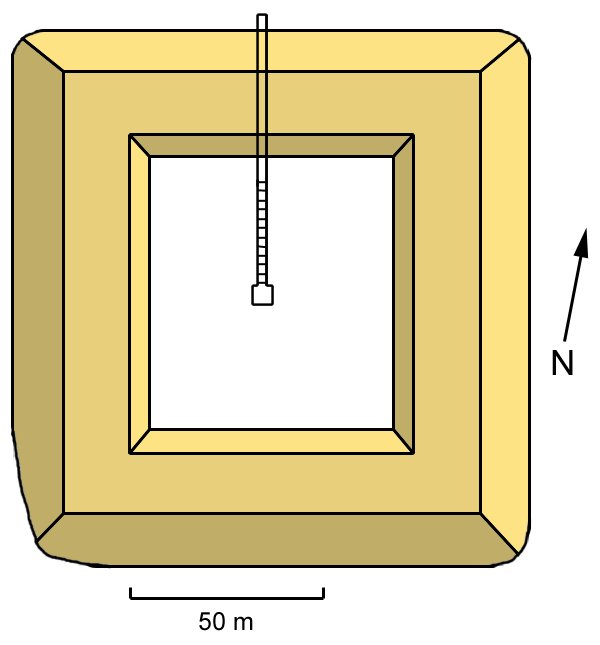
The temple is dedicated to the Theban triad of Amun-Ra, Mut, and Khonsu, along with Seth, the main deity of the region. It was intended to encourage farmers to settle in the area, alongside irrigation works and Roman villages built of mud-brick. The complex is surrounded by a well-preserved mud-brick fence measuring 40x80 meters, where traces of painted plaster can still be seen. Although small in size, measuring 7.3x16.2 meters, it is one of the most complete Roman structures in the area.
John Gardner Wilkinson placed a plan for the temple complex in 1825. The main gate is located on the eastern side of the enclosure wall, with another gate to the south. Early travelers in the 19th century left numerous inscriptions in Greek on the courtyard walls, with many carving their names into the columns and walls of the portico. These inscriptions indicate the high level of sand at that time, as the sand was eventually cleared in 1874.
Sources: Wikipedia, OpenStreetMap, Wikidata, Wikimedia Commons
Written by Friendly Jane
Discuss this with the author and others
No comments yet. Be the first to start the conversation.