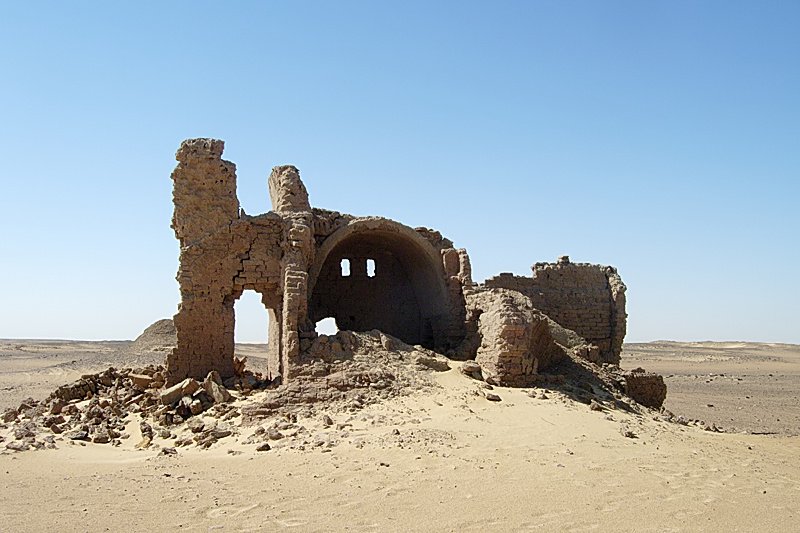

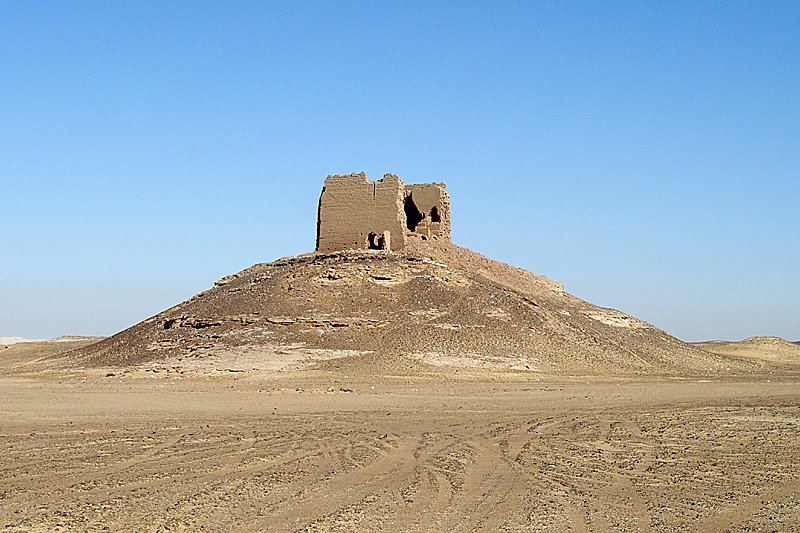
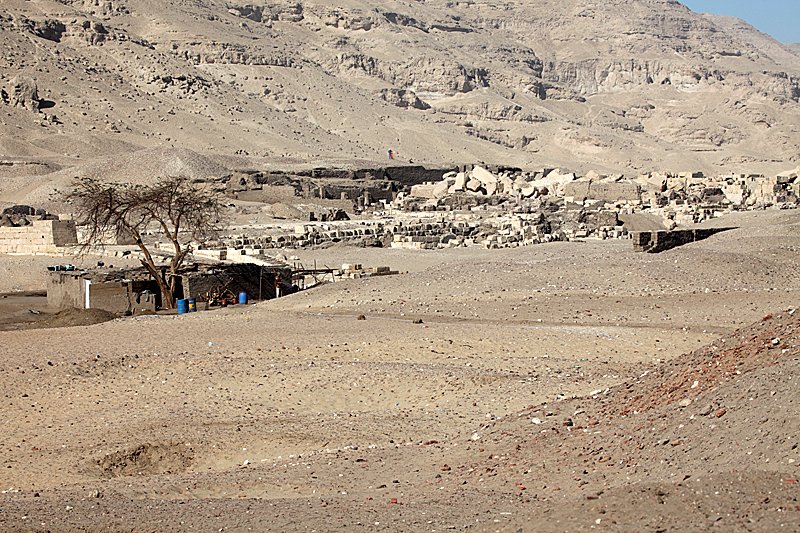
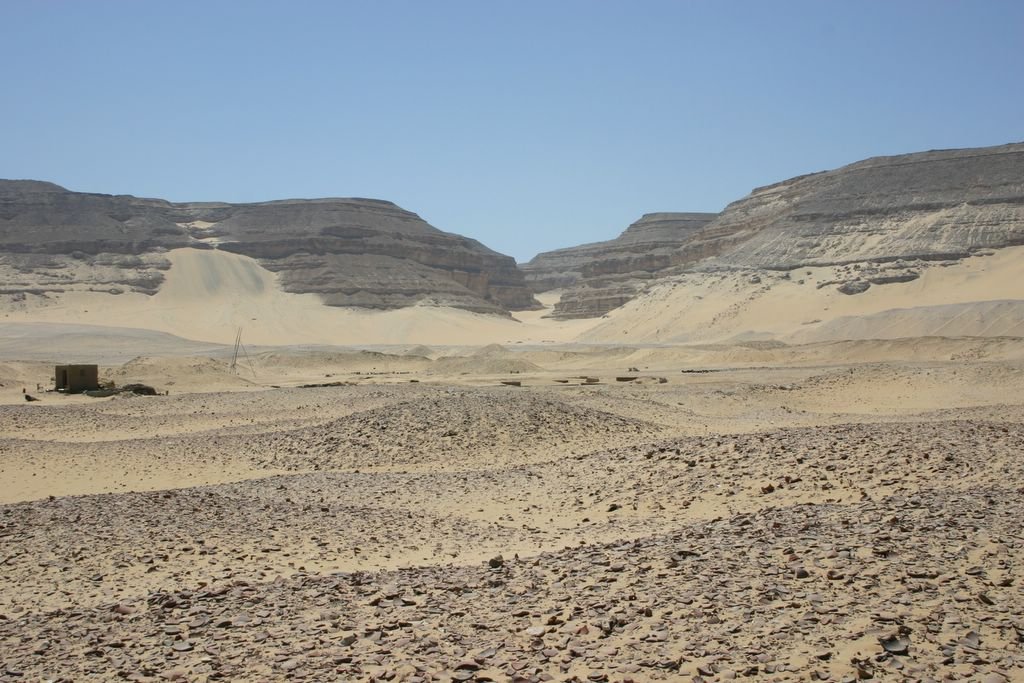
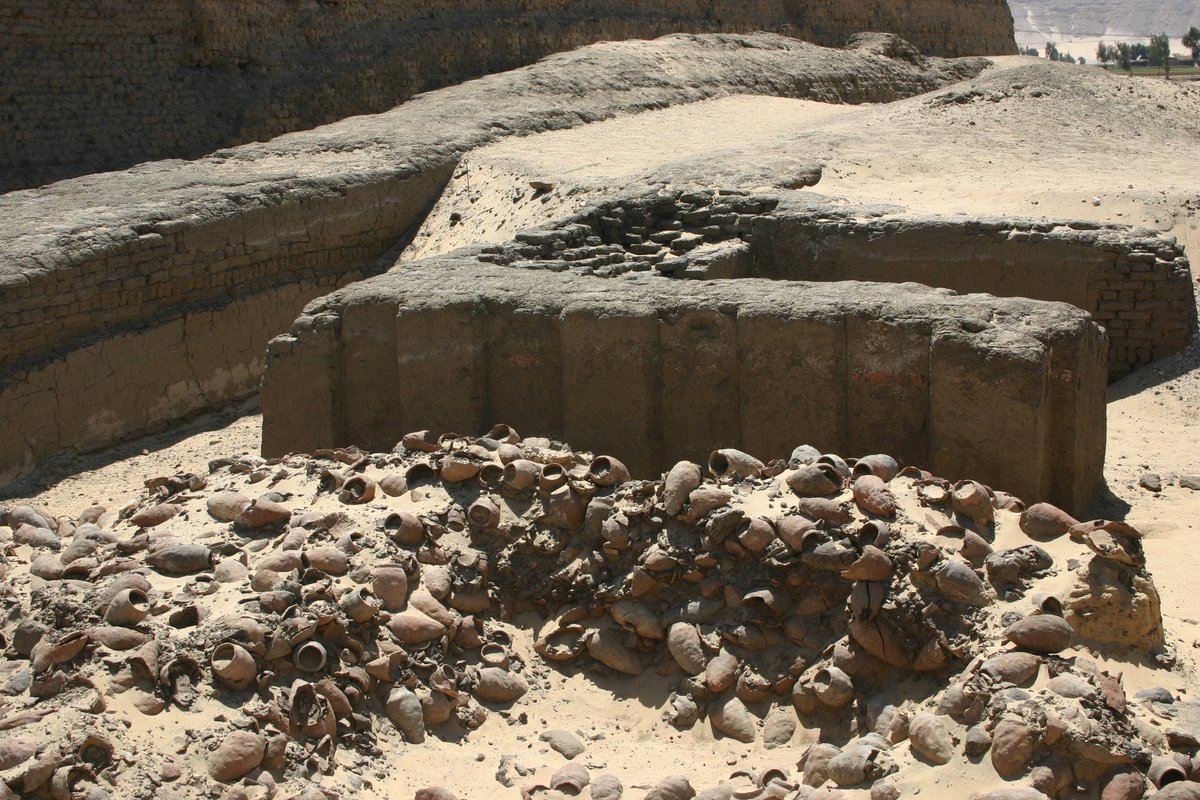
In the vast expanse of the desert lies a forgotten archaeological site. It is believed that the fortress and the nearby Qasr El Jib belonged to the surrounding settlement, of which only scattered pottery fragments remain. The site is located on flat land on the old desert road towards the Dakhla Oasis, at the point preceding the Kharga depression via the Ramya Pass.
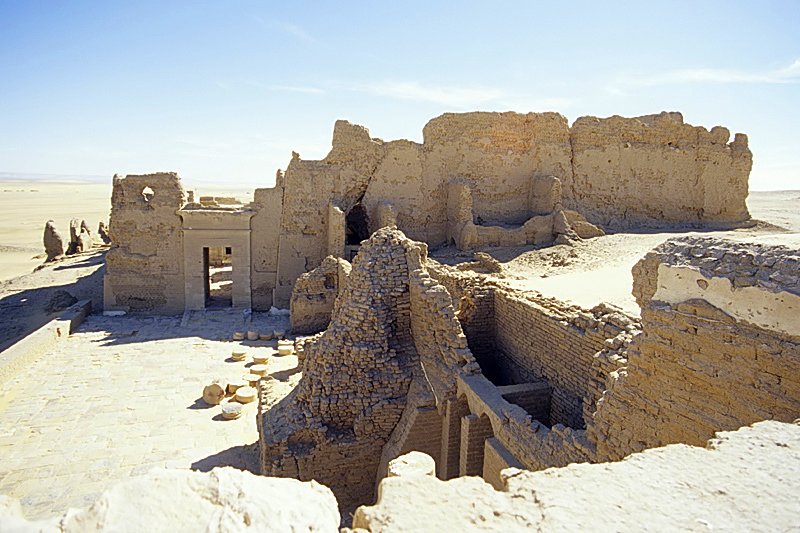
The fortress, built of mudbrick, measures 14 square meters in area and 7 meters in height. It contains several rooms that eventually collapsed. The building featured reinforced circular towers at its corners, with entrances located in the middle of the northern and southern walls.
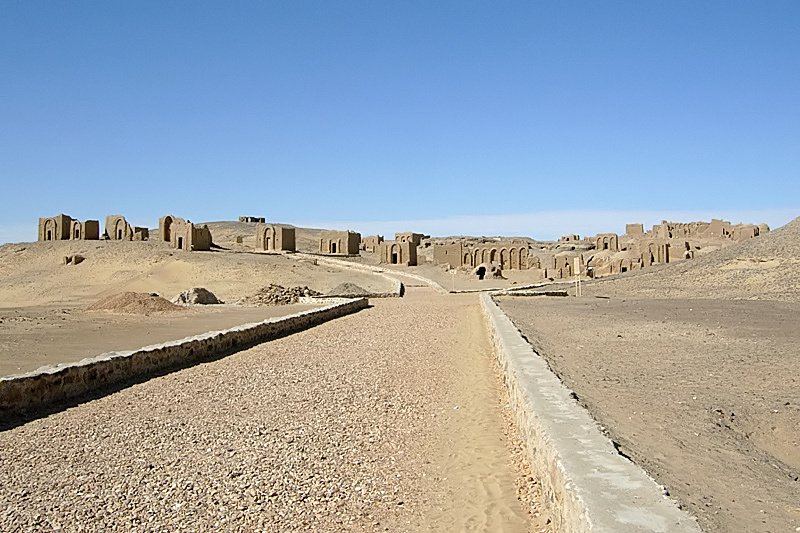
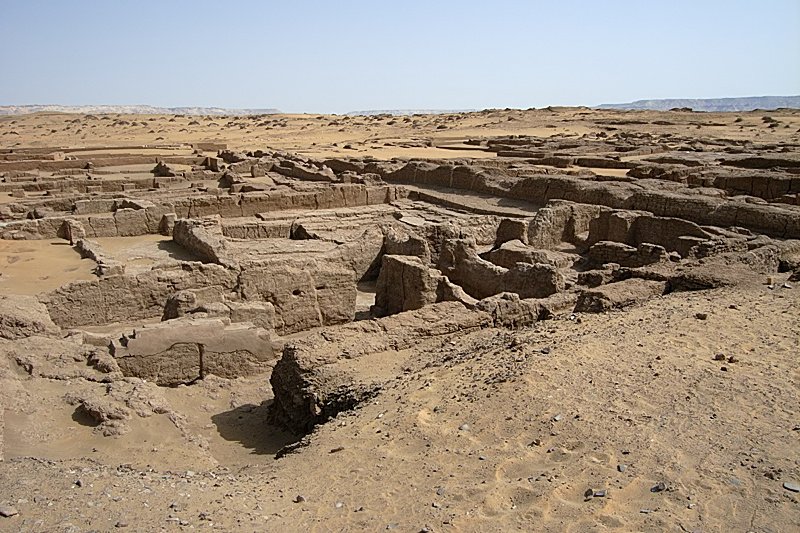
The settlement, recently discovered to be large and complex, lies on the southern side of the fortress. It may have served as an important supply station for travelers. It is still possible to see the shapes of many destroyed houses under the sand, along with remains of mudbrick structures, ovens, silos, and grinding sites, suggesting the settlement may have been a wide industrial site in addition to its agricultural role.\n A survey of the North Kharga Oasis revealed possible animal pens and a complex construction system with quartzite walls and an irrigation system featuring channels powered by groundwater. A large cemetery lies to the south of the settlement, containing tombs carved into the rock as well as brick-lined graves with vaulted ceilings.
Sources: Wikipedia, OpenStreetMap, Wikidata, Wikimedia Commons
Written by Mutabor
Discuss this with the author and others
No comments yet. Be the first to start the conversation.