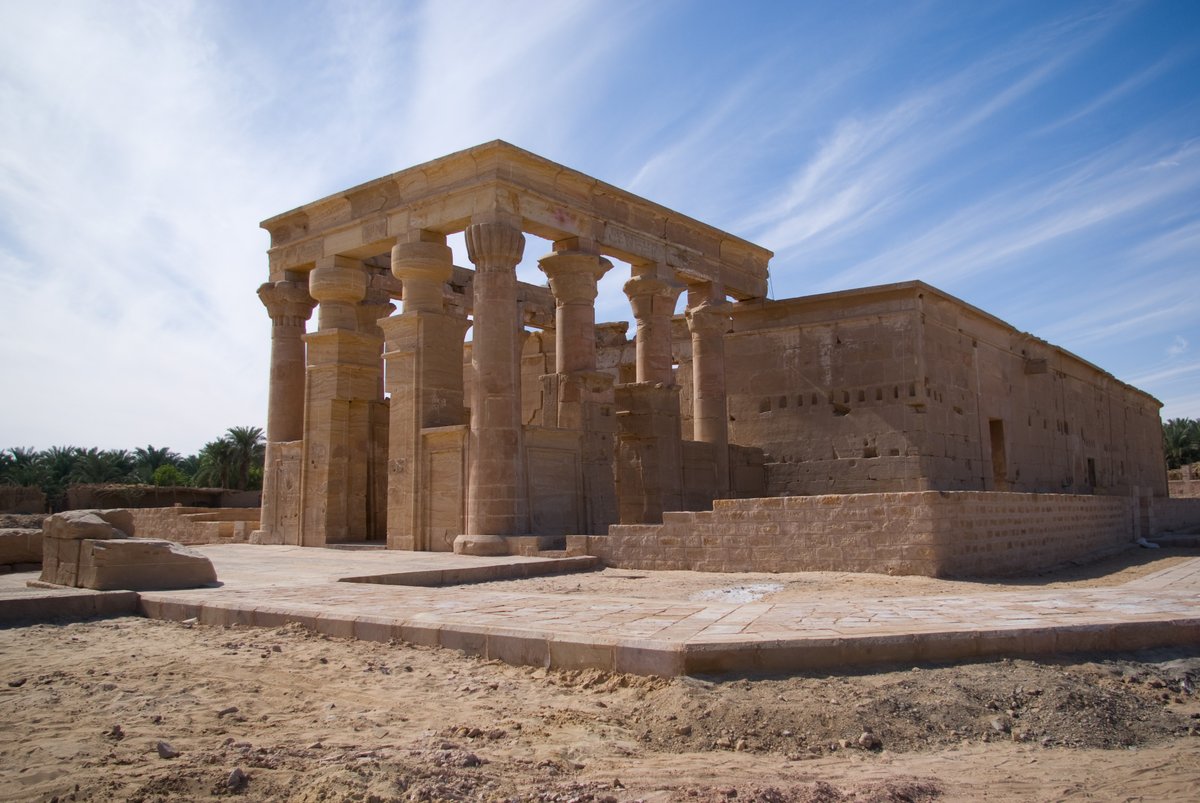

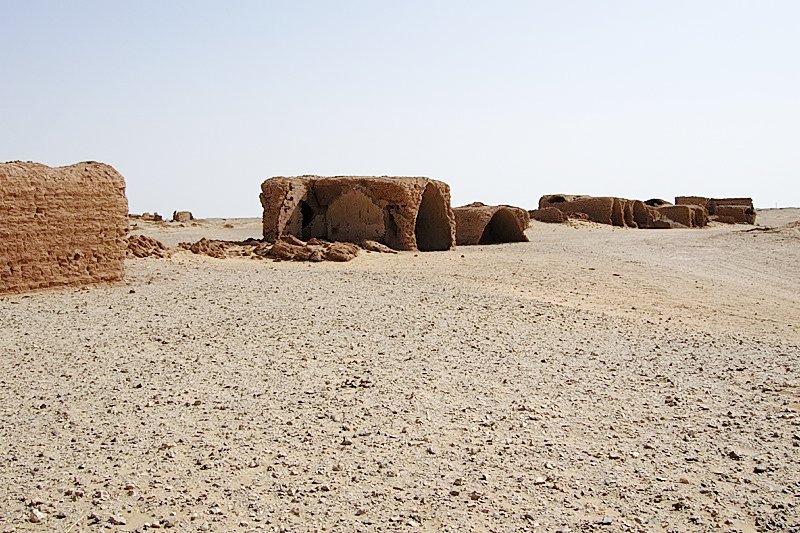
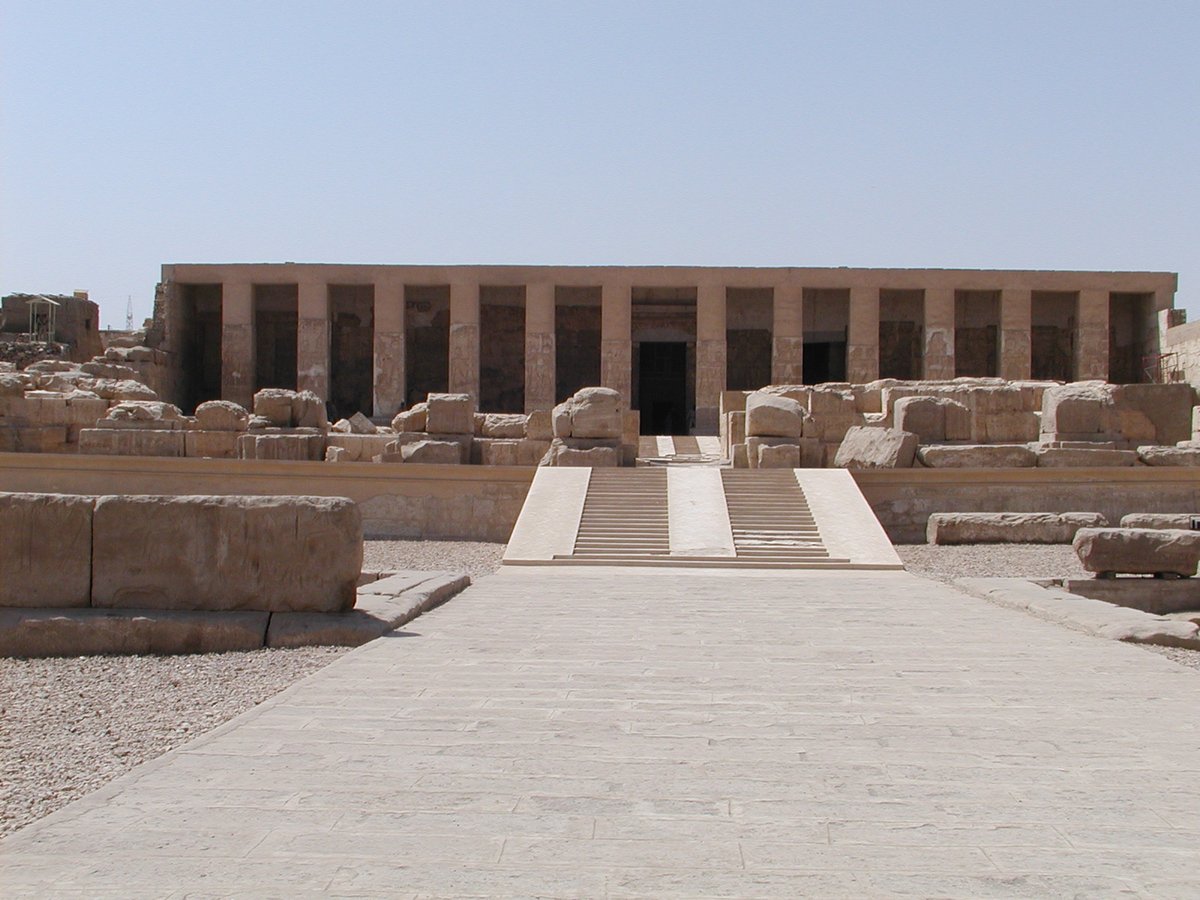
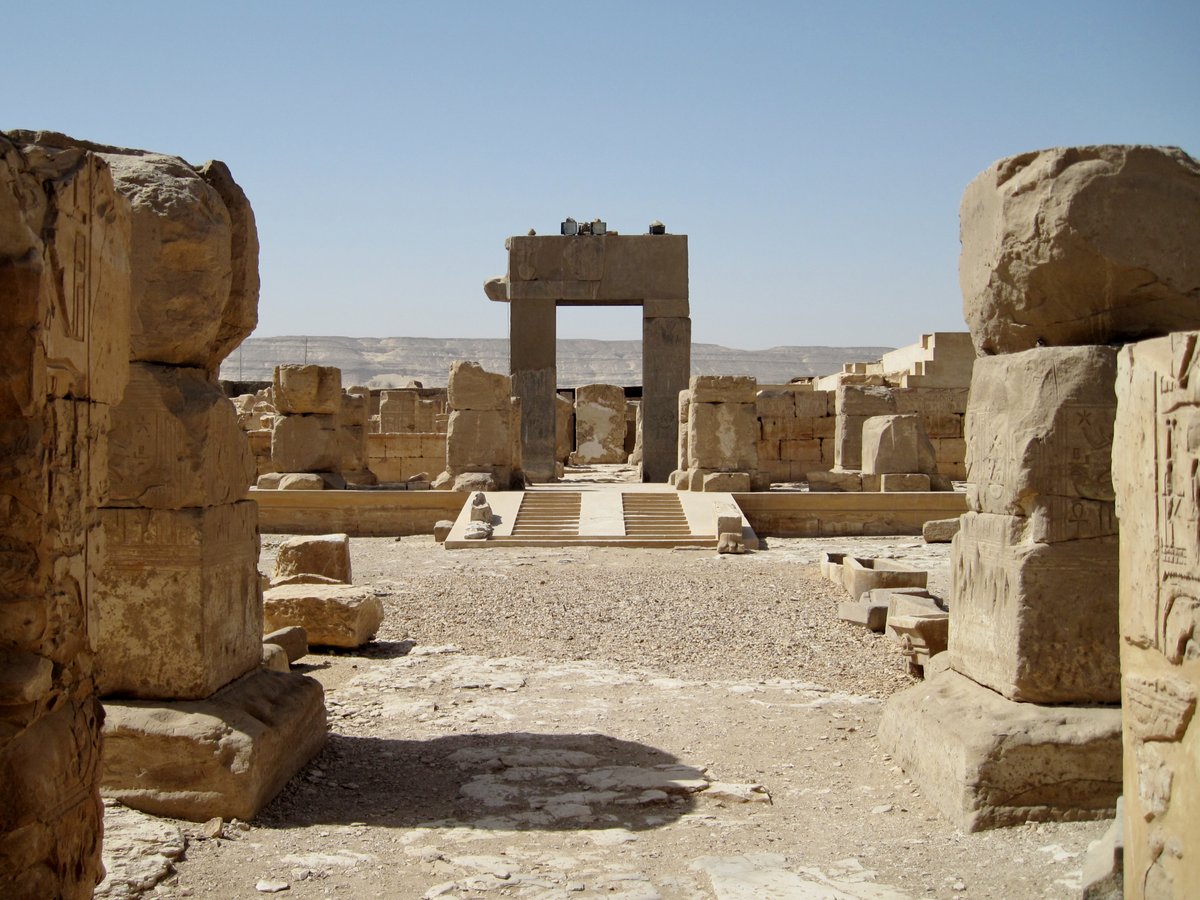
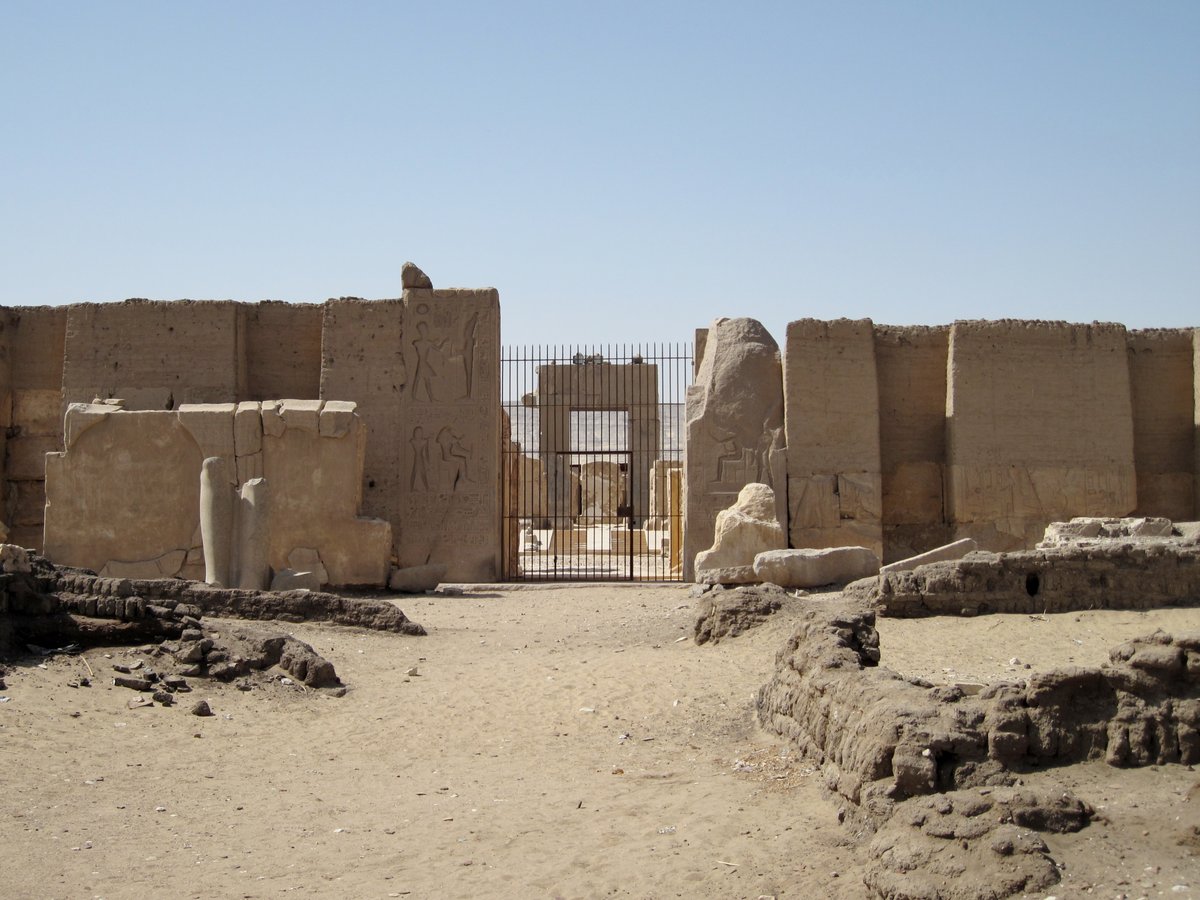
The Temple of Hibis is the largest and best preserved ancient Egyptian temple in the Kharga Oasis. It is the only structure in Egypt dating to the Saite-Persian period (664–404 BCE) that has survived to modern times in relatively good condition. Located about 2 km north of Kharga, the temple was devoted to a syncretism of local forms of the deity Amun, specifically Amun of Hibis and Amun-Ra of Karnak who dwells in Hibis. It is also believed to be dedicated to Amun and Osiris.
Construction began during the 26th Dynasty, likely under Pharaoh Psamtik II, though archaeological evidence suggests an older New Kingdom temple existed on the site. During the 27th Dynasty, the Achaemenid pharaoh Darius I was active in its construction and wall decorations. Later additions were made by rulers such as Hakor of the 29th Dynasty, Nectanebo I and Nectanebo II of the 30th Dynasty, and potentially by Ptolemy IV and a Roman emperor.
Architecturally, the temple resembles the Theban temples of the New Kingdom and Ptolemaic periods, but features a bold style of decoration. A long hallway lined with sphinxes leads to a hypostyle hall where the walls are shaped like huge papyrus rolls. These walls bear hymns to Amun and a notable depiction of Seth defeating Apep. The naos is subdivided into nine registers featuring a pantheon of nearly 700 Egyptian deities and royal figures, though the accompanying inscriptions remain brief or absent.
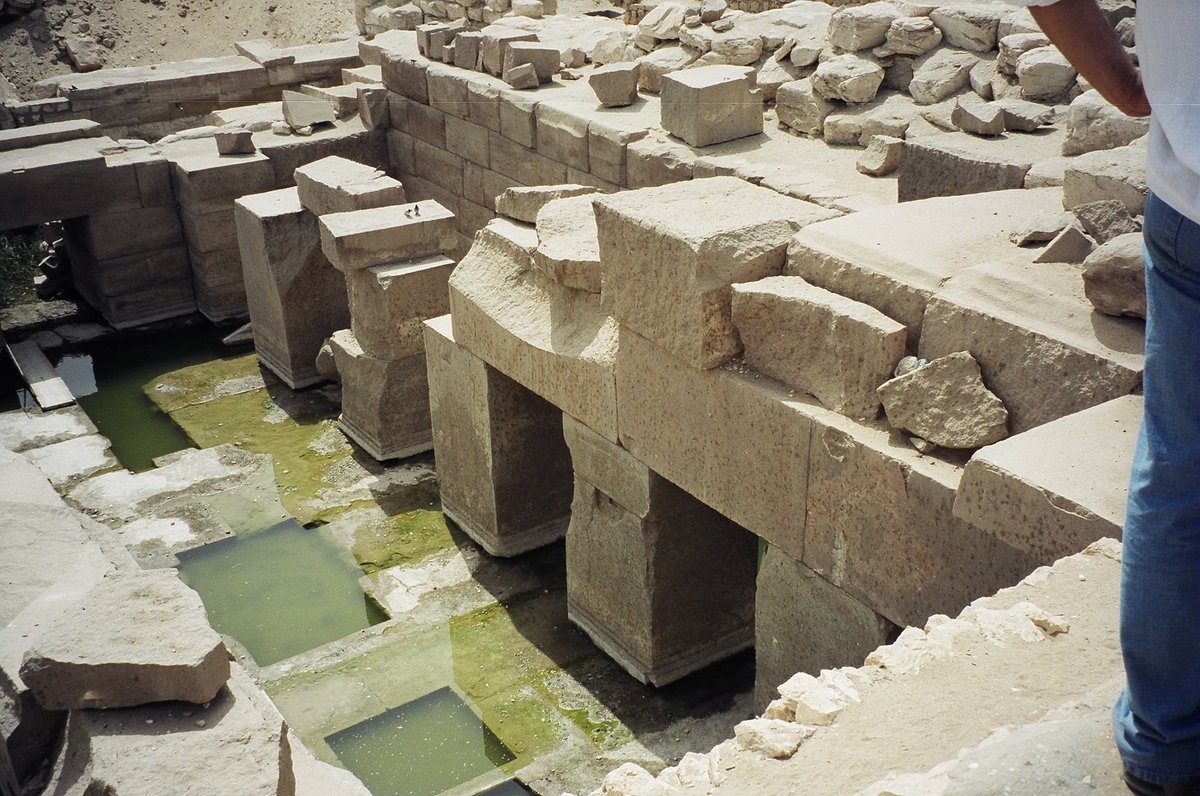
The temple was once surrounded by a lake that has since vanished. While its seclusion helped preserve the structure, it is currently endangered by rising ground water damaging its foundations. The Egyptian Antiquities Service has considered a complete dismantling and relocation of the temple to protect it from this damage.
Sources: Wikipedia, OpenStreetMap, Wikidata, Wikimedia Commons
Written by Mutabor
Discuss this with the author and others
No comments yet. Be the first to start the conversation.