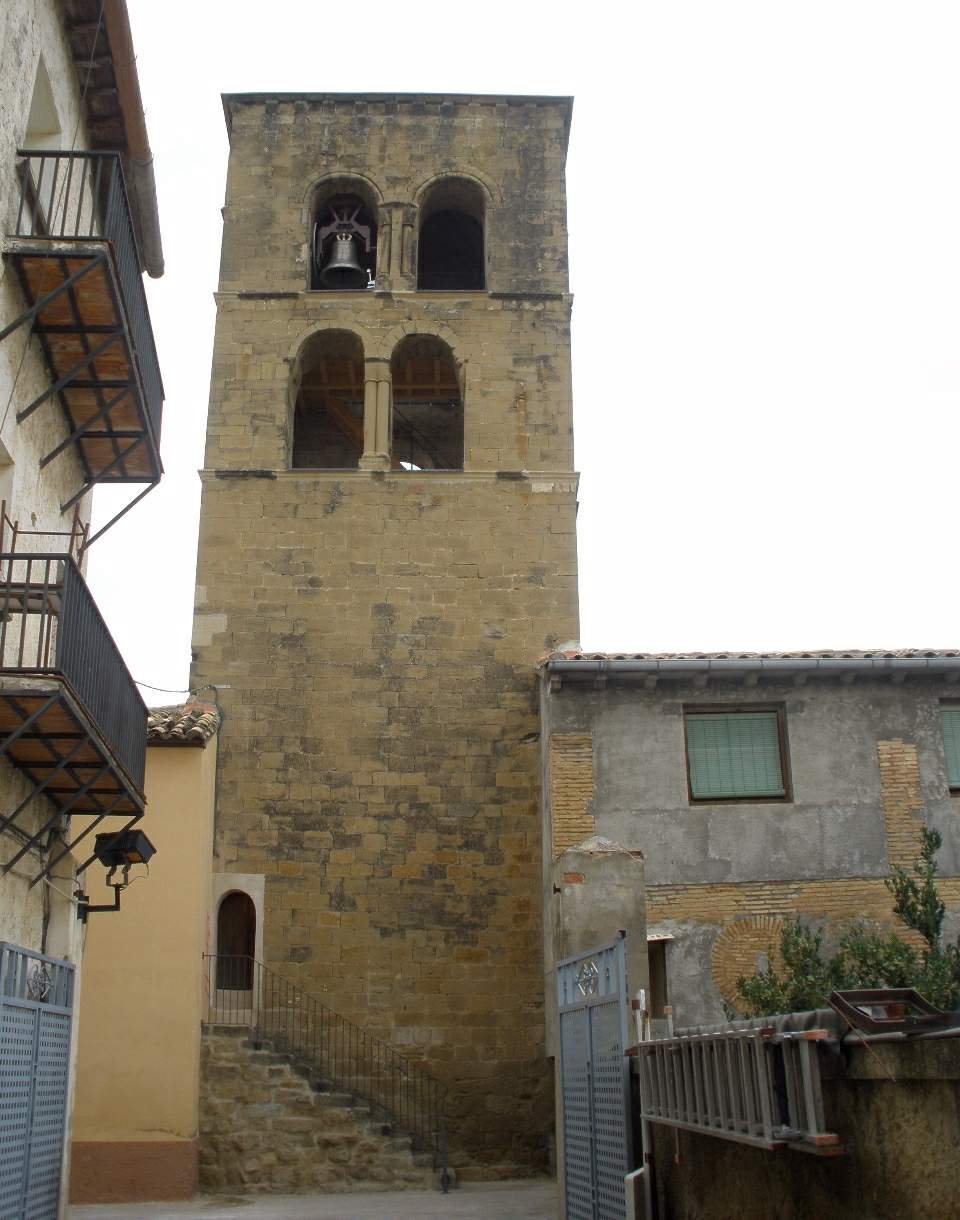

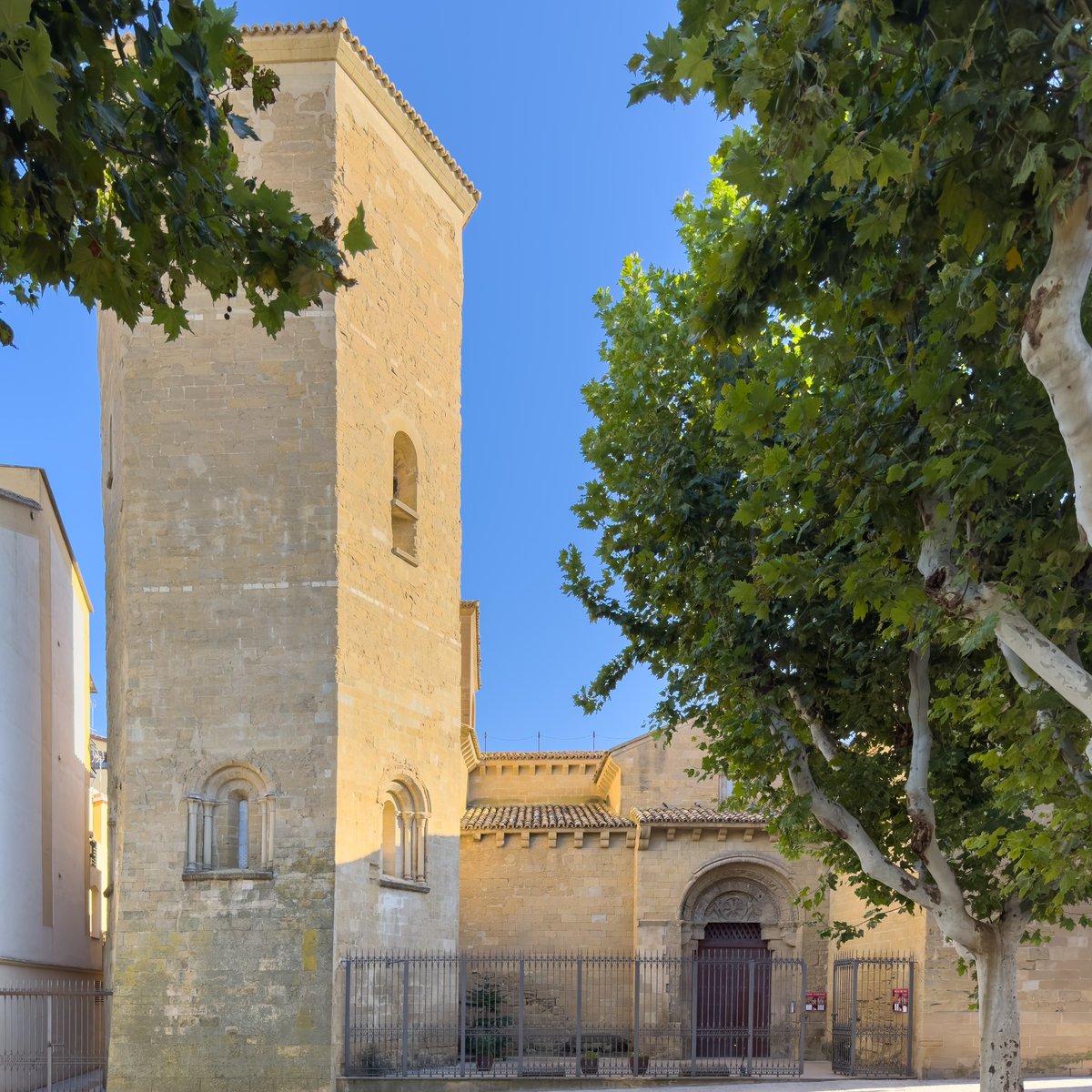
In the northern part of Ayerbe, a Romanesque tower stands as a resilient survivor of a larger complex. Built in the 12th century as part of the church of San Pedro, it remains today as a Monumento arquitectónico-artístico. While the 19th century brought the demolition of most of the original church due to instability, this tower stood firm, preserved for us to examine.
We must look closely at the masonry of ashlar stone. On both the interior and exterior, the distinct marks of the stonemasons remain visible. The structure rises in three bodies, with the top two serving as a bell tower featuring twin arches supported by rows of small columns. Inside, we find a small chamber holding the upper remains of a 16th-century Calvary scene. We can still discern the date 1567 on the figure of Christ, even as other inscriptions have faded over the centuries.
For generations, this tower functioned as the public voice of the village. It housed four bells: Virgen del Pilar, María Juana, Santa Bárbara, and Santa Leticia. These bells dictated the rhythm of daily life, announcing liturgical hours and various functions. The bell-ringer was obligated to ring the bells every evening at sunset for the rosary and later for the Ave Maria, using different combinations of bells depending on the day.
Specific patterns were also established for funeral services. For a 'Modalidad primera' funeral of 3 libras y 15 sueldos jaqueses, the bells were rung at repique with all four bells - starting with the two small ones for a quarter of an hour, followed by the cimbalico bells, and concluding with the two large ones.
Today, the tower is a quiet structure of historical significance. We can enter through a simple rounded arch on the face of mediodía to explore its history further. The physical presence of the stone invites us to contemplate the enduring history of its sound.
Sources: Wikipedia, OpenStreetMap, Wikidata, Wikimedia Commons

Written by Nik Frost
Discuss this with the author and others
No comments yet. Be the first to start the conversation.