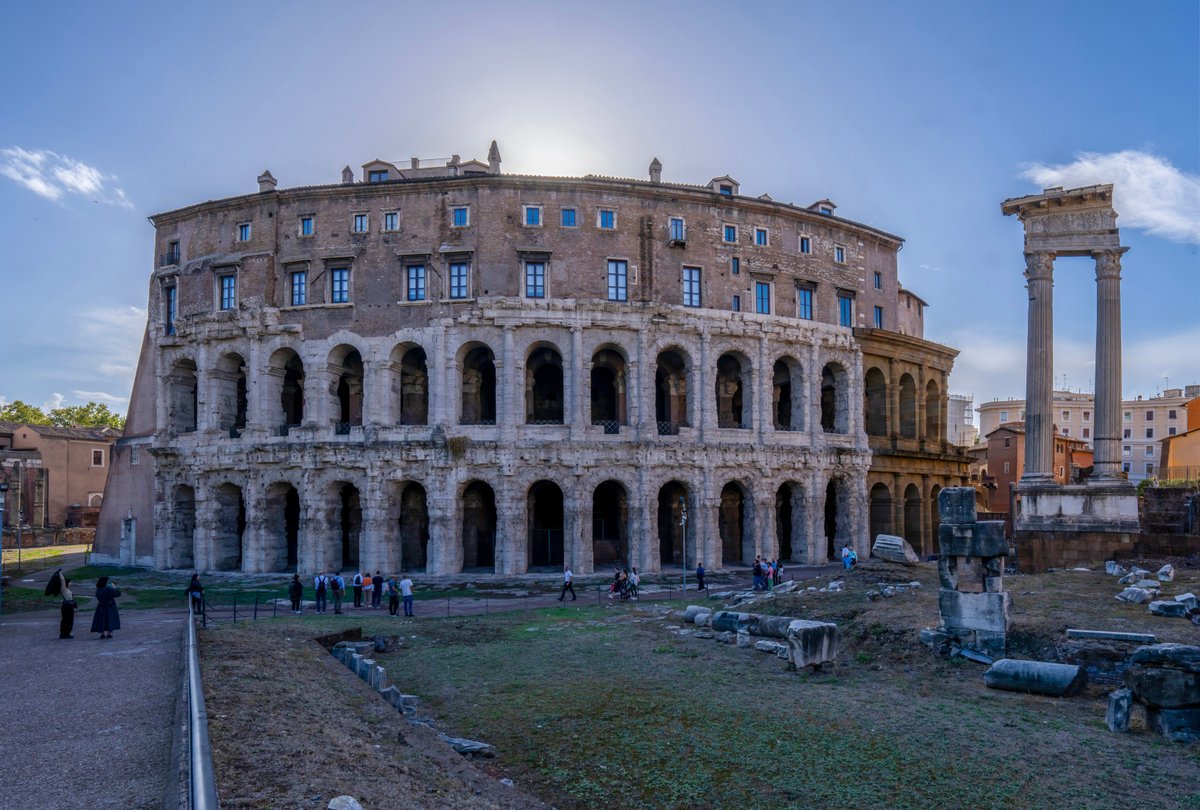

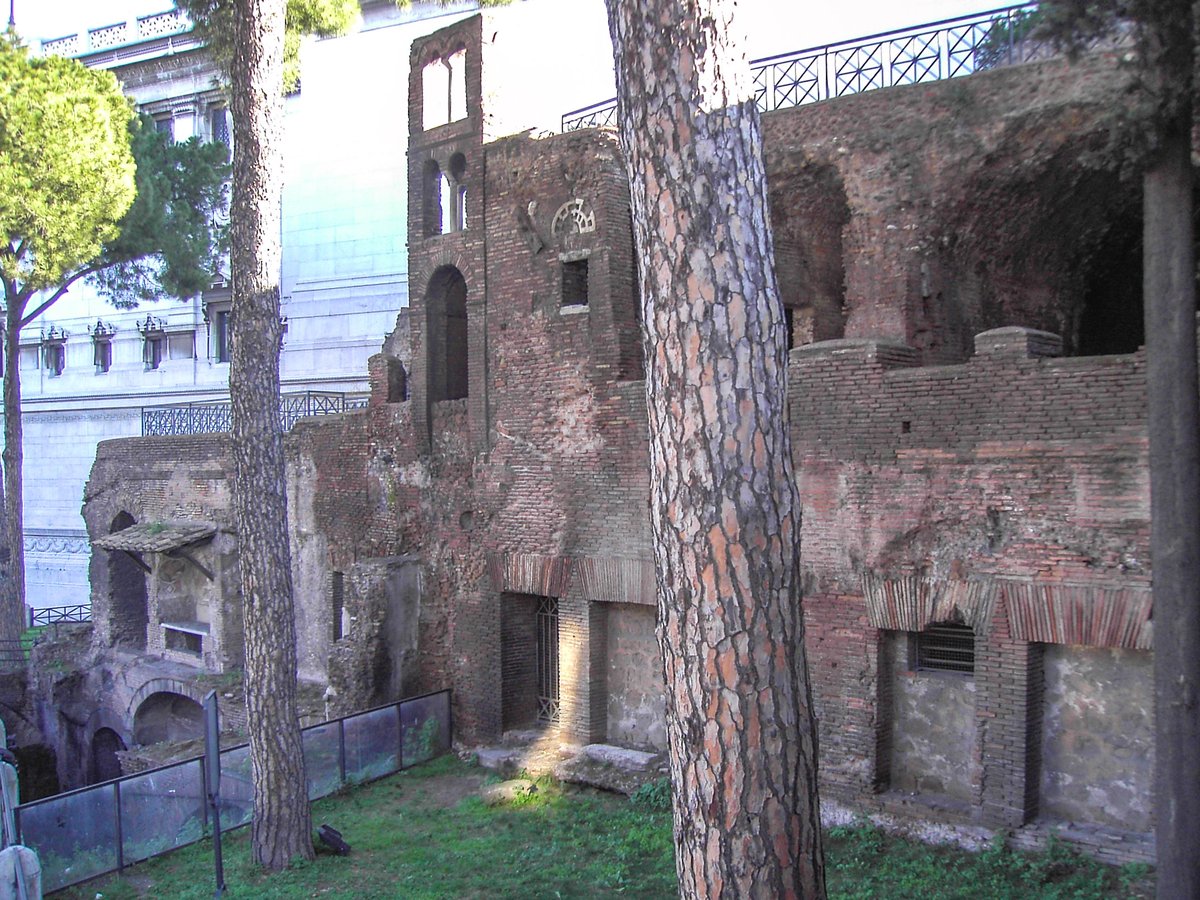
Completed in 13 BC and formally inaugurated by Augustus in 12 BC, this open-air theatre was named after his nephew Marcus Claudius Marcellus, who died in 23 BC. It was 111 m in diameter and could originally hold between 11,000 and 20,000 spectators, with a 4th-century catalogue recording a capacity of 17,580. The structure was built mainly of tuff and concrete faced with stones in the pattern known as opus reticulatum, completely sheathed in white travertine. It is also the earliest dateable building in Rome to make use of fired Roman brick.
The network of arches, corridors, tunnels and ramps that gave access to the interiors were normally ornamented with a screen of engaged columns in Greek orders: Doric at the base, Ionic in the middle. It is believed that Corinthian columns were used for the upper level, but the theatre was reconstructed in the Middle Ages, removing the top tier of seating and the columns. The theatre fell out of use in the early 4th century and the structure served as a quarry, for example, for the Pons Cestius in 370 AD.
In 421, Petronius Maximus restored the statues located inside the building, and the remaining structure still housed small residential buildings. In the 16th century, a residence for the Orsini family, designed by Baldassare Peruzzi, was built atop the ruins of the ancient theatre. Now, the upper floors are divided into multiple clubs, and its surroundings are used as a venue for small summer concerts. The Embassy of the Sovereign Military Order of Malta to the Holy See is located in the premises of Casa Litta - Palazzo Orsini, in Teatro Marcello.
Sources: Wikipedia, OpenStreetMap, Wikidata, Wikimedia Commons


Written by Nicolo Ciampini
Discuss this with the author and others
No comments yet. Be the first to start the conversation.