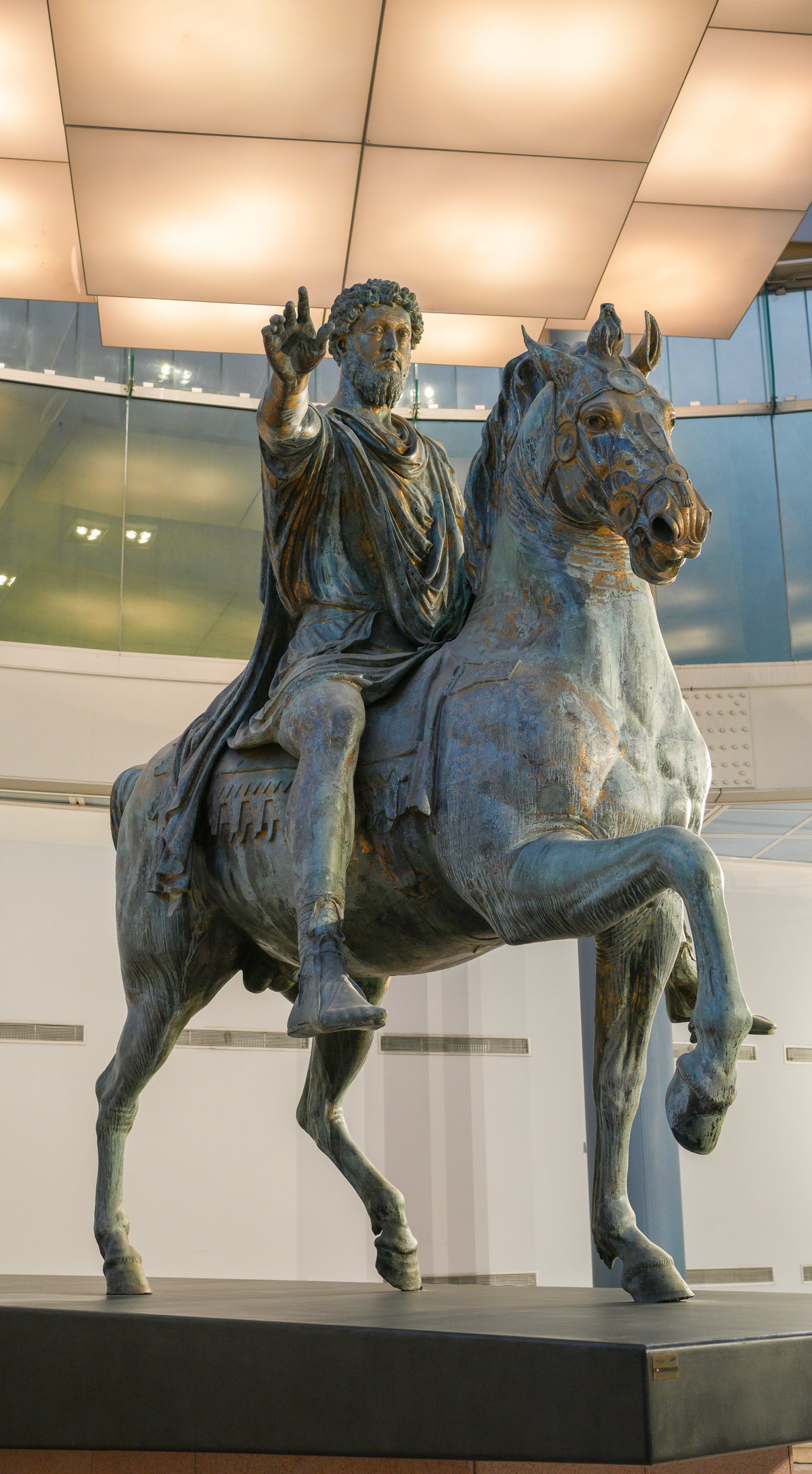

The equestrian statue of Emperor Marcus Aurelius (121-180 AD) is one of the most iconic sights in Rome. Made of bronze, the statue is 4.24 meters tall and has been on display at the Piazza del Campidoglio since the mid-16th century, although the original statue stood there earlier. The statue is a replica, as the original can be found in the Capitoline Museums. Despite its Roman heritage, the statue's horse is a Sarmatian horse, a breed that was common in the grasslands of Eastern Europe. Marcus Aurelius adopted 'Sarmaticus' to his name after a victory over the Sarmatians, a nomadic people from southern Russia and eastern Europe.
The statue that stands today was created in 175 AD, but the original statue is difficult to date. It is not known where it originally stood, but it was likely moved by Emperor Constans II during his visit to Rome in 663 and moved to the Campus Lateranensis, near the Lateran Palace. In 1538, Pope Paul III ordered that the statue be moved to its current location in the Piazza del Campidoglio, where Michelangelo designed a pedestal for it. The Sarmatian connection to the statue highlights the multiculturalism of ancient Rome, where people from different parts of the empire could come together and share their cultures.
Sources: Wikipedia, OpenStreetMap, Wikidata, Wikimedia Commons
Written by Nicolo Ciampini
Discuss this with the author and others
No comments yet. Be the first to start the conversation.