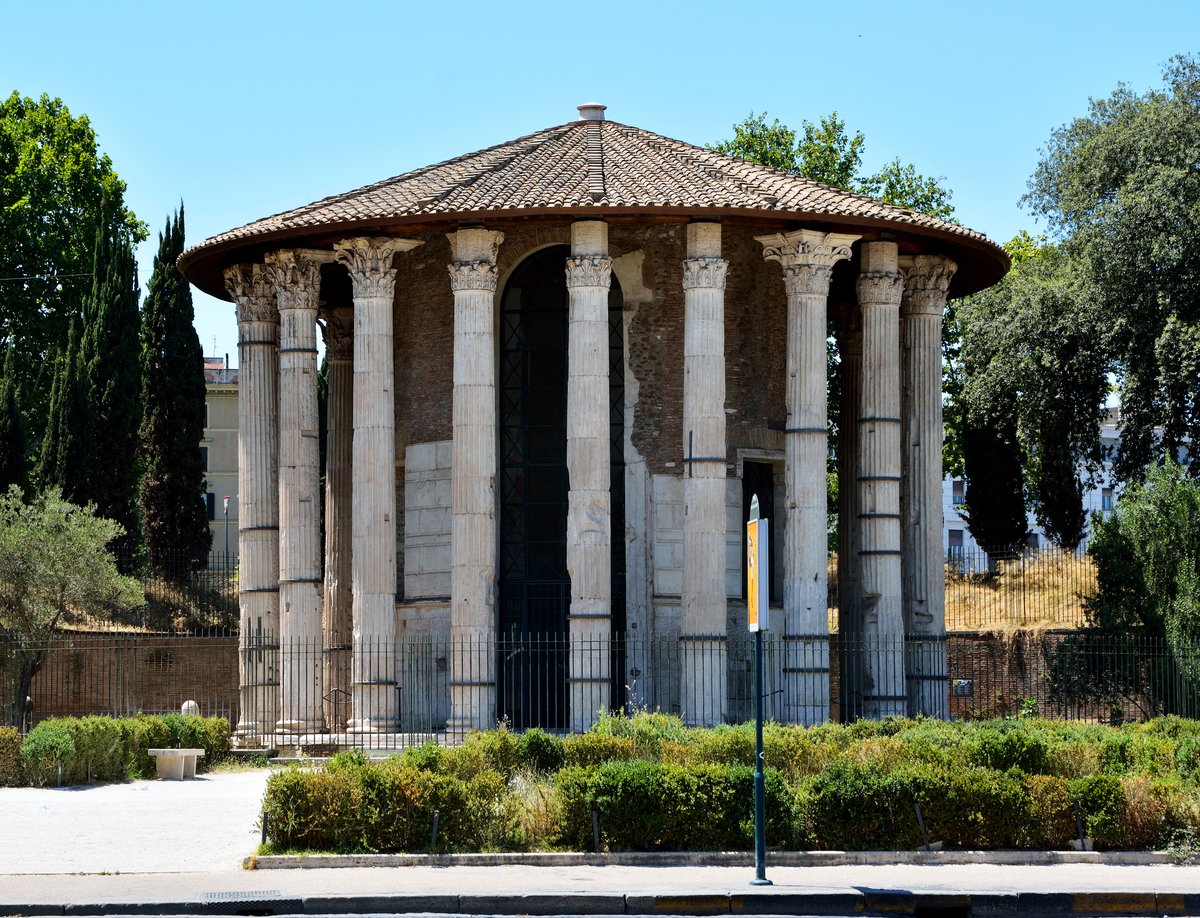

Perched at the heart of Rome's ancient Forum Boarium, the Greek structure, Hercules Olivarius' Temple - also known as Hercules Victor - is an remarkable 'peripteral' design. Wrapped by a colonnade, it holds a certain allure among the cobblestones of Italy. This architectural curiosity, shrouded in mystery, was mistakenly considered a temple of Vesta until the 19th century, hinting at Rome's early admiration for Greek styles, constructed in the late 2nd century BC.
Distinguished by its circular design and Corinthian columns, it contrasts with other Roman temples. It claims the title of the earliest surviving mostly intact marble building in Rome, making it the sole Greek marble edifice in the city.Some assert Lucius Mummius Achaicus, the conqueror of the Achaeans and the destroyer of Corinth, or Marcus Octavius Herrenus, a successful Roman businessman, were the temple's creators. The temple's origin story, however, remains a mystery.One intriguing tale of the temple is that neither flies nor dogs dare enter its hallowed grounds.
This peculiar rule can be traced back to its sacred past, yet the specific origin of this oddity remains unsolved. Today, this marvel stands defiant on the banks of the Tiber river, amid the urban cacophony. The temple has endured several restorations, with the most recent in 1996.Hercules Olivarius transcends a mere historical landmark, inspiring numerous architects and artists, including Bramante’s Tempietto and other High Renaissance churches, greatly inspired by its unique design.It serves as a symbol of the Greeks' subtle influence on the Romans, yet remains an unsolved riddle, a hidden treasure, a winged olive tree nestled in the heart of Rome.
Sources: Wikipedia, OpenStreetMap, Wikidata, Wikimedia Commons
Written by Nicolo Ciampini
Discuss this with the author and others
No comments yet. Be the first to start the conversation.