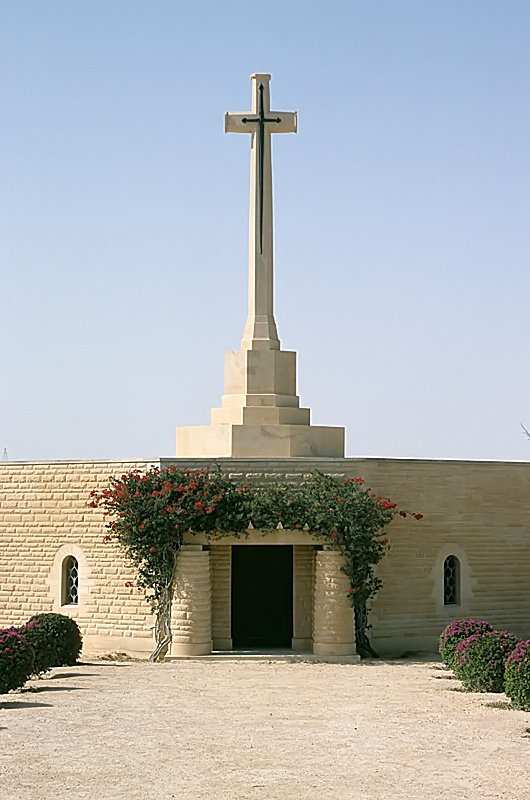

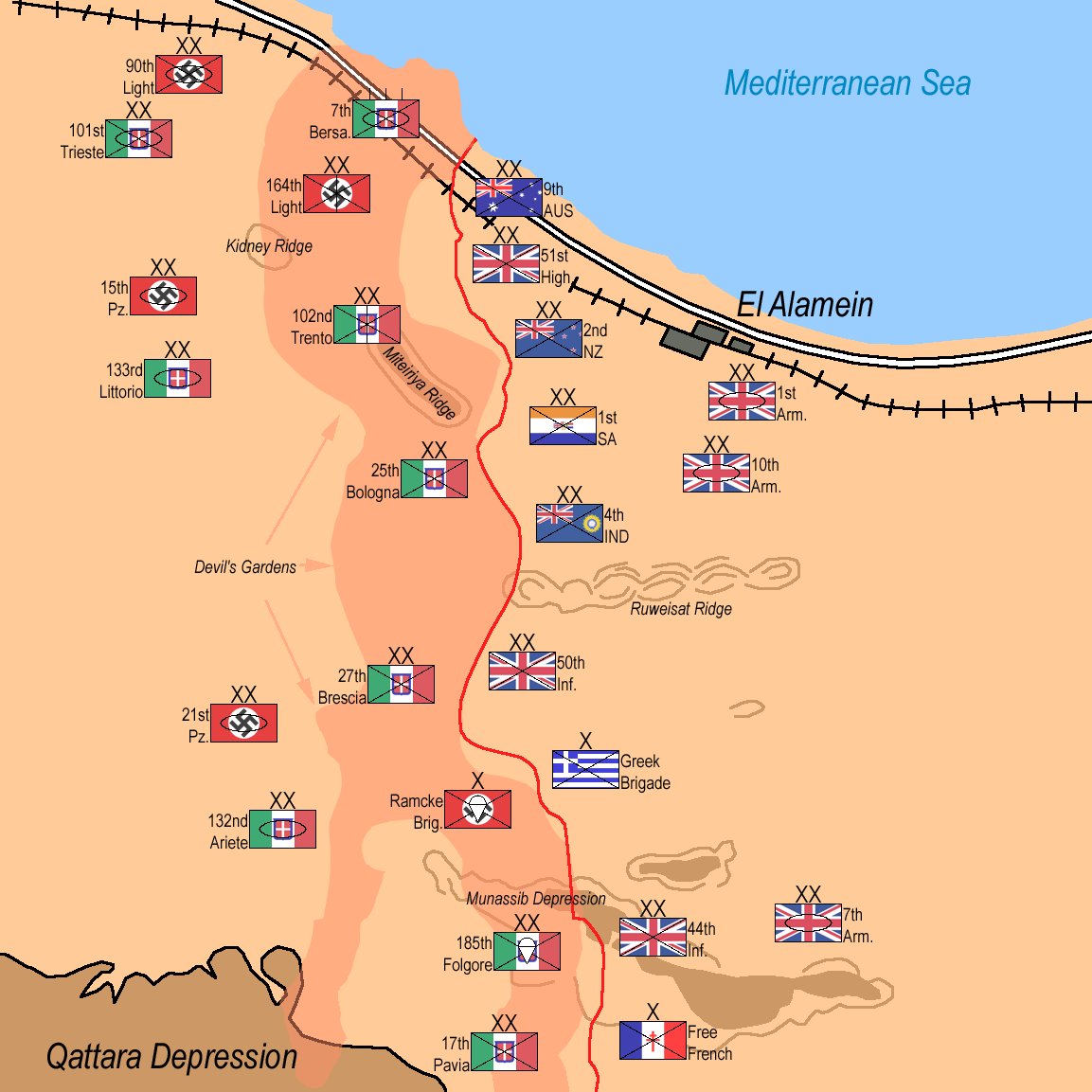
The Alamein Memorial commemorates 11,866 Commonwealth service members who died during World War II and for whom no known grave could be found. The memorial honors land forces who died during the Western Desert campaign as well as in Syria, Lebanon, Iraq, and Iran, and airmen who fell across regions including Egypt, Libya, Greece, Crete, and Madagascar.
Hubert Worthington designed the site to withstand the harsh African environment. He built high walls to keep out drifting sand and provide shelter from the sun, and chose to plant succulents and cacti instead of plants more common in Europe. The entrance to the memorial features an inscription describing how those who died preserved the link between East and West.
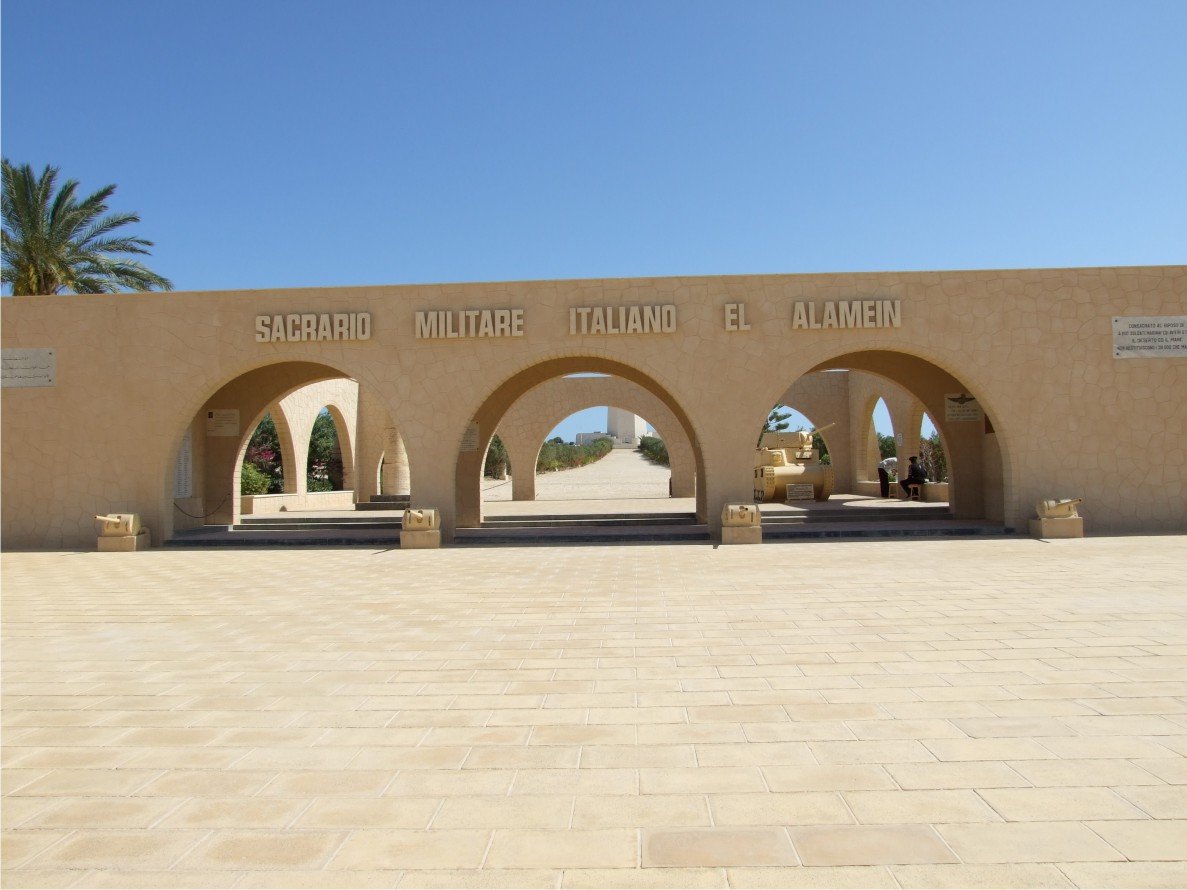
Visitors today pass through this memorial to reach the larger El Alamein War Cemetery, which contains the graves of 6,425 identified Commonwealth service personnel, 815 unidentified ones, and 102 of other nationalities. Nearby stands a separate Alamein Cremation Memorial for 603 Commonwealth service personnel who were cremated in line with their religion.
The cemetery includes monuments for Greek, New Zealand, Australian, South African, Indian, and Canadian forces. The names of 213 Canadian airmen appear on the memorial, which stands as a site of remembrance for those whose fortune of war denied them a known and honoured grave.
Sources: Wikipedia, OpenStreetMap, Wikidata, Wikimedia Commons
Written by Mutabor
Discuss this with the author and others
No comments yet. Be the first to start the conversation.