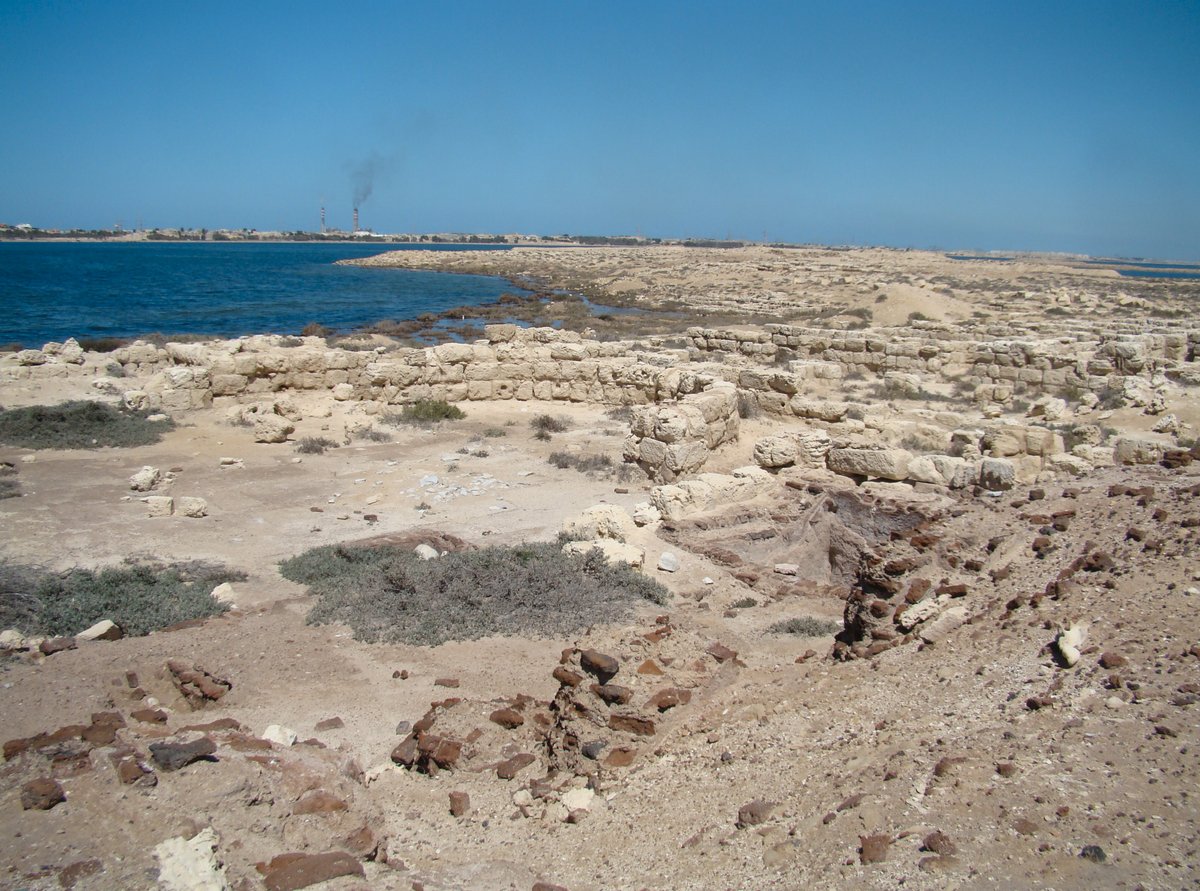

In 654 BCE, the pharaoh Psamtik I installed a garrison at Marea to secure the western borders of his kingdom after defeating Libyan tribes in the area. Located 45 km south-west of Alexandria, the site was a large port city in the Roman period, and possibly already in the Ptolemaic times. Its harbor may have functioned until the medieval period, and its remains include four large jetties, the longest of which extends 120 m into the lake.
The ancient city was famous for its wine, which was distributed throughout the Mediterranean Basin. The amphorae used for transport were produced locally. Marea was also a large pottery production center, home to one of the largest pottery kilns in Egypt. The site contains Byzantine architecture, including a bath complex, a funerary chapel, and a large basilica with a transept.
In 2001, archaeologists discovered the largest known set of ostraca from the 5th–6th century, which contain notes regarding the construction of the basilica. Under the basilica, excavators uncovered the remains of an older church dated preliminarily to the second half of the 4th century. Research continues to study the history of this center from the end of the 3rd century to the building of the Byzantine city.
Sources: Wikipedia, OpenStreetMap, Wikidata, Wikimedia Commons

Written by Mutabor
Discuss this with the author and others
No comments yet. Be the first to start the conversation.