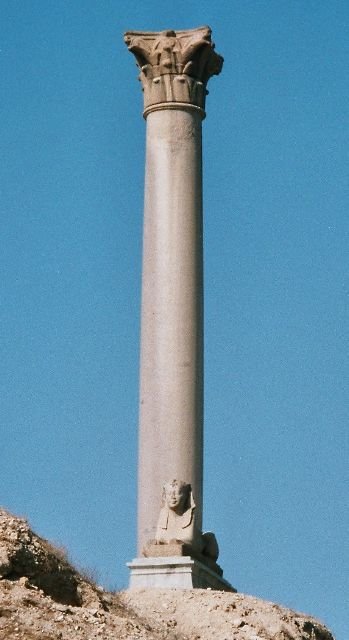

Once upon a time, beneath the golden sands of Alexandria, a city draped in warm memories, stood an extraordinary structure that refused to bow to the ravages of time and the footsteps of the Great Beyond. This was no ordinary structure, for it stood tall and proud, prevailing against the surrounding desolation, like a radiant beacon piercing the veil of yesterday. This was none other than Pompei's Pillar, a Roman triumphal column dedicated to the benevolent Emperor Diocletian.
Known as one of the largest monuments ever created, it stands tall even today, 27 meters high from the sands, its granite shaft splattered with hints of pink and the capital at its summit, a cool grey, reflecting the vibrant sunshine. The stone, a precious gift from the distant land of Aswan, adds a touch of foreign enchantment to this everlasting tribute.
The pillar, not born of the sands of Alexandria, carries with it the essence of another land long lost. And so, it stands, a reminder of a forgotten realm, swallowed by the sands of time.
Erected in honor of Diocletian between the years 297 and 303 AD, when the emperor was in Egypt, quelling the voices of revolt, atop the towering shaft once stood a statue, a resplendent emblem of glory and power. But the hands of time have claimed this treasure, leaving only the base, 6 meters tall and twice that in diameter, to bear witness to the past.
On this base, a miraculous Greek inscription remains, its words forever sealed in stone, serving as a testament to Publius, the Praefectus Aegypti, a silent spectator to history.
Sources: Wikipedia, OpenStreetMap, Wikidata, Wikimedia Commons
Written by Mutabor
Discuss this with the author and others
No comments yet. Be the first to start the conversation.