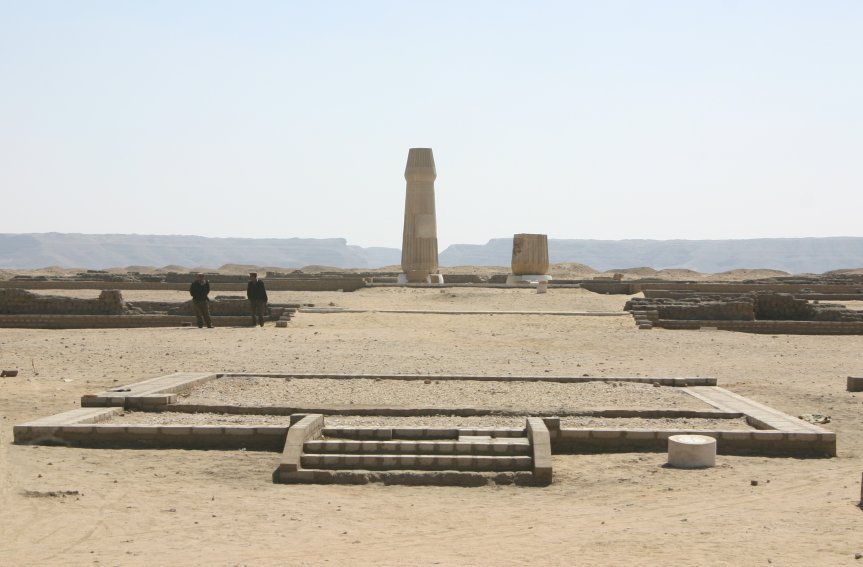

Deep within the heart of the ancient city of El-Amarna, lies a wondrous tomb. Known as the Royal Tomb of Eknathon, this structure differs from other royal tombs, embracing a unique, straight-axis design, believed to be the first of its kind in Ancient Egypt. Commissioned by the Pharaoh Ehnaton for himself and his beloved family, construction began in his 6th year of rule. The tomb's unusual layout veers from conventional designs, eschewing the common broken-axis, and instead, leads one along a straight path, a testament to a new vision for burials in the land of the Nile.
A single step initiates the journey, followed by a long hallway, and then another smaller step descends into a 3.5-meter deep ritual chamber. Adorned with four walls, the tomb faces the east, embracing the bright sunrise. Two offset branches spring from the main, northwest-southeast axis. The first branch unfolds just after the first long hallway, a series of five interconnected rooms. Inscribed upon the walls of the main axis, an entrance to another room was carved, though left incomplete.
The second branch unfolds on the second set of stairs, encompassing three chambers. The Chapel of Eknathon, the tomb's central chamber, was adorned with captivating images and inscriptions of the royal family. After Ehnaton's departure, the chamber following his death was marred by vandalism.
Sources: Wikipedia, OpenStreetMap, Wikimedia Commons
Written by Mutabor
Discuss this with the author and others
No comments yet. Be the first to start the conversation.