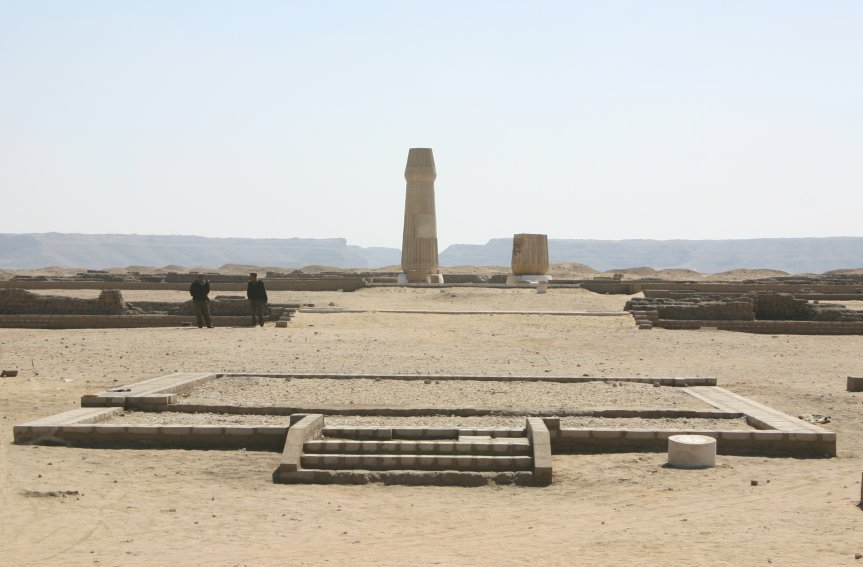

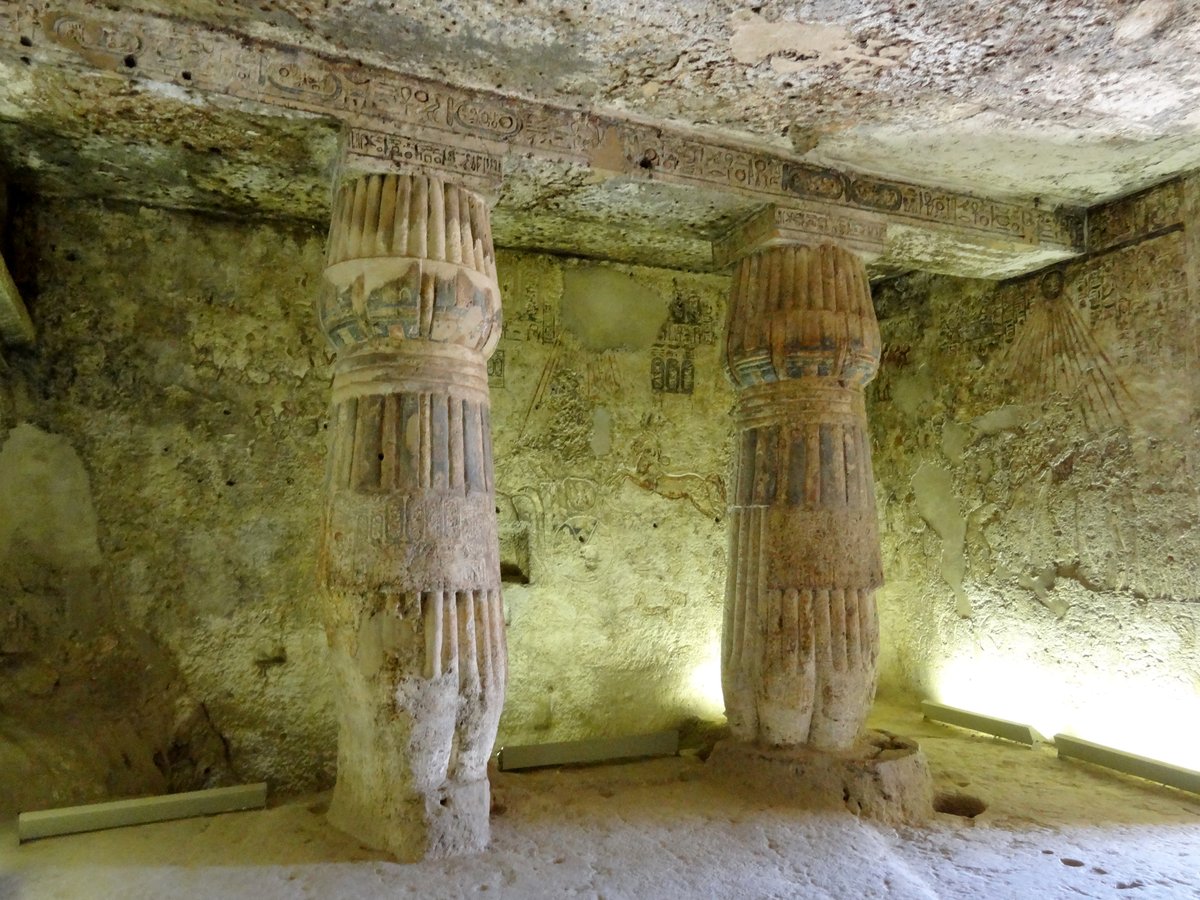
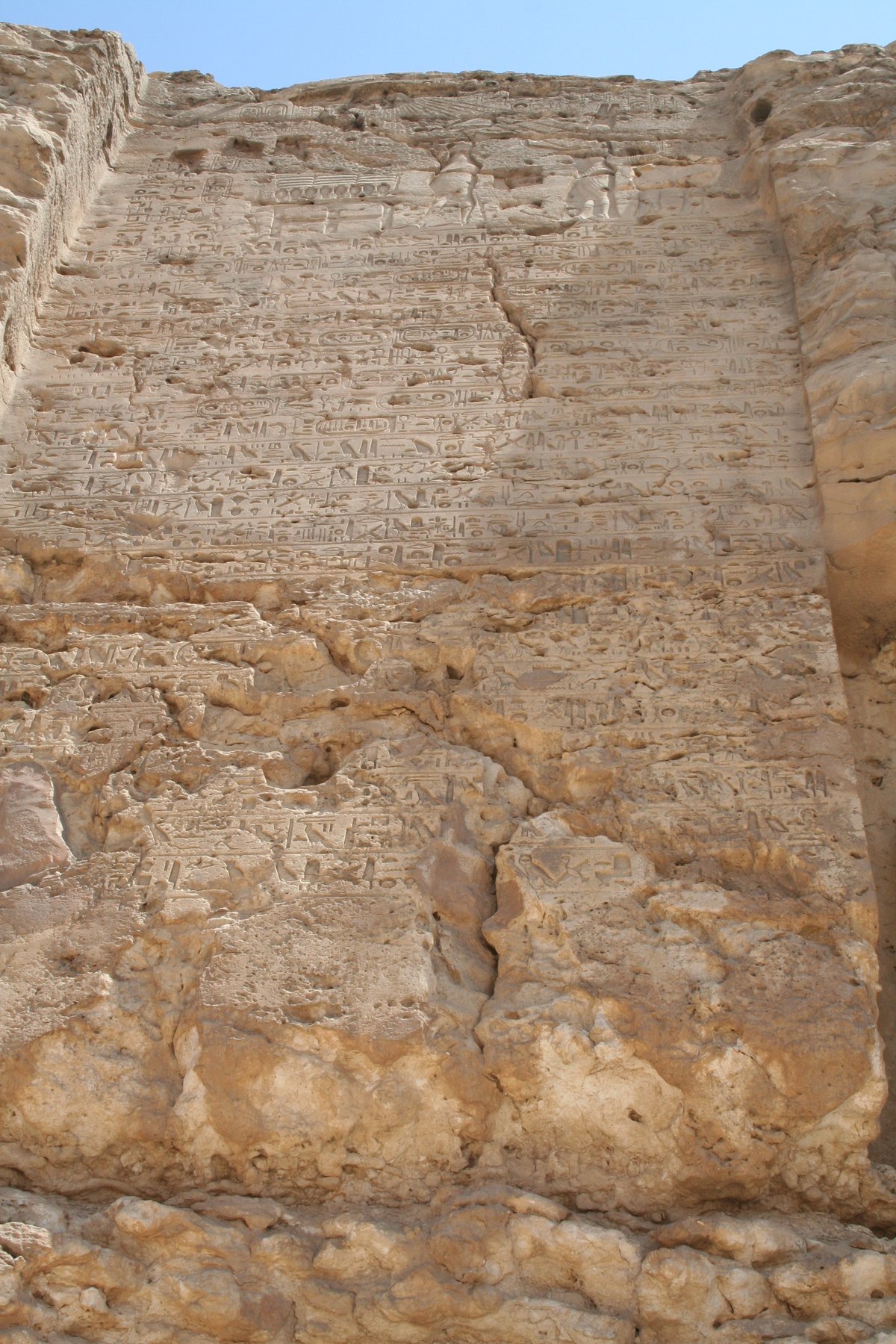
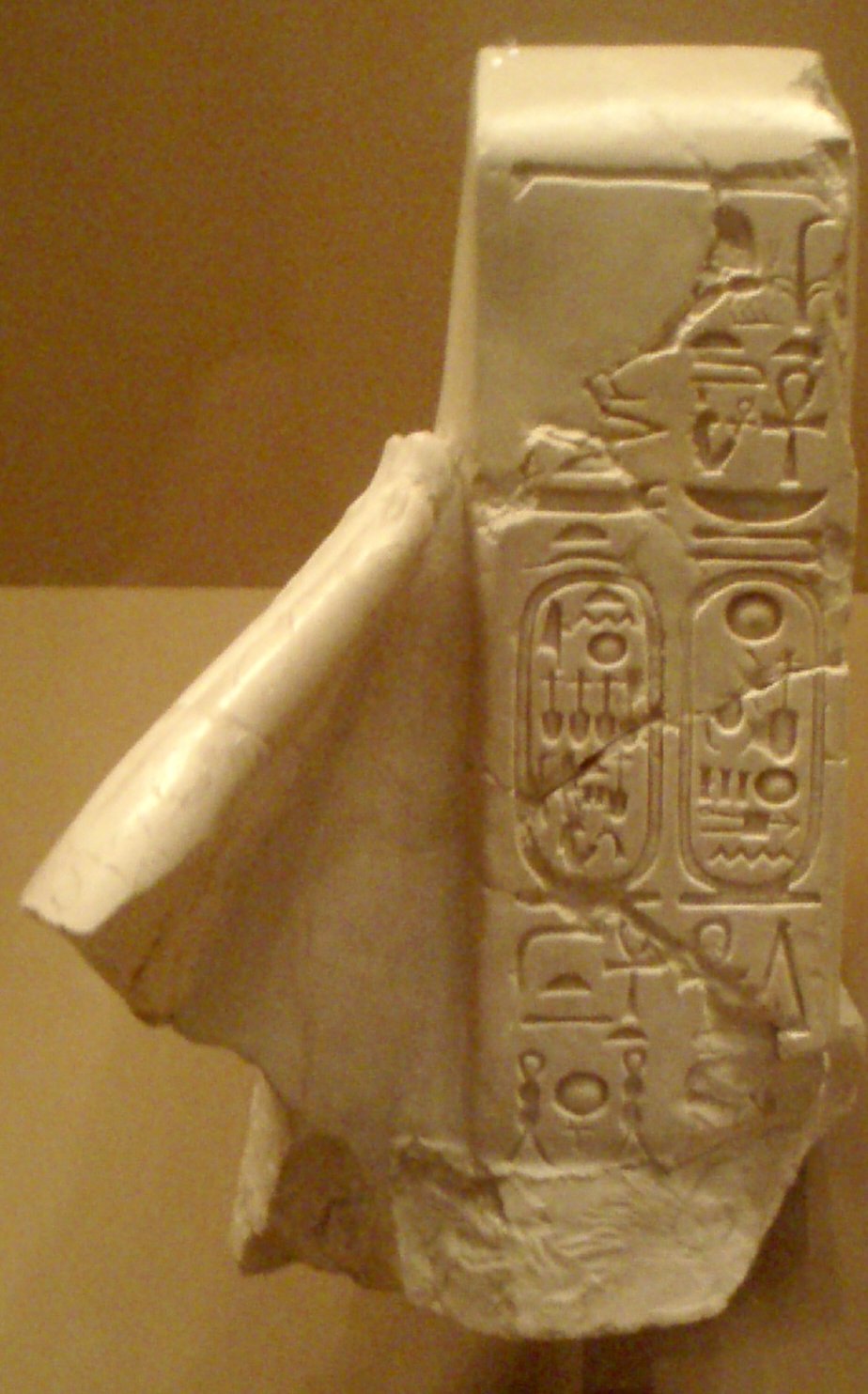
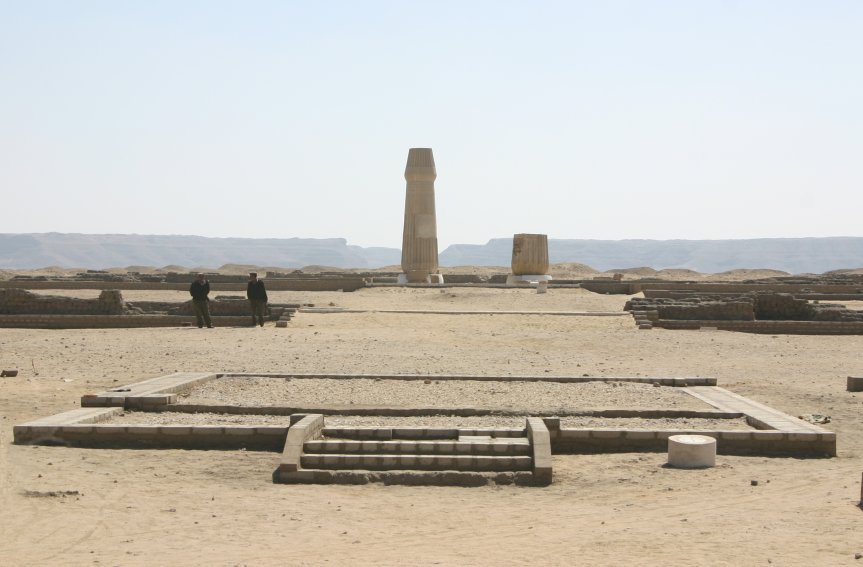
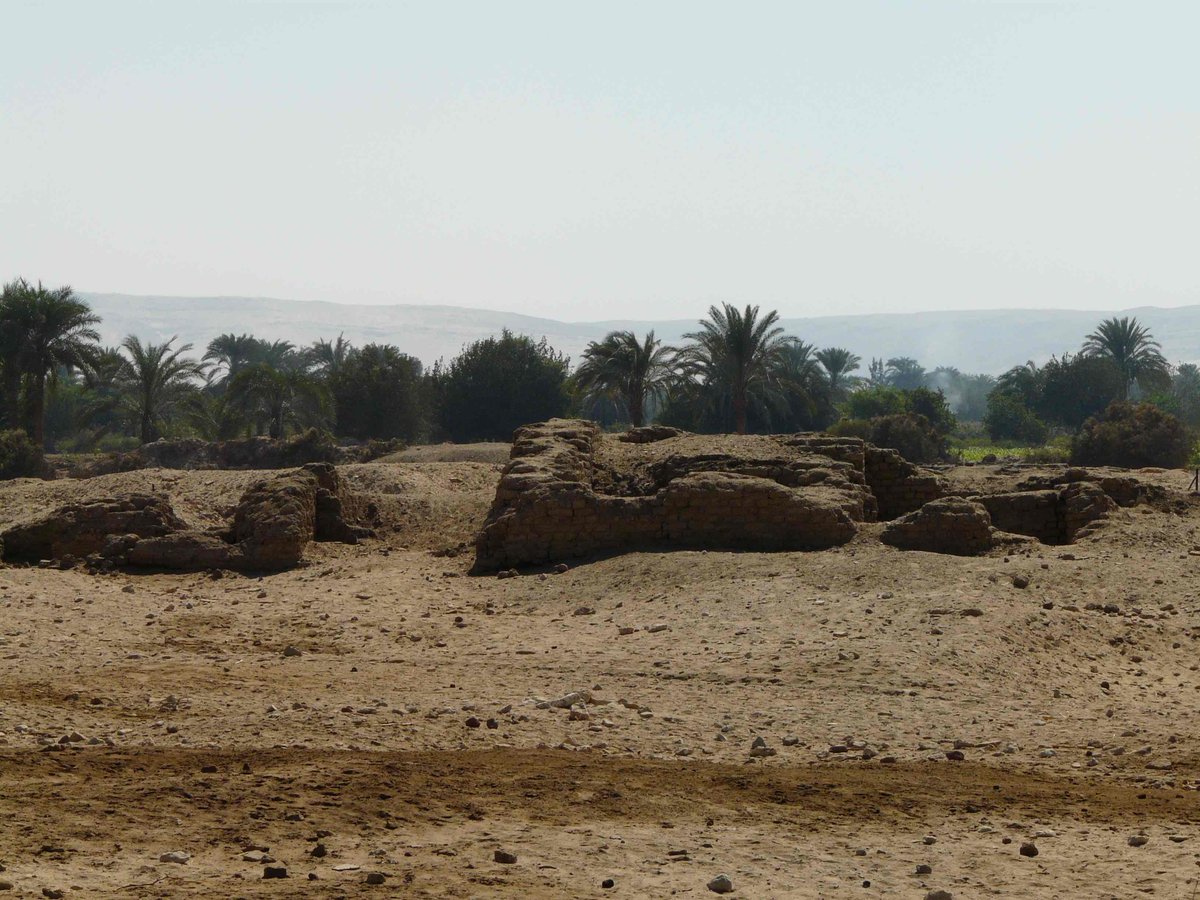
Amarna is an extensive ancient Egyptian archaeological site containing the ruins of Akhetaten, the capital city during the late Eighteenth Dynasty. Established in 1346 BC at the direction of Pharaoh Akhenaten, the city was abandoned shortly after his death in 1332 BC. The name Amarna comes from the Beni Amran, an Arab tribe that settled the area before the 18th century, while the ancient Egyptian name Akhetaten means "the horizon of the Aten".
To speed up construction, most of the buildings were constructed out of whitewashed mudbrick, though the most important structures were faced with local stone. The city covered an area of approximately 8 miles on the east bank of the Nile River, while land on the west bank provided crops for the population. It is the only ancient Egyptian city which preserves great details of its internal plan, largely because it was abandoned almost completely shortly after the royal government of Tutankhamun quit the city in favor of Thebes.
Akhenaten described the city as the Aten's "seat of the First Occasion, which he had made for himself that he might rest in it". It may be that the Royal Wadi's resemblance to the hieroglyph for horizon showed that this was the place to found the city. The city was dedicated to the new religion of worship to the Aten, and its core contained the Great Temple of the Aten, the Small Aten Temple, and the Great Royal Palace.
Sources: Wikipedia, OpenStreetMap, Wikimedia Commons
Written by Mutabor
Discuss this with the author and others
No comments yet. Be the first to start the conversation.