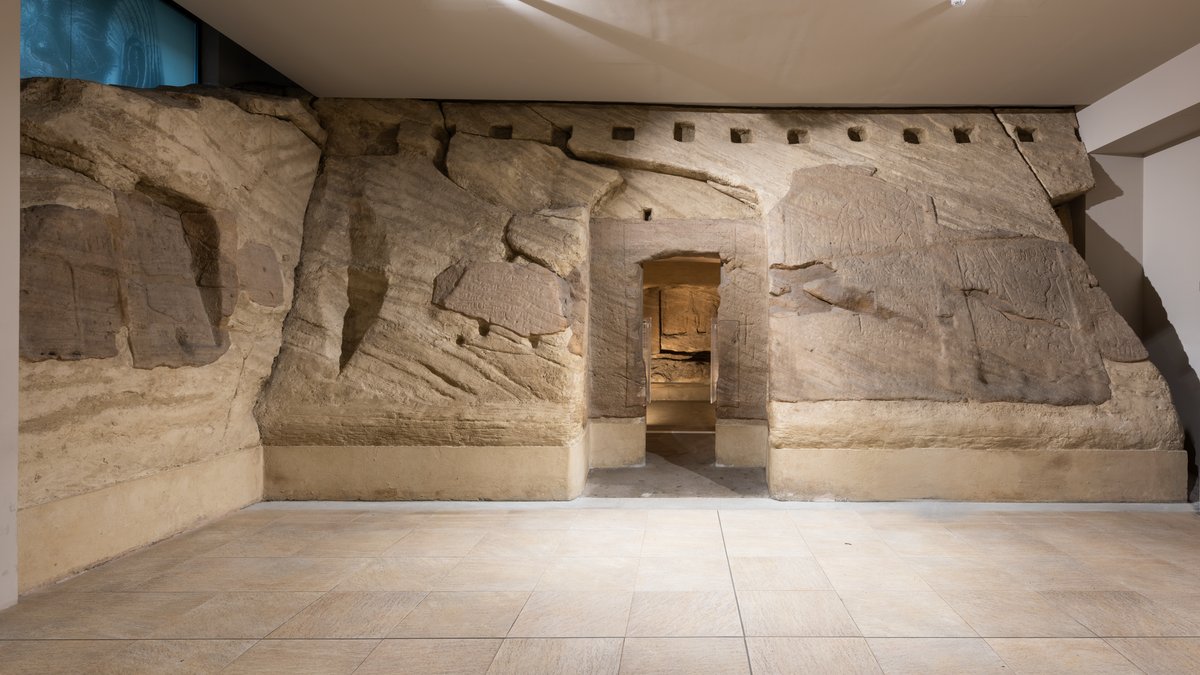

The Temple of Ellesyia is an ancient Egyptian rock-cut temple built during the 18th Dynasty by the Pharaoh Thutmosis III. Originally located near the site of Qasr Ibrim, the temple was dedicated to the deities Amun, Horus, and Satis. The interior features an inverted T-shaped structure consisting of a corridor and two side chambers. On the walls, scenes depict offerings made by the king to Egyptian and Nubian gods, with statues of Horus, Satet, and Thutmosis III carved in half-relief.
During Akhenaten's reign (1352–1336), the decorations were chiseled at various points. Rameses II later restored the temple, remodeling the triad in the rear niche with Amon, Horus, and the king. Eventually, the site became a Christian place of worship, evidenced by crosses and five-pointed stars engraved on the entrance portal and interior walls.
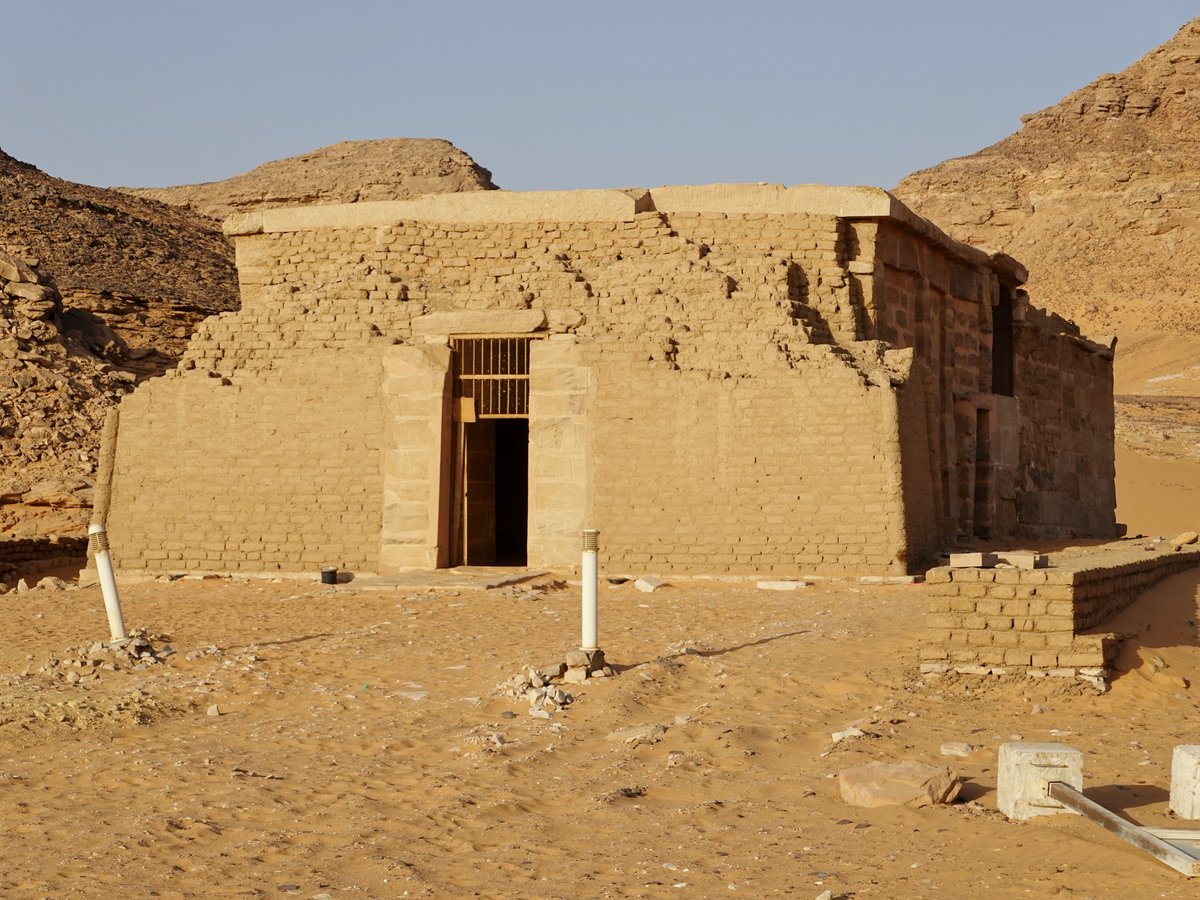
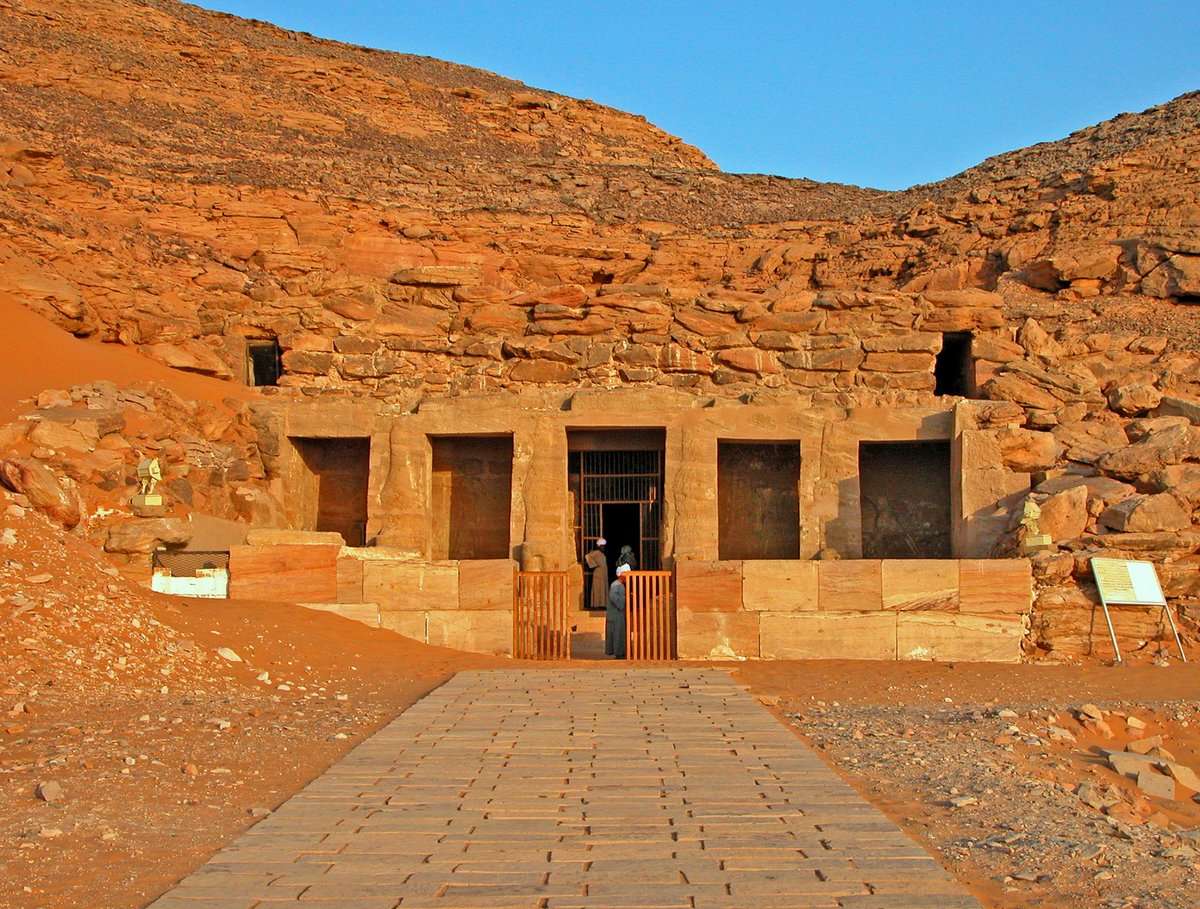
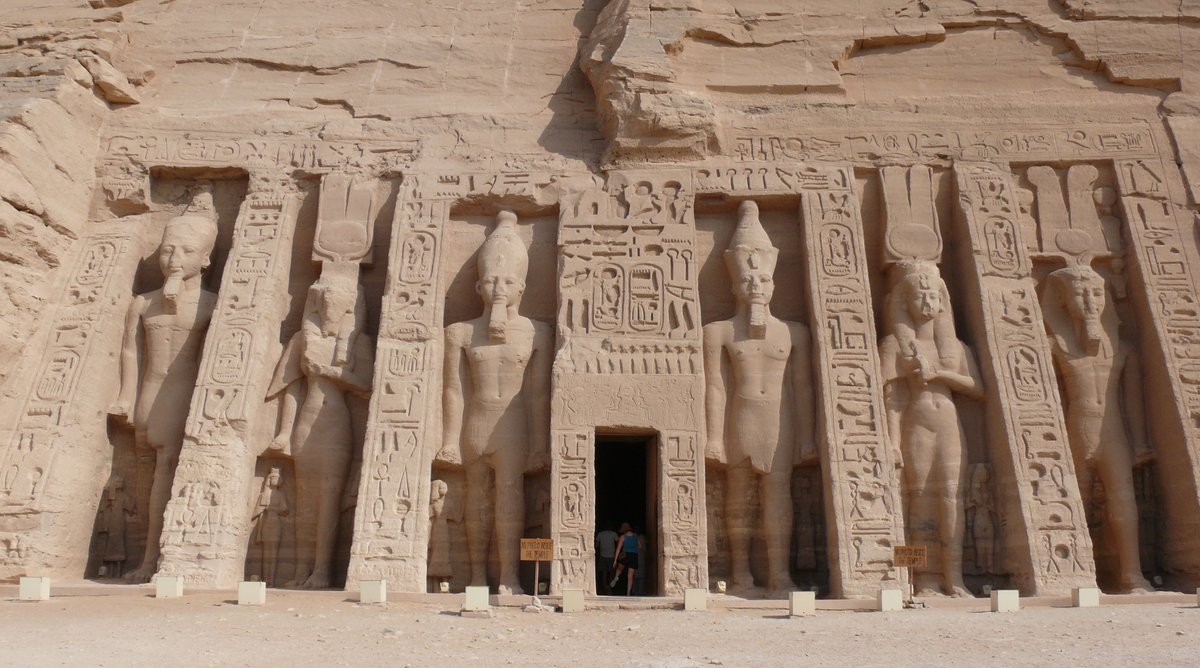
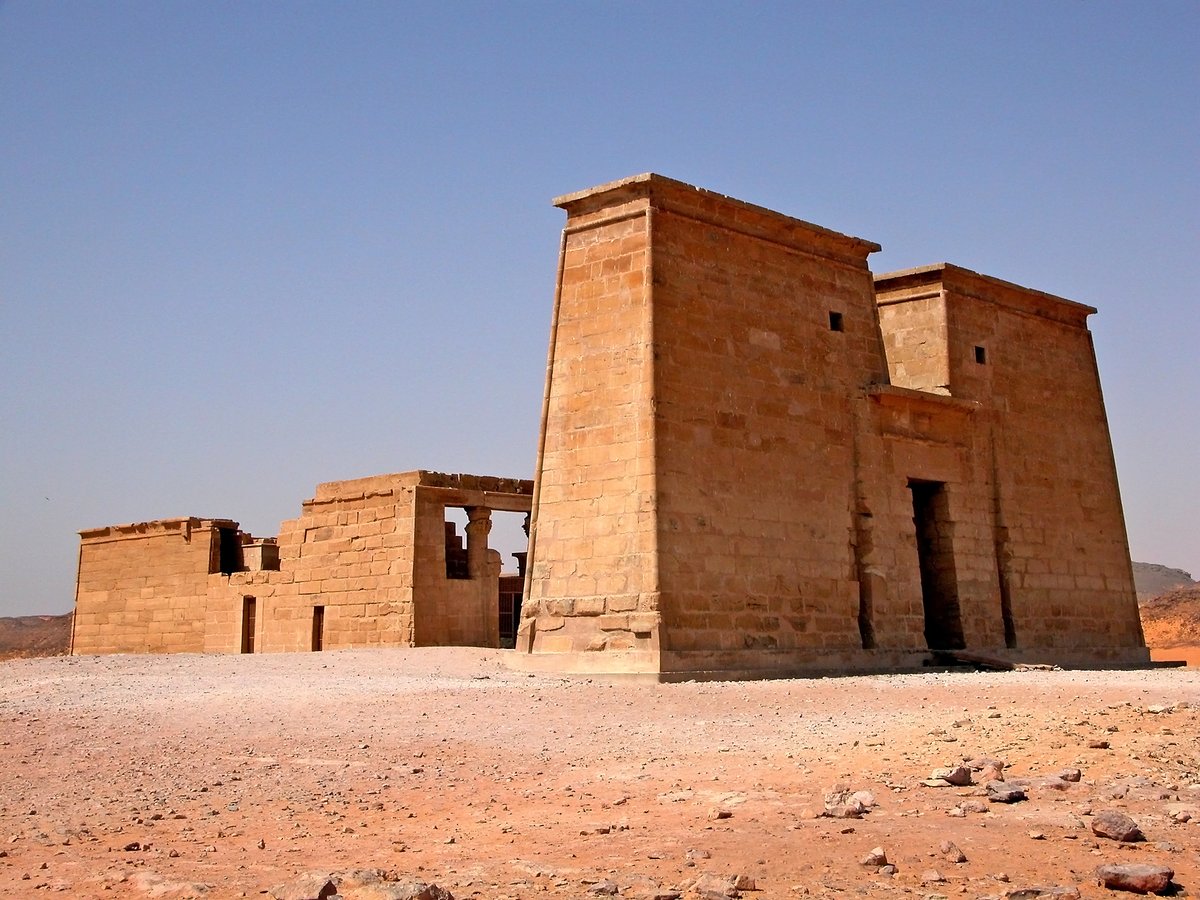
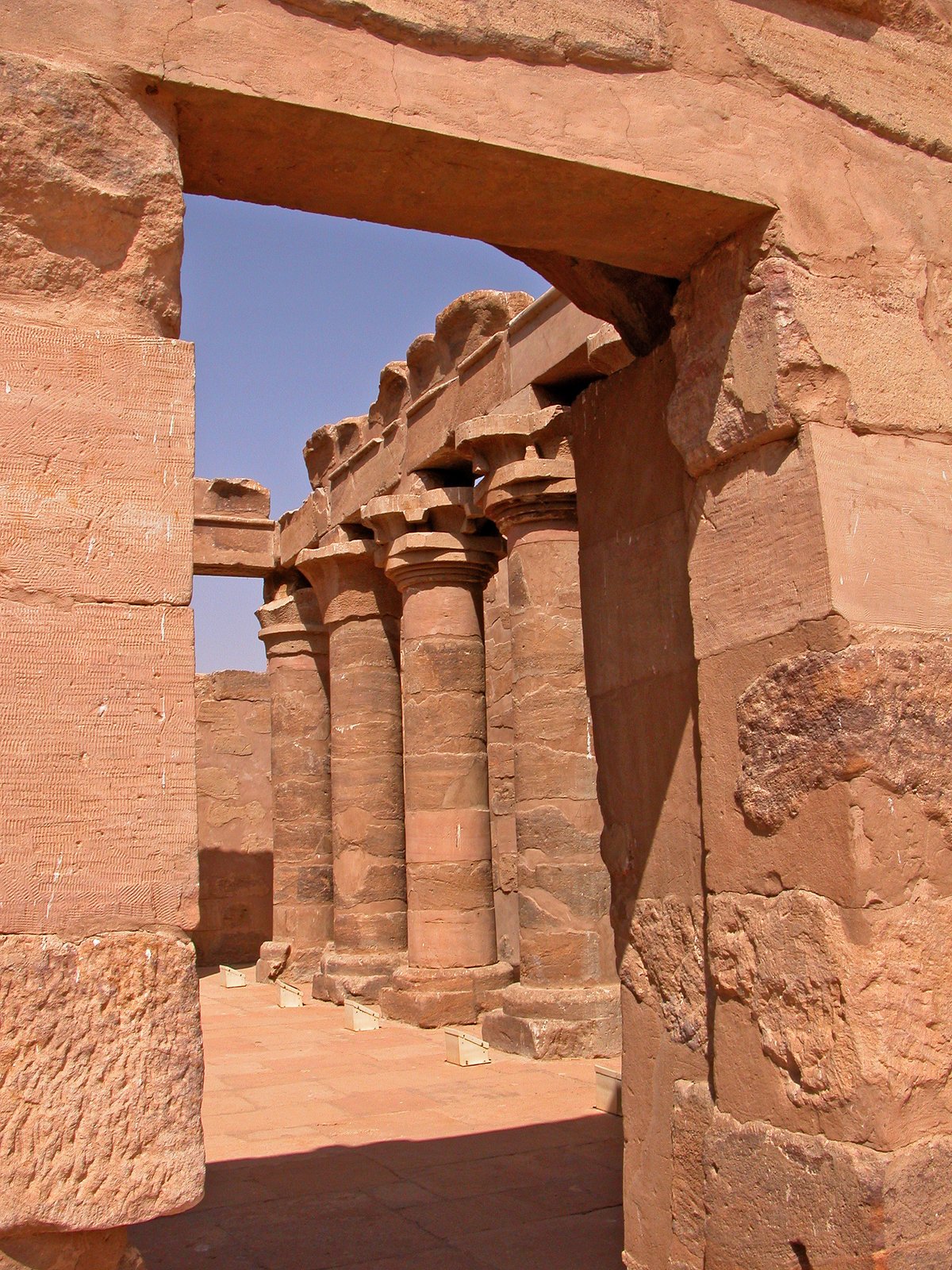
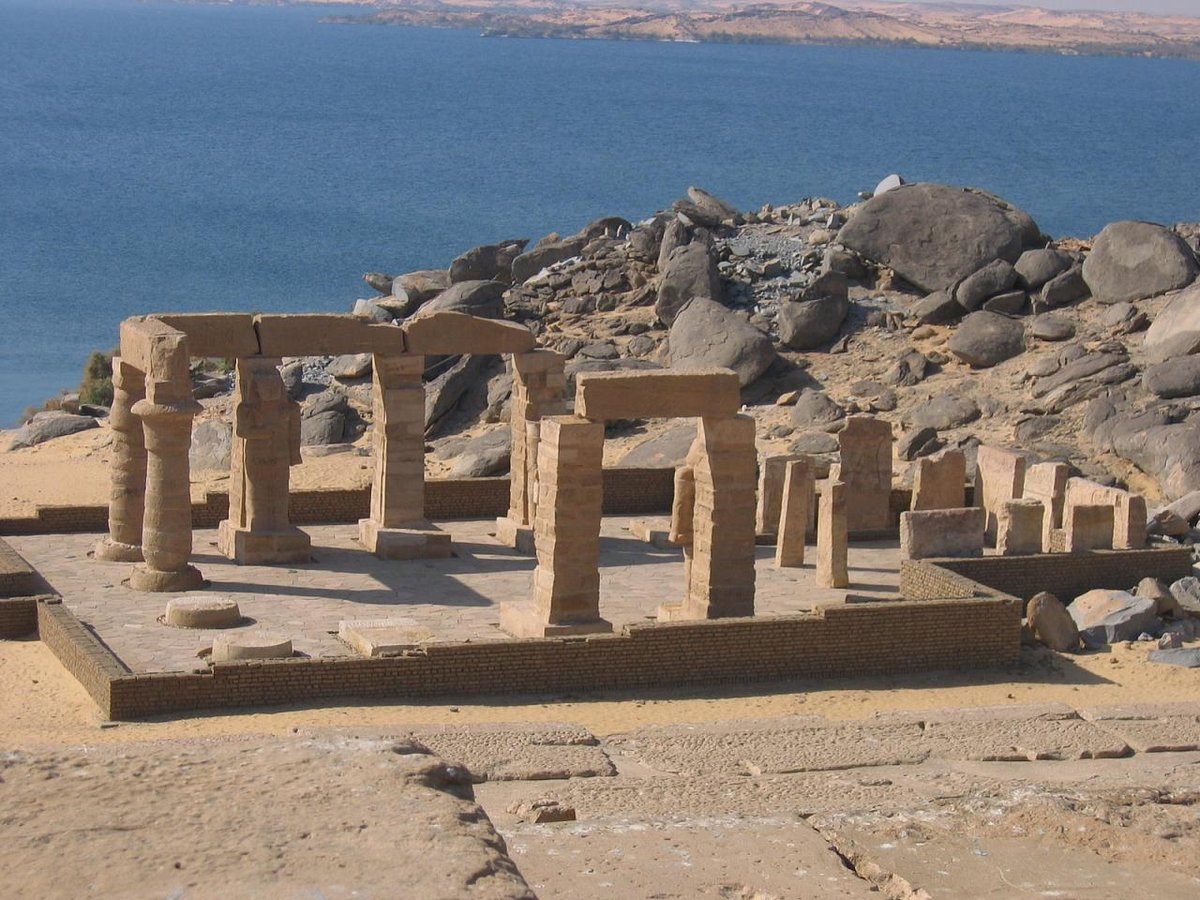
Faced with the construction of the Aswan High Dam, the temple was part of UNESCO's International Campaign to Save the Monuments of Nubia. In 1967, the temple was dismantled and moved to the Museo Egizio in Turin. UNESCO also assisted in relocating the Temple of Kalabsha to Berlin, the Temple of Taffeh to Leiden, the Temple of Dendur to New York City, and the Temple of Debod to Madrid.
Sources: Wikipedia, OpenStreetMap, Wikidata, Wikimedia Commons
Written by Mutabor
Discuss this with the author and others
No comments yet. Be the first to start the conversation.