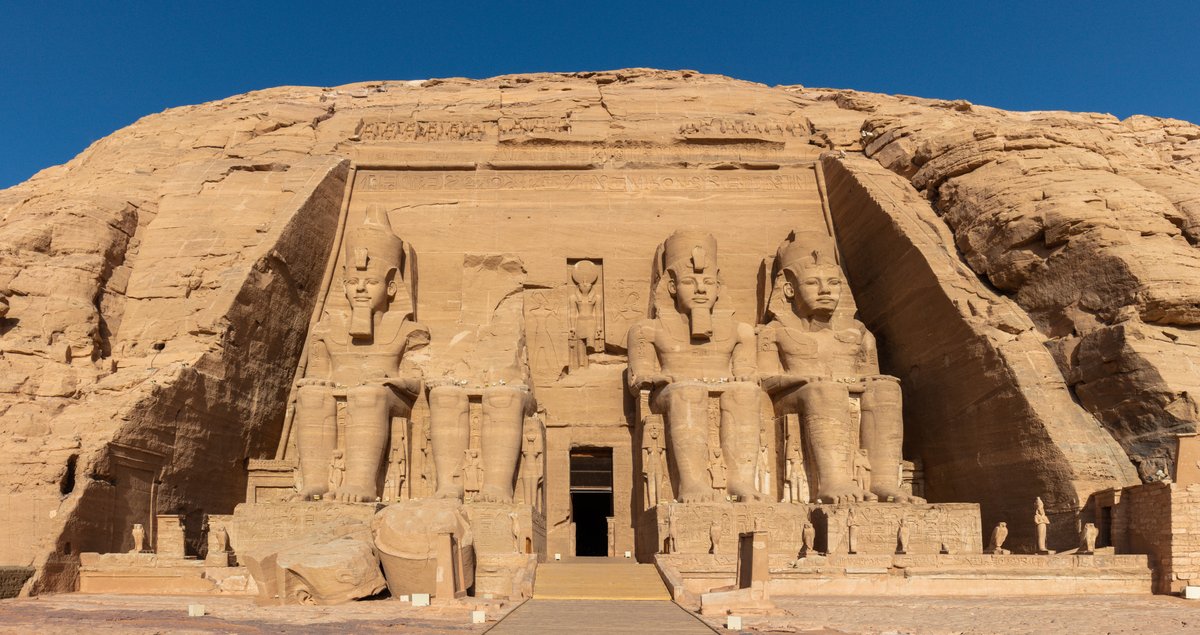

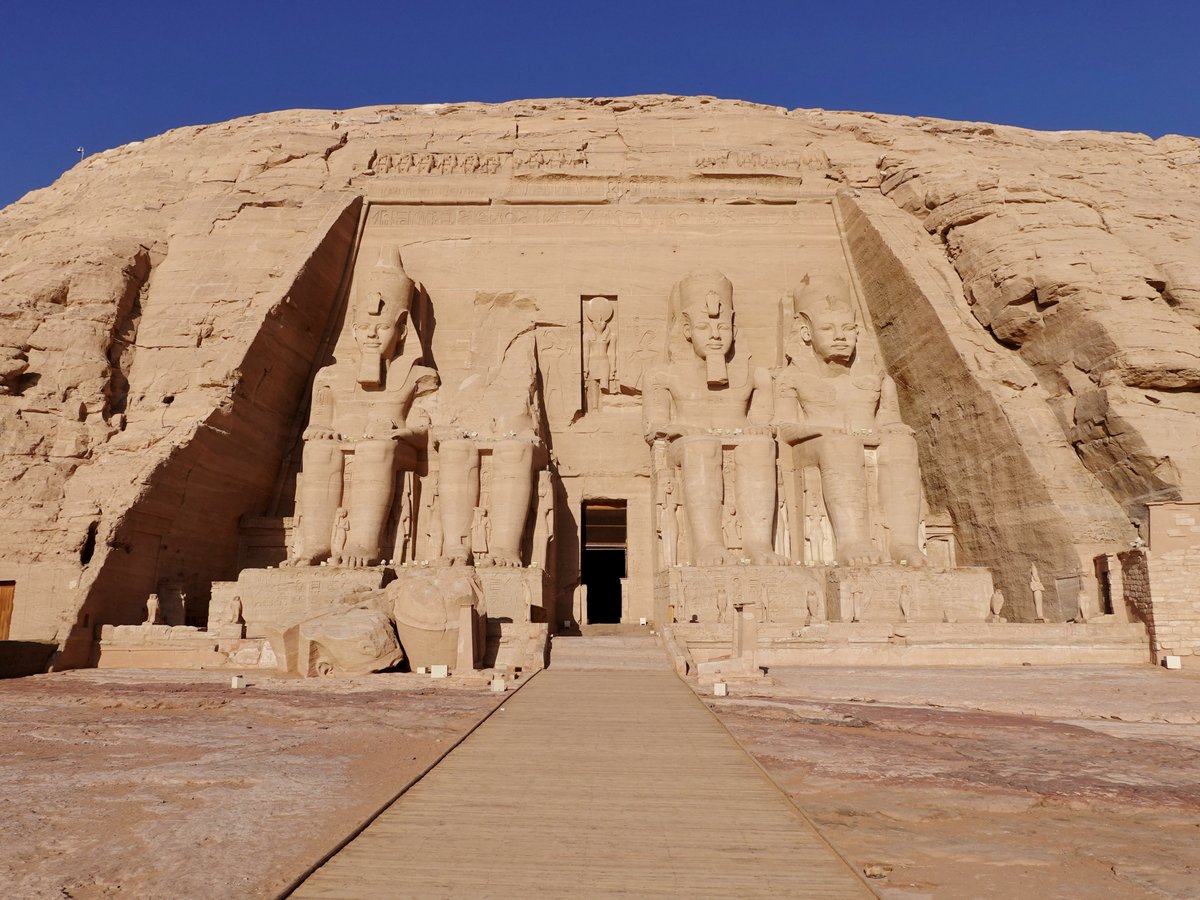
The temple of Ramses II is a funerary temple of the speos type, built under the mandate of the third ruler of the Nineteenth Dynasty. It is one of the most famous buildings in the region and is part of the Abu Simbel complex in the historical region of Nubia. The structure is located on the western bank of the water, near the national border with Sudan.
Construction began around 1264 a. C. and was finished twenty years later, around 1244 a. C. It is one of six temples excavated into the rock in Nubia during the long reign of Ramses II. After being abandoned for centuries, it was visited in 1813 by the Swiss J. L. Burckhardt. Later, in 1817, the Italian explorer Giovanni Belzoni cleared the entrance and removed the objects he could transport.
Because of the construction of the Aswan Dam in 1964, the temple was dismantled and reconstructed in a nearby area, 65 meters higher and about 200 meters further away. The facade stands approximately 30-33 meters high and 38 meters wide, featuring four colossal statues of Ramses II. Inside, the temple is divided into several rooms, including a sanctuary where the faces of Amon, Ra, and Ramses are illuminated by sunlight on the 21st of February and 21st of October, though this phenomenon now occurs two days later than originally intended.
Sources: Wikipedia, OpenStreetMap, Wikidata, Wikimedia Commons
Written by Mutabor
Discuss this with the author and others
No comments yet. Be the first to start the conversation.