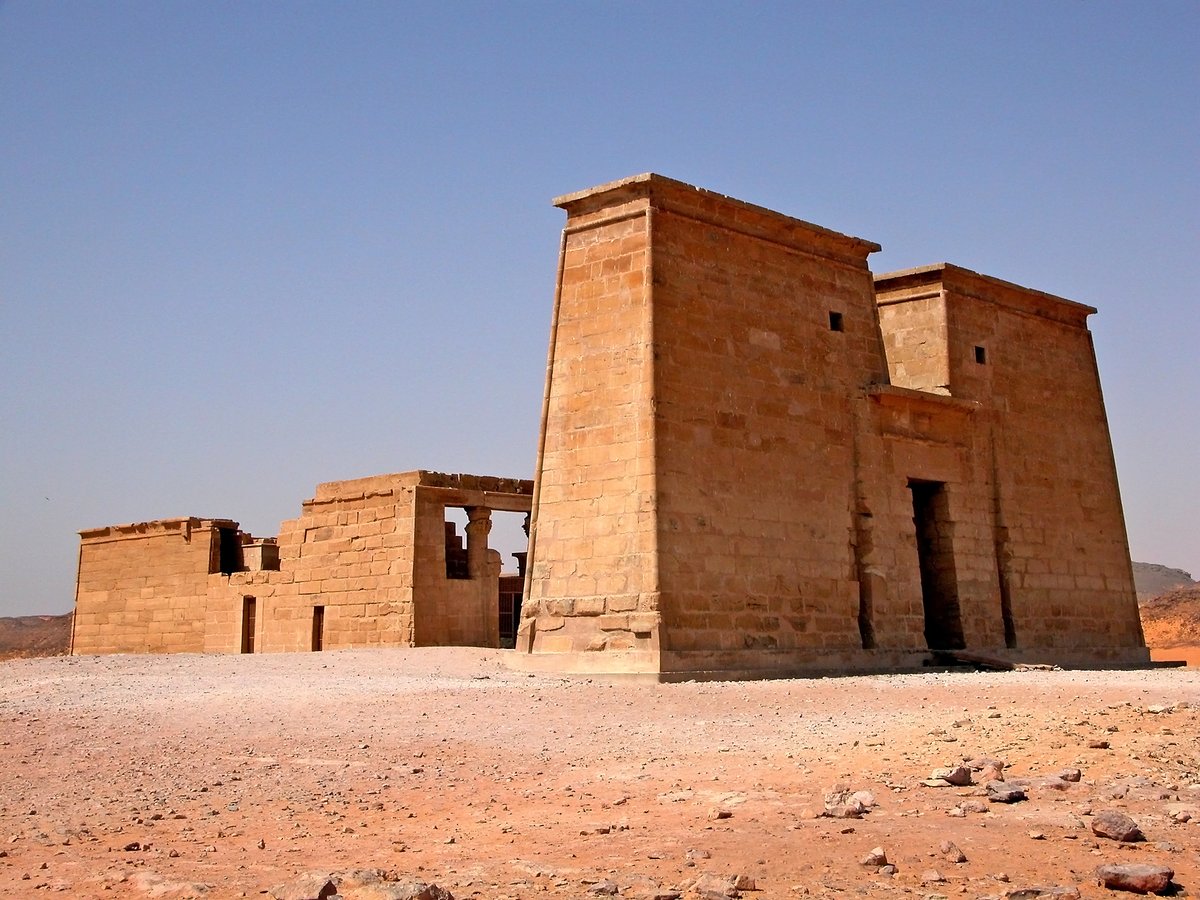

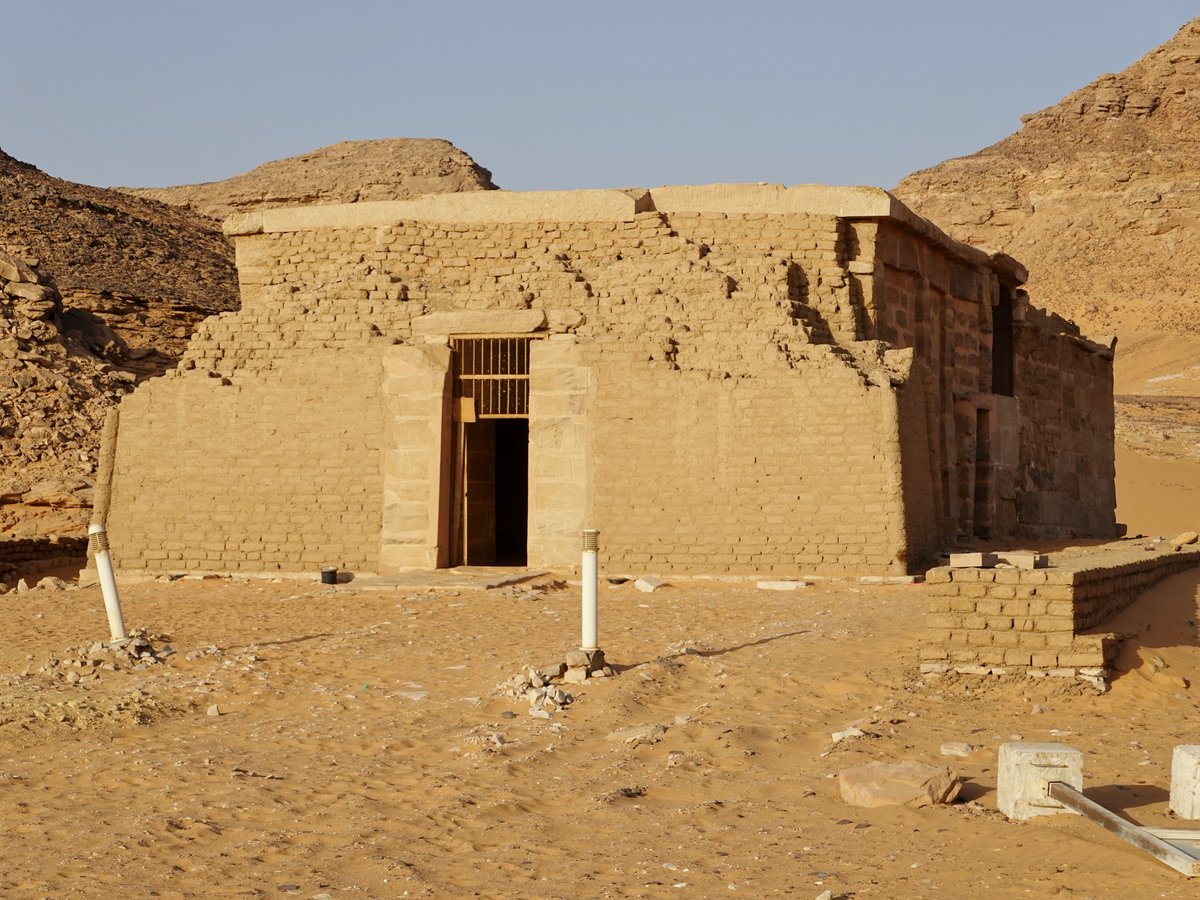
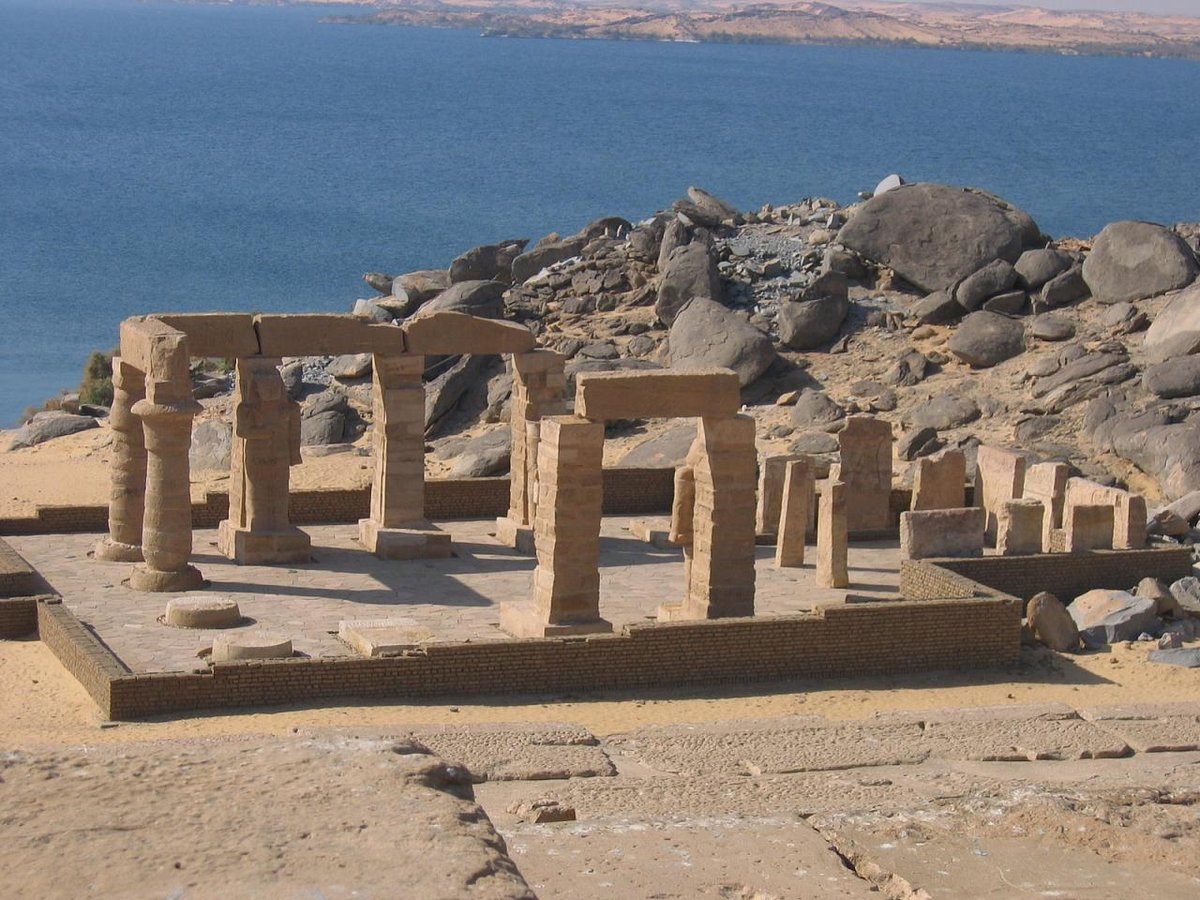
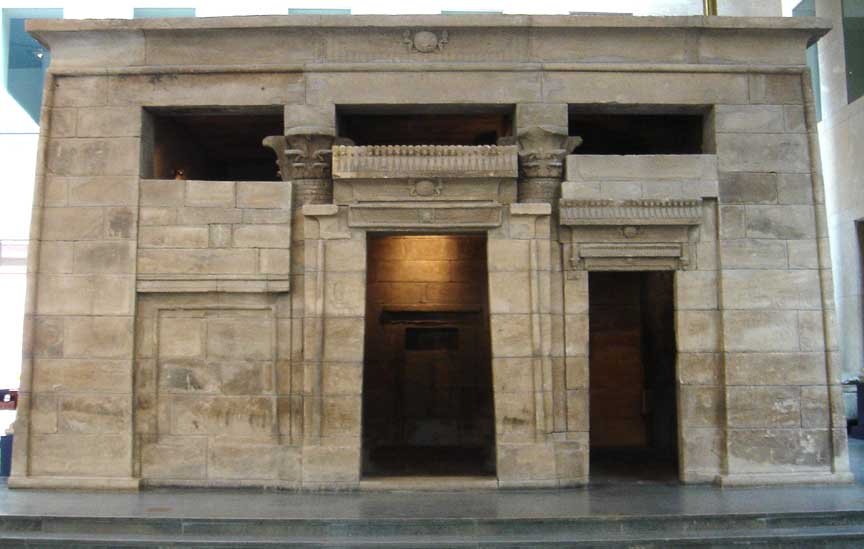
In Lower Nubia lies the Greco-Roman Temple of Dakka, a site dedicated to Thoth, the god of wisdom in the ancient Egyptian pantheon. The temple began as a small one-room shrine or chapel, first started in the 3rd century BC by a Meroitic king named Arqamani (or Ergamenes II). He worked in collaboration with Ptolemy IV, who added an antechamber and a gate structure to the shrine.
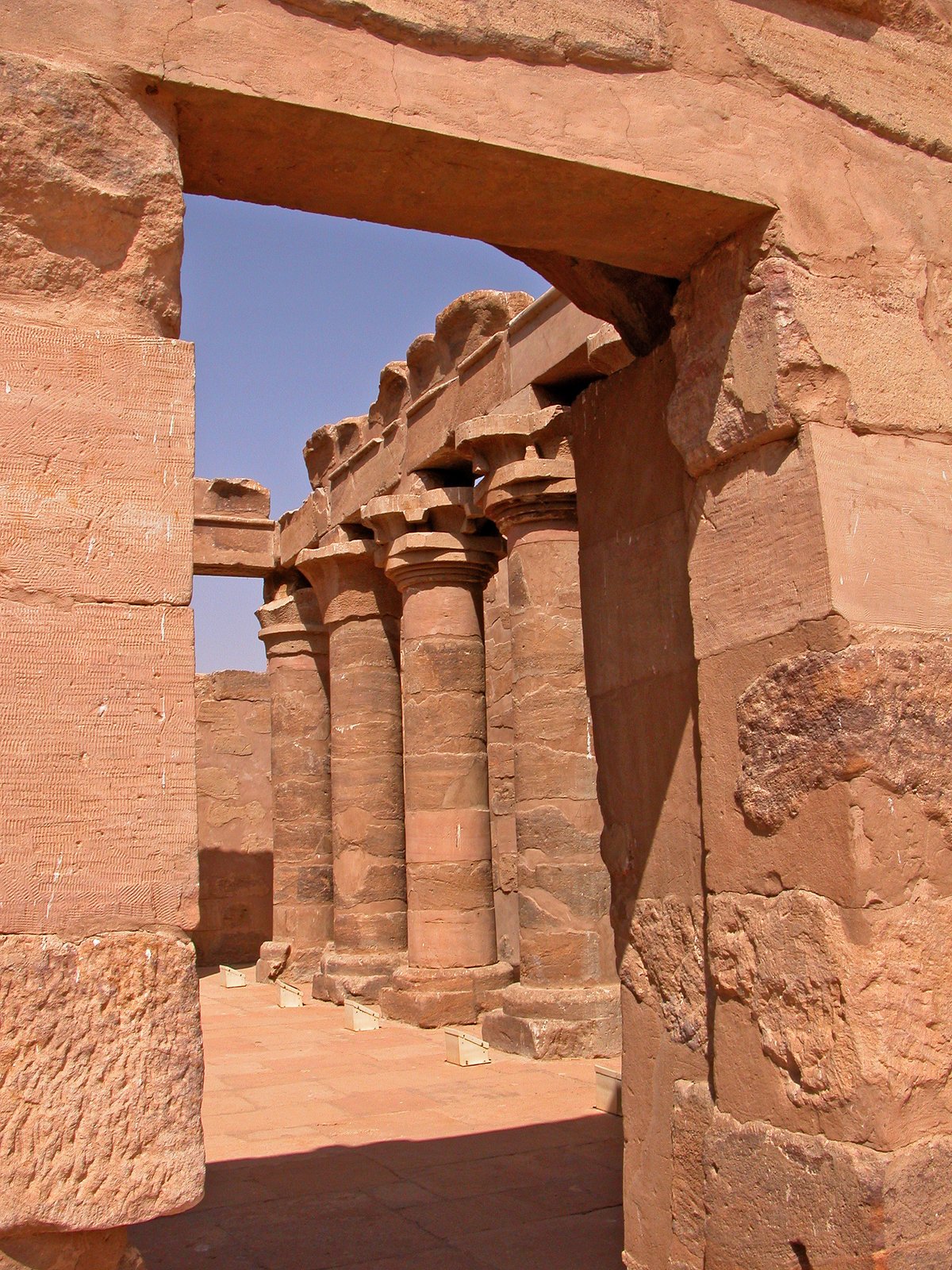
Later, Ptolemy IX enlarged the temple by adding a pronaos with two rows of probably three columns. During the Roman period, the Emperors Augustus and Tiberius further enlarged the structure by adding a second sanctuary at the rear, as well as inner and outer enclosure walls with a large pylon. The Romans transformed the temple into a temple fortress, surrounded by a stone wall measuring 270 by 444 metres long with an entrance along the Nile.
During the Christian period of Egypt, the facade of the pronaos was converted for use as a church. Christian paintings were still visible here in the 20th century before the temple was enveloped by the Nile floods; in the 19th century, these paintings were already described as rather crude and quite damaged. Today, the temple's pylon is separated from the remainder of the temple due to the missing enclosure walls of the open court.
Sources: Wikipedia, OpenStreetMap, Wikidata, Wikimedia Commons
Written by Mutabor
Discuss this with the author and others
No comments yet. Be the first to start the conversation.