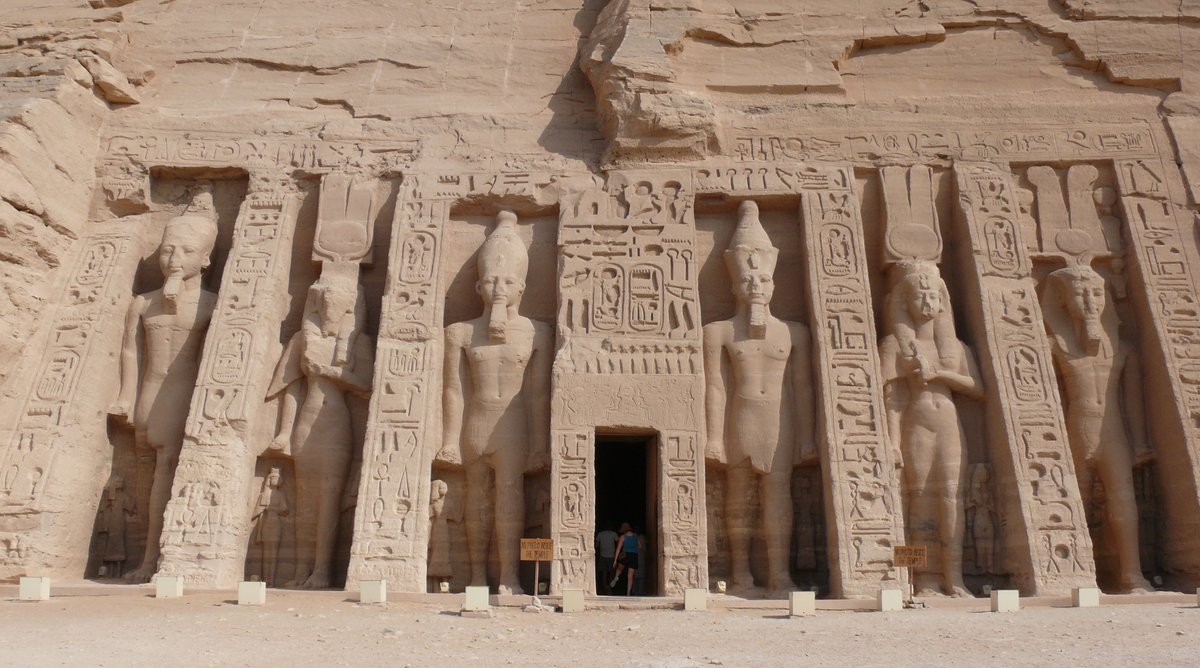

Crafted during the reign of Ramses II of the 19th dynasty, the Temple of Nefertari, also known as the Temple of Hathor, emerged as a unique monument dedicated to a woman - Nefertari. A rare sight in ancient times, it is part of the Abu Simbel complex.
Construction commenced in 1264 BC and was completed in 1284 BC, making it one of the enduring symbols of Ramses II's long rule. The temple remained abandoned for centuries before its discovery by European explorers in the early 19th century.
The first to hear of its existence was J. L. Burckhardt in 1813. After returning to Europe, he explained his discovery to the Italian explorer Giovanni Belzoni, who traveled to the site but was unable to access the temple. Belzoni returned in 1817, this time finding the entrance and later taking away various objects he could transport.
The facade of the temple features six colossi - four representing Ramses II and two representing Nefertari. These statues are approximately 10 meters tall and are carved directly into the mountain rock. In the facade, the statues have their left legs forward as if they were walking.
The temple features a series of passages and rooms, all decorated with reliefs and hieroglyphics. The hypostyle hall is supported by six pillars decorated with reliefs of the goddess Hathor and Nefertari. It was designed for religious ceremonies.
The inner sanctuary houses a statue of the goddess Hathor, who is represented together with Nefertari. The walls are adorned with reliefs showing the king and queen in various religious activities, such as making offerings to the gods. The temple showcases the artistic mastery and deep spirituality of the civilization during Ramses II's reign.
Sources: Wikipedia, OpenStreetMap, Wikidata, Wikimedia Commons

Written by Mutabor
Discuss this with the author and others
No comments yet. Be the first to start the conversation.