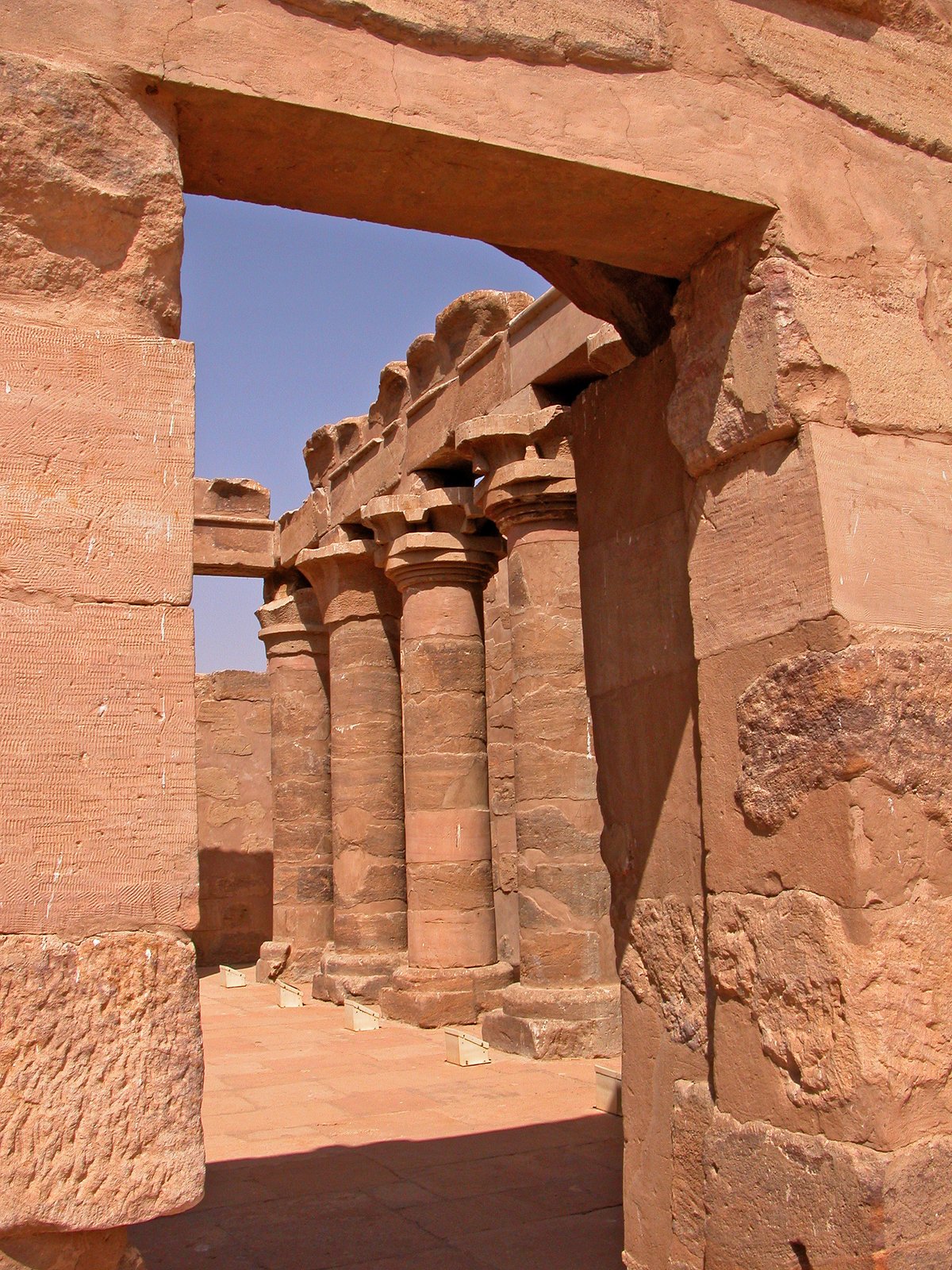

A winding spiral staircase curls in a corner of the court, a stone path leading to the roof. This is the only Egyptian temple in Nubia with a spiral staircase, a singular architectural choice in a landscape of heavy pillars and straight lines.
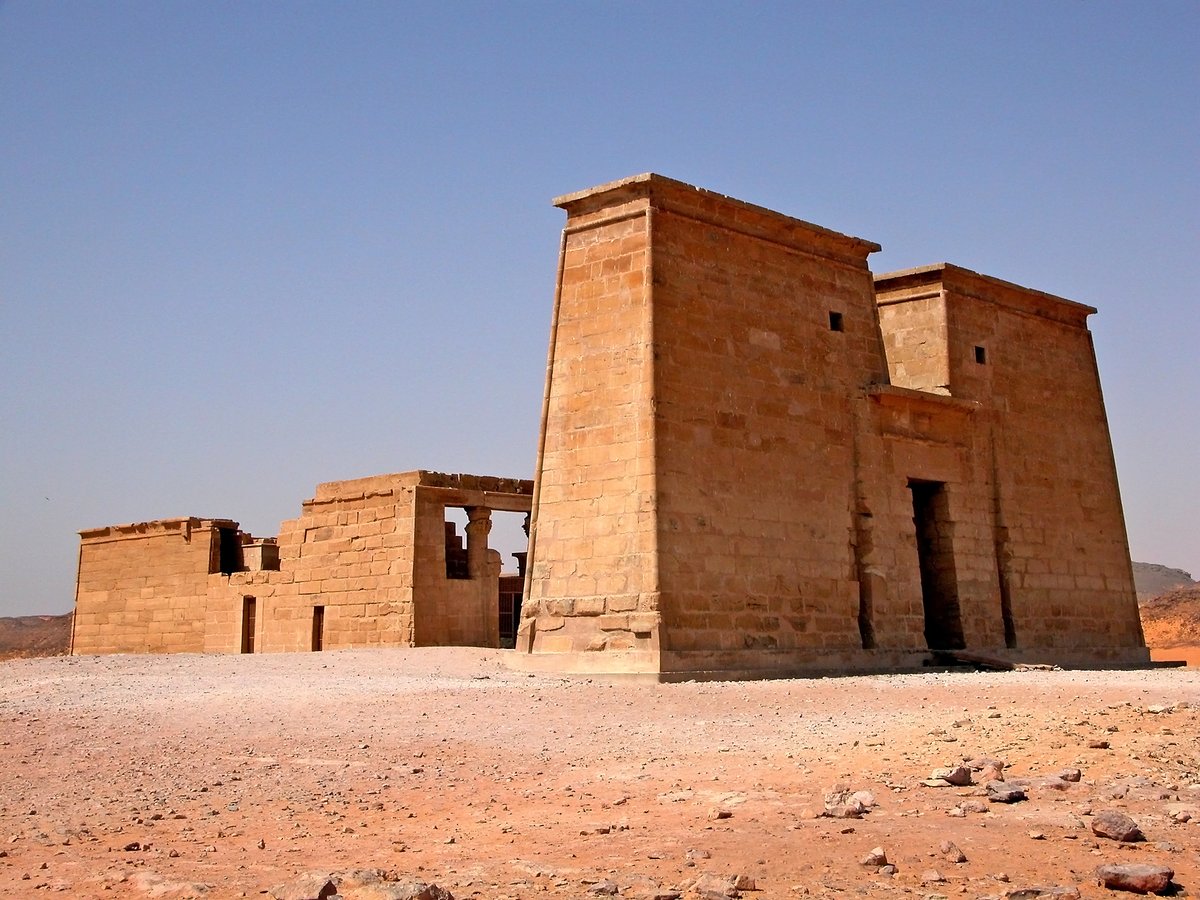
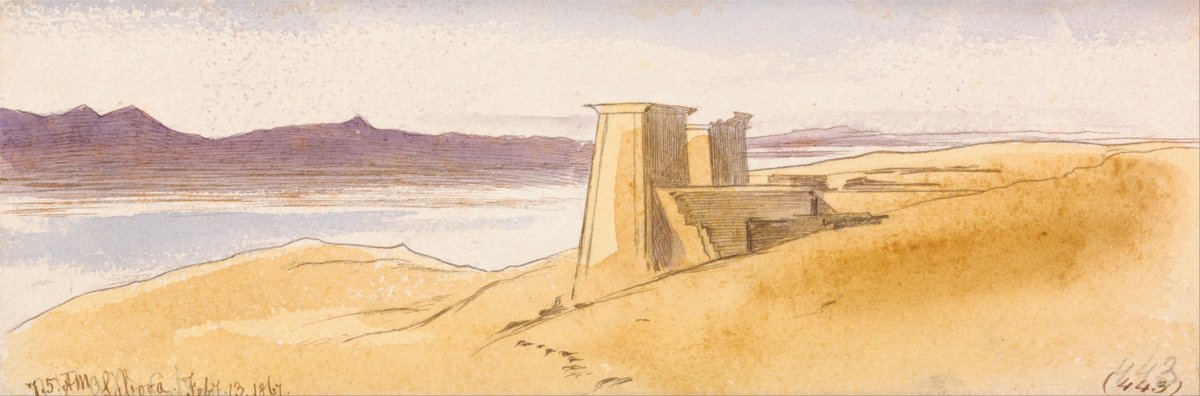
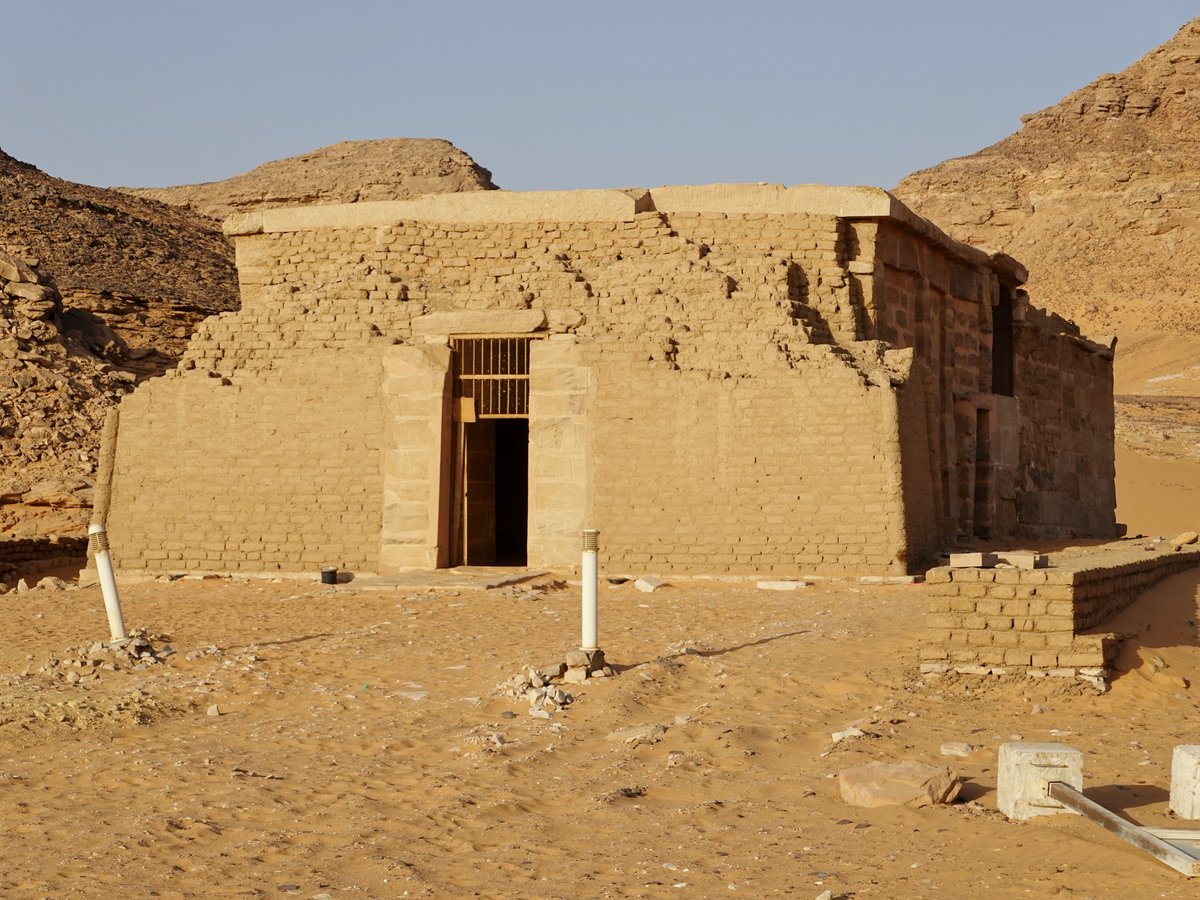
Long ago, the Romans established a permanent frontier between Meroë and Roman Egypt at Maharraqa. They built this temple to honor Isis and Serapis, but the structure was never fully completed. Only a small court measuring 13.56 by 15.69 metres, surrounded on three sides by columns, was finished - the sanctuary itself was never built.
In the 6th century, the temple was converted into a church. By the mid-19th century, wall paintings of Christian saints were still visible on the interior of the north wall. These paintings depicted the history of the fall of man, arranged in a line like a procession of men and angels, alongside many Christian inscriptions.
In the 1960s, the temple was dismantled and relocated to escape the flooding of the Nile caused by the Aswan High Dam. During this process, the remaining Christian wall paintings were destroyed. It now stands at the New Wadi es-Sebua site as a fragment of the ancient frontier where a spiral of stone remains.
Sources: Wikipedia, OpenStreetMap, Wikidata, Wikimedia Commons
Written by Mutabor
Discuss this with the author and others
No comments yet. Be the first to start the conversation.