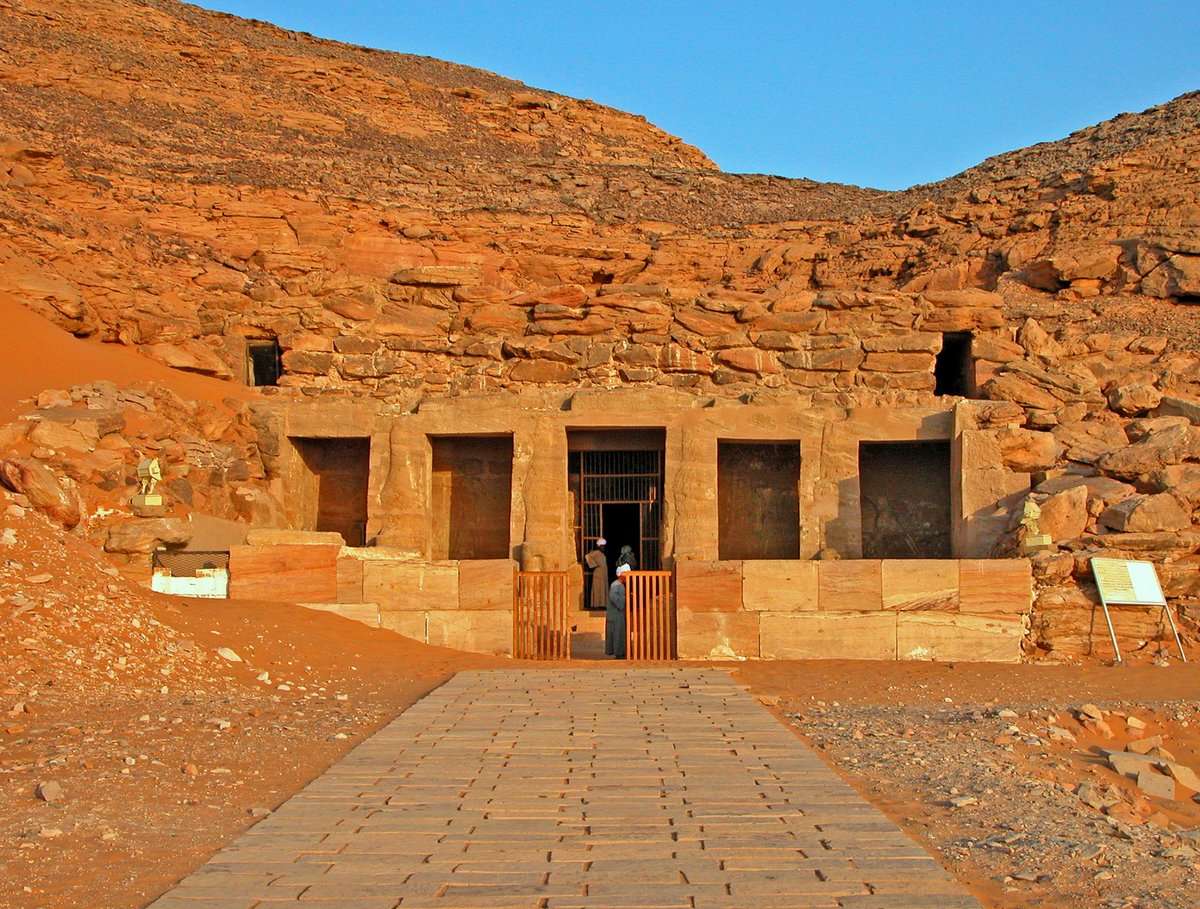

Nestled in Lower Nubia, the Temple of Derr, or el-Derr, is a rock-cut Egyptian temple located in New Amada. It was built during the 19th Dynasty by Pharaoh Ramesses II on the east bank of the Nile. The temple's unique position was probably because the river on its approach to the Korosko bend flows in an unnatural southeasterly direction. The temple was dedicated to the god Ra-Horakhty.
In ancient times, the structure was known as The Temple of Ri'amsese-meryamun in the Domain of Re. According to Joyce Tyldesley, the temple was built by Setau, who served as Ramesses' Viceroy of Kush or Nubia between Year 38 and Year 63 of the pharaoh's reign. While scholars disagree on the precise date, Nicolas Grimal suggests it was built in the thirtieth year of Ramesses II to coincide with his first royal jubilee. The temple's plan and decoration resemble the Great Temple of Abu Simbel.
When cleaned and restored in modern times, the temple revealed unusually bright and vivid relief decorations that contrasted sharply with the more subdued color tones of other Egyptian temples. It consisted of a sequence of two hypostyle halls leading to a triple sanctuary where a cult of statues of Ramesses II, Amon-Re, Ra-Horakhty and Ptah was celebrated.
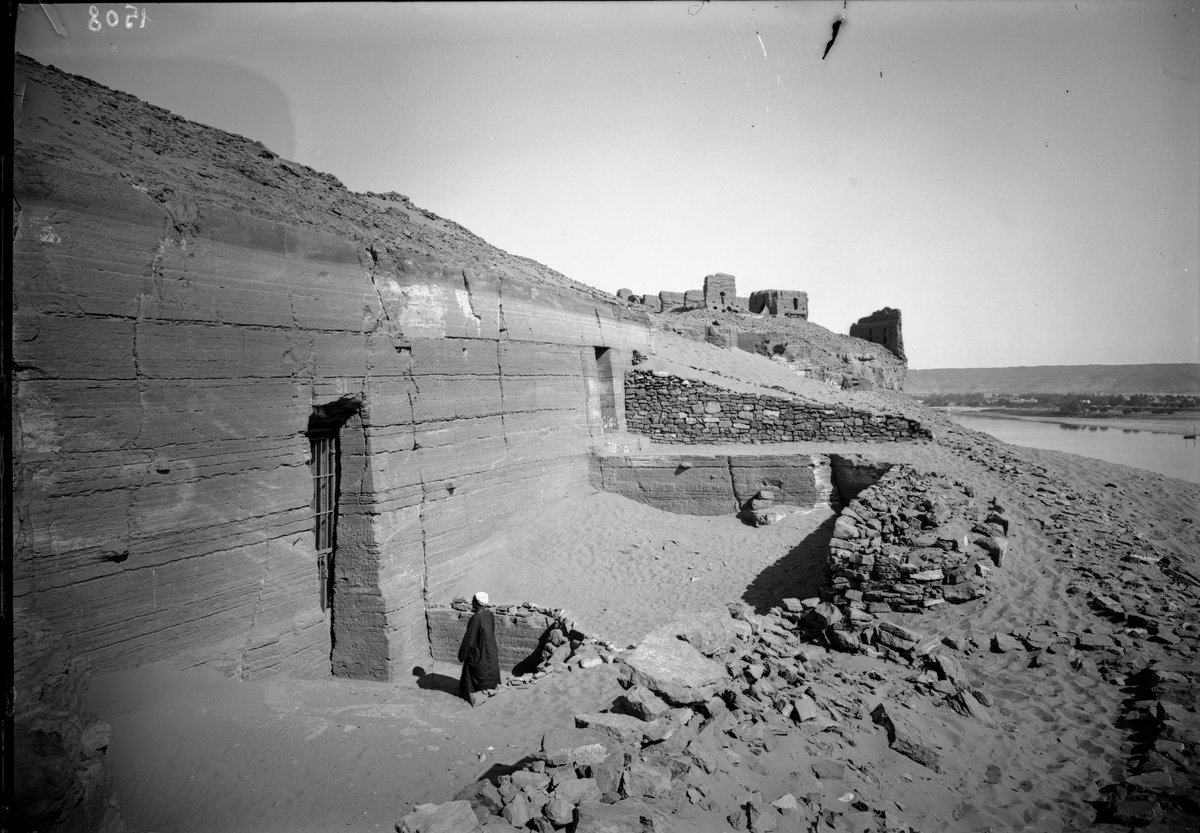
Early travellers visited the original site before the temple was dismantled and relocated in 1964 as part of the International Campaign to Save the Monuments of Nubia. It was moved along with the Temple of Amada to a new site. The temple was first studied and published by Aylward Blackman in 1913.
Sources: Wikipedia, OpenStreetMap, Wikidata, Wikimedia Commons


Written by Mutabor
Discuss this with the author and others
No comments yet. Be the first to start the conversation.