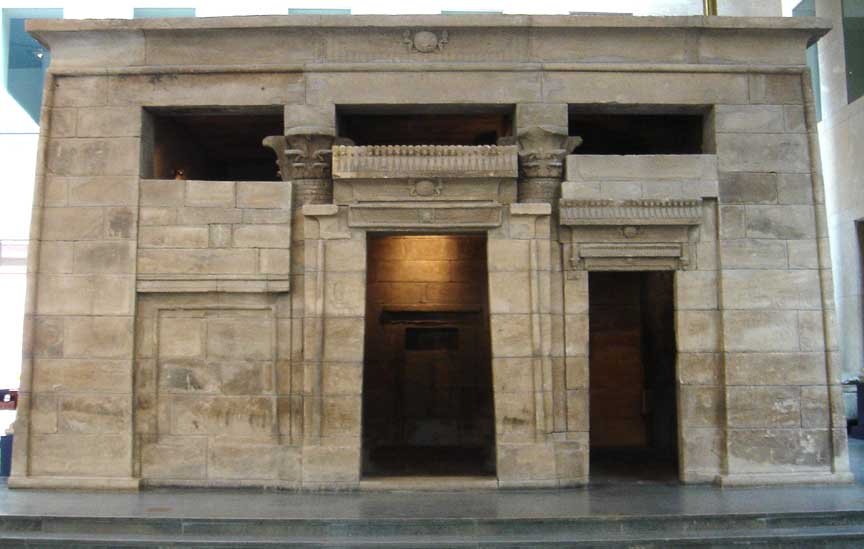

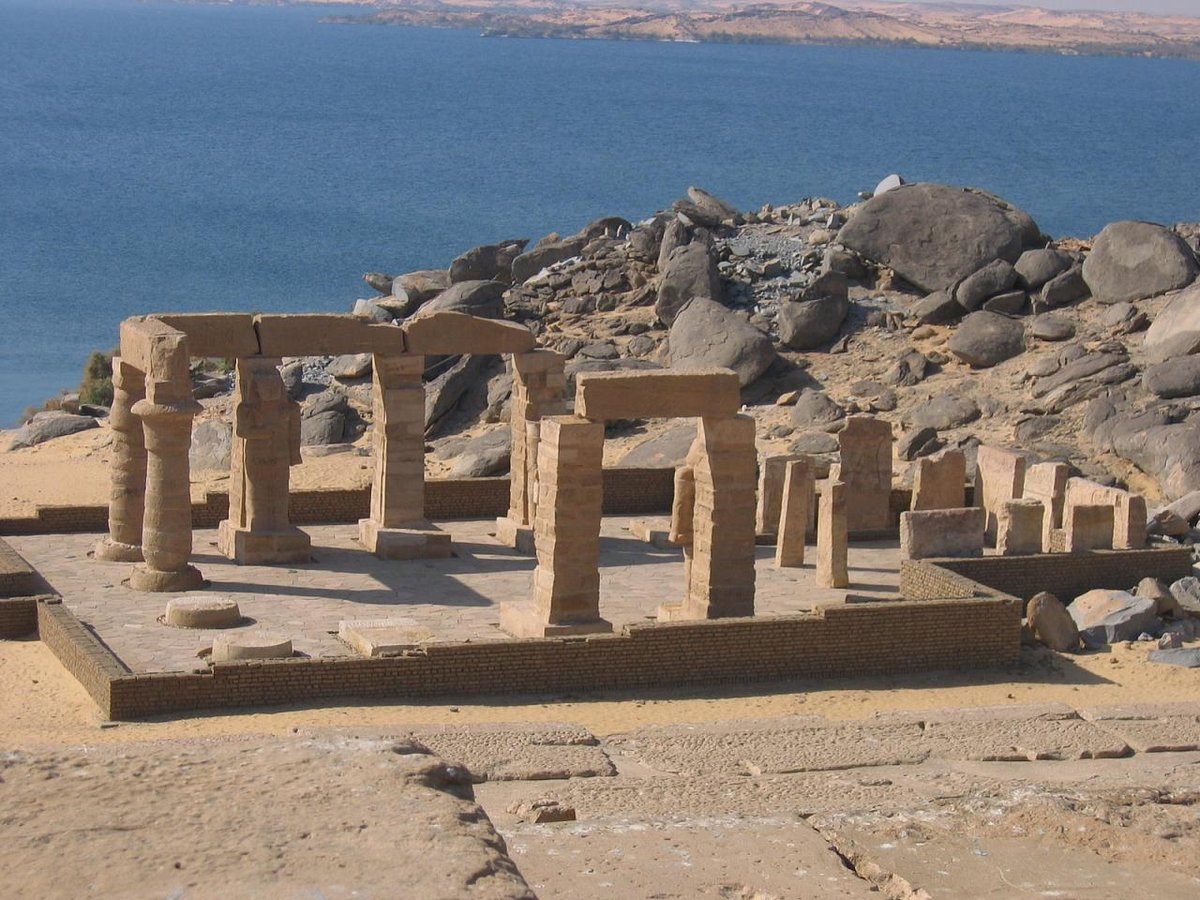
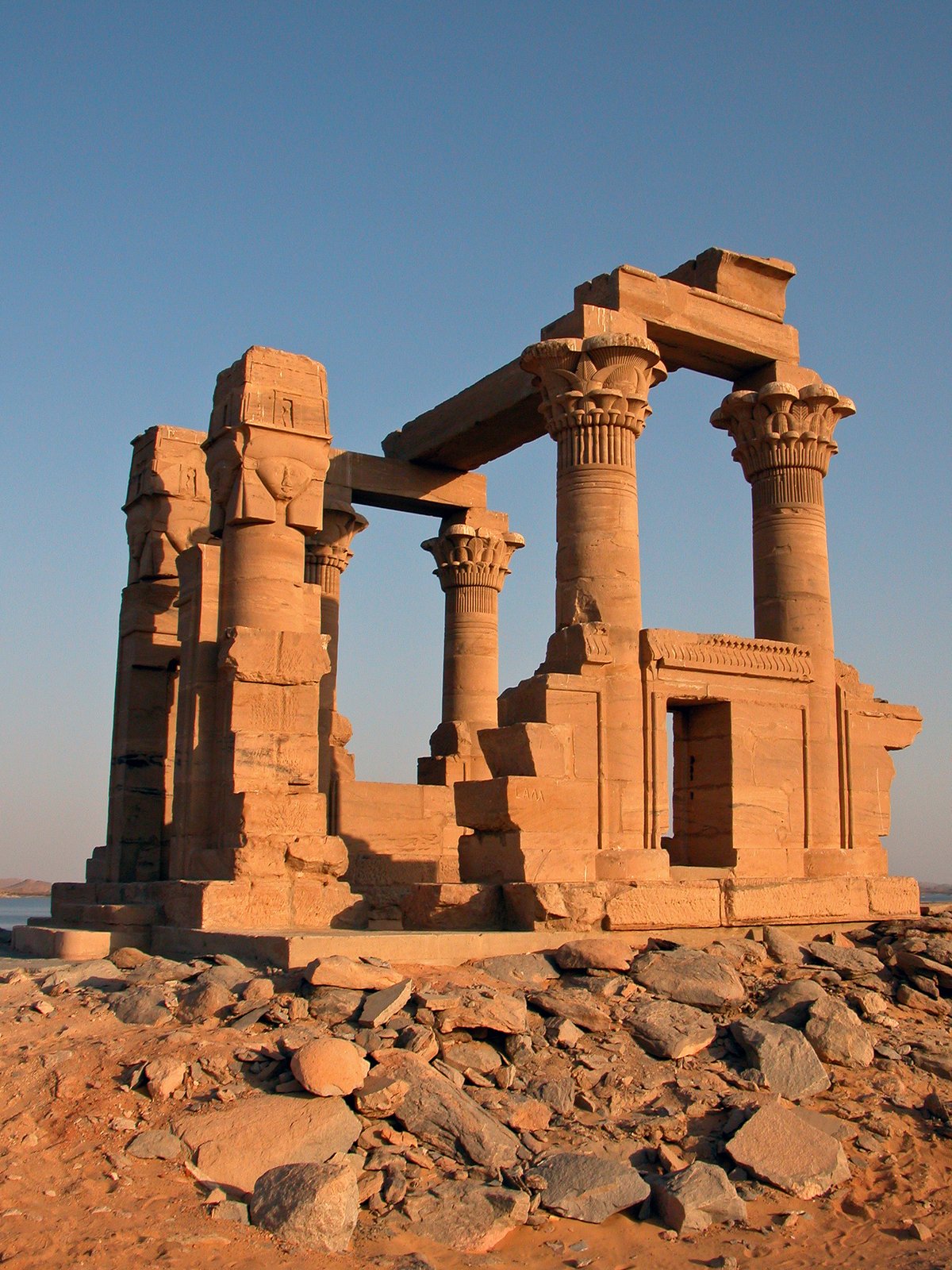
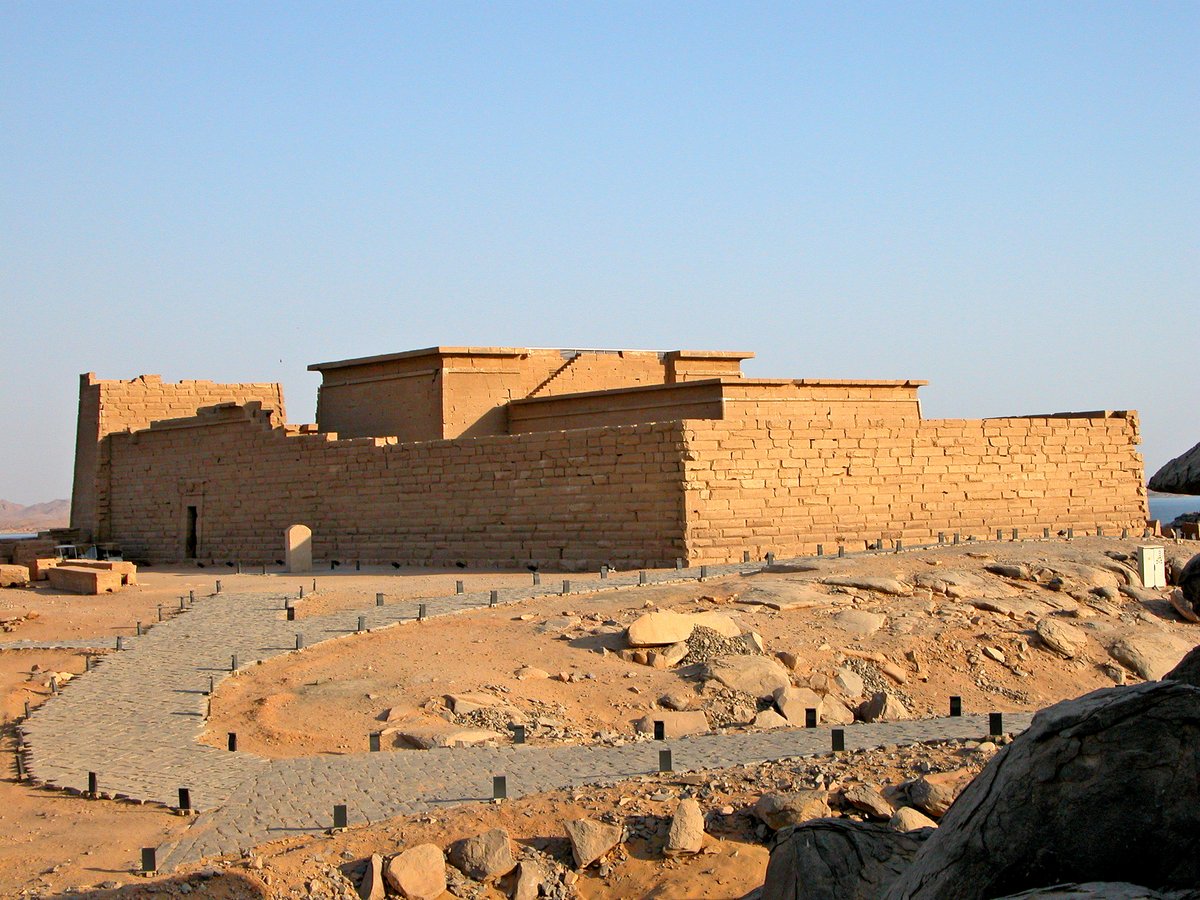
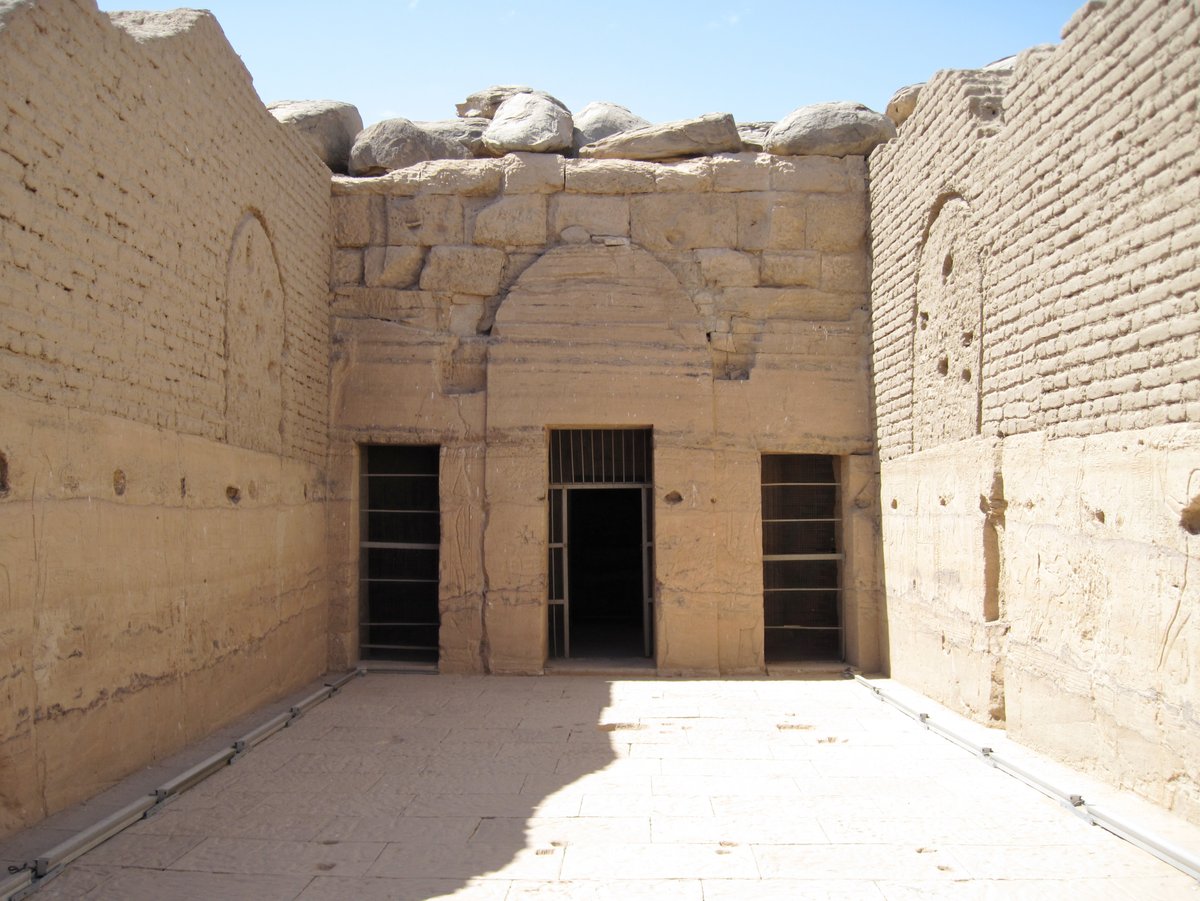
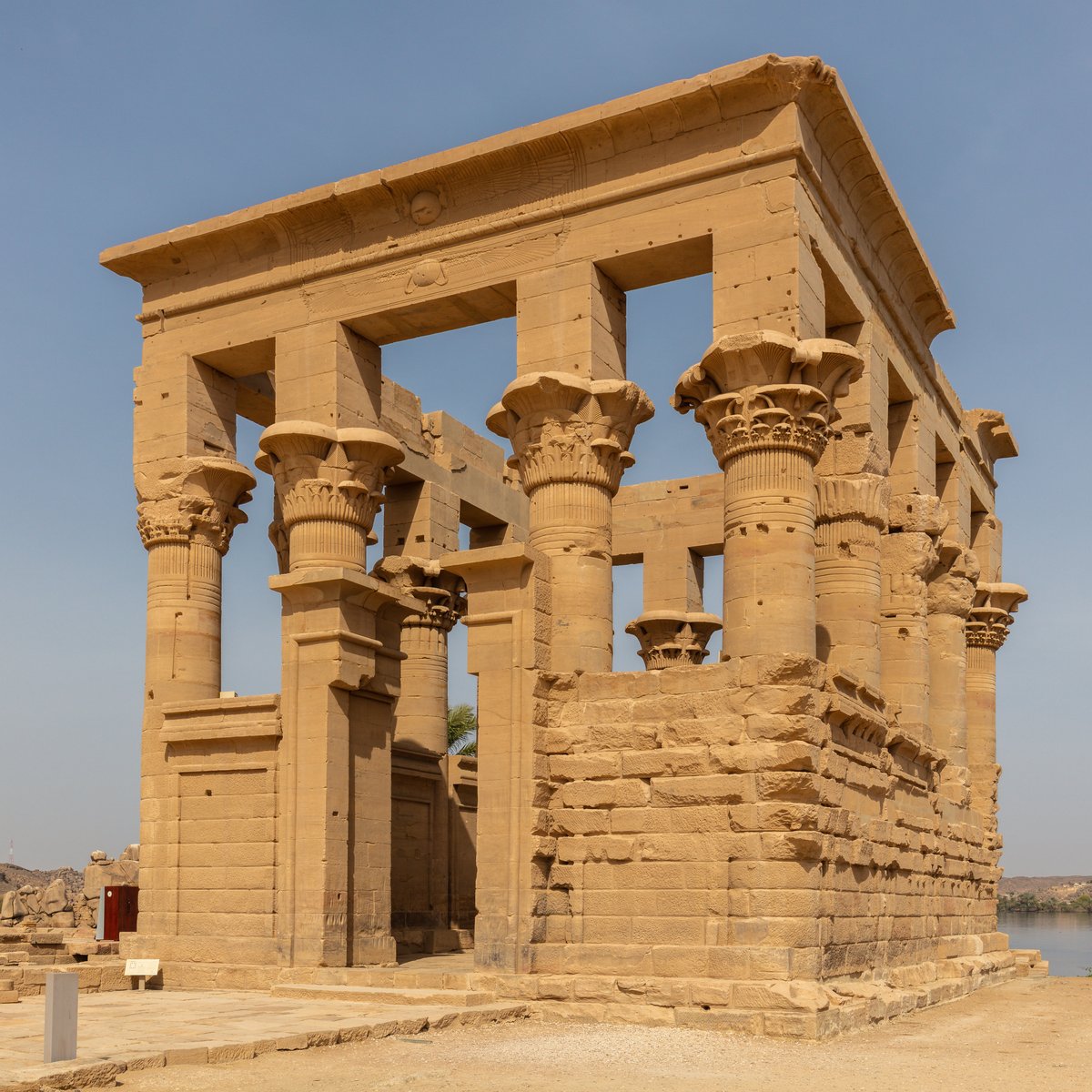
In Egypt, during the rule of the Roman emperor Augustus, the Temple of Taffeh was built between 25 BCE and 14 CE. It was constructed from sandstone as part of the Roman fortress known as Taphis. The temple measures 6.5 by 8 metres and features a rear wall with a statue niche. The north temple's two front columns are formed by square pillars with engaged columns on their four sides.
In 1960, UNESCO made an international call to save monuments in Nubia, such as the temple of Abu Simbel, from the reservoir created by the Aswan High Dam. In gratitude for the Netherlands' participation in this campaign, the Egyptian government donated the temple to the Netherlands. Adolf Klasens, a Dutch Egyptologist and the director of the Rijksmuseum van Oudheden, helped arrange the agreement.
The building consists of 657 blocks weighing approximately 250 tons. It arrived in the Netherlands in 1979 and was reconstructed in a new wing of the Rijksmuseum van Oudheden. The new structure was designed so that natural light would illuminate the temple and visitors could see it before paying for admission. A Greek inscription and a Christian cross remain carved into its walls.
Sources: Wikipedia, OpenStreetMap, Wikidata, Wikimedia Commons

Written by Mutabor
Discuss this with the author and others
No comments yet. Be the first to start the conversation.