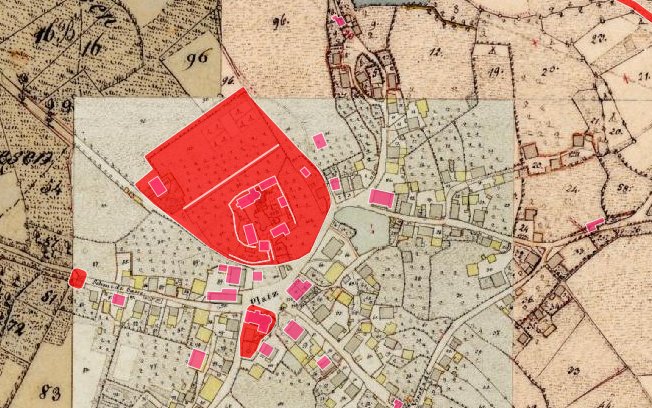
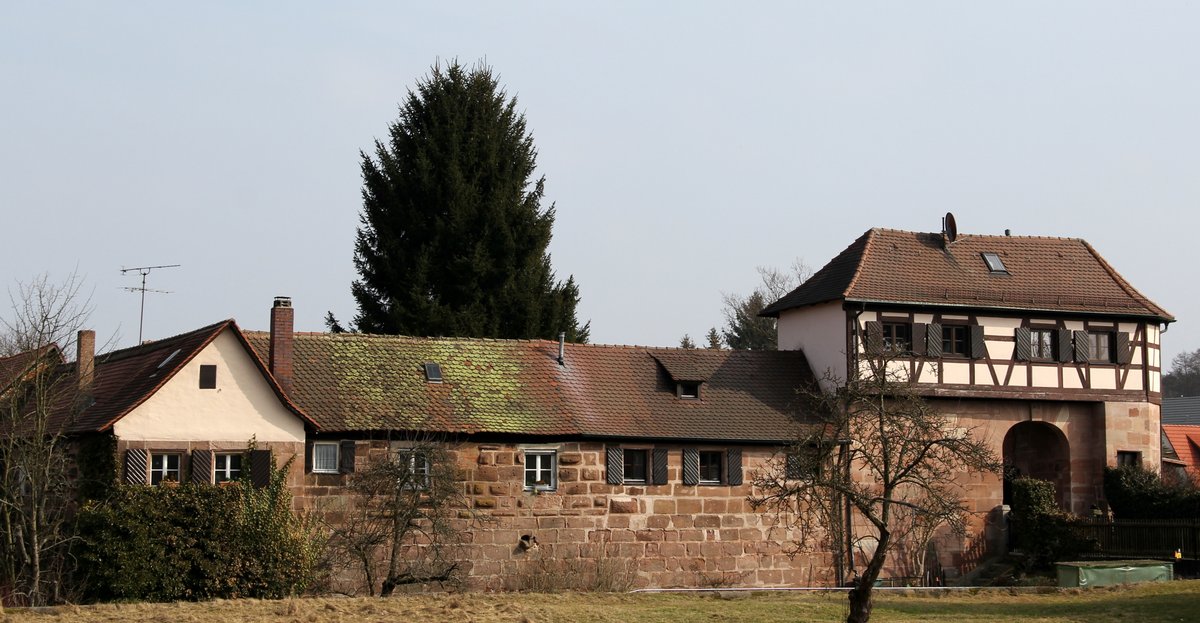
Village houses cradle heavy sandstone blocks, silent relics of a scorched 15th-century palace. On August 17, 1853, Schloss Pyrbaum dissolved into ash. The arsonists, Michael Flier and his wife, were arrested during the fire. The castle was dismantled after the fire, and the sandstone blocks were used to build surrounding houses.
Ancient records trace Pyrbaum back to 1130, linked to Birboum. By 1278, Albert Rindsmaul de Nurnberch von Grünsberg owned Pyrbaum, taking the name Rindesmule de Grundisperc after acquiring the property. He offered local chapel patronage to Abbess Adelhaid of Seligenporten in 1292. The Wolfsteins inherited the property through marriage in 1354.
For approximately 400 years, the Wolfsteins held the property, securing imperial immediacy in 1353 and full freedom by 1354. In 1493, Freiherr Wilhelm II. von Wolfstein built the imposing Schloss Pyrbaum on the site of the old castle. This structure was three stories tall and covered with a high hipped roof. It featured four round towers and a pond with a bridge leading to the castle and the adjacent church. Maps from 1568 confirm a castle-like structure with a mighty keep.
Ownership fractured in 1602 between Johann Albrecht and Hans Adam Sulzbürg. When the Wolfstein line ended in 1740, the property passed to the Electorate of Bavaria due to a 1562 feudal inheritance. After the death of Elector Maximilian III. Josef, the property fell to the Empire and was placed under Bavarian government control in 1779. The Neumarkt land court received the property in 1806.
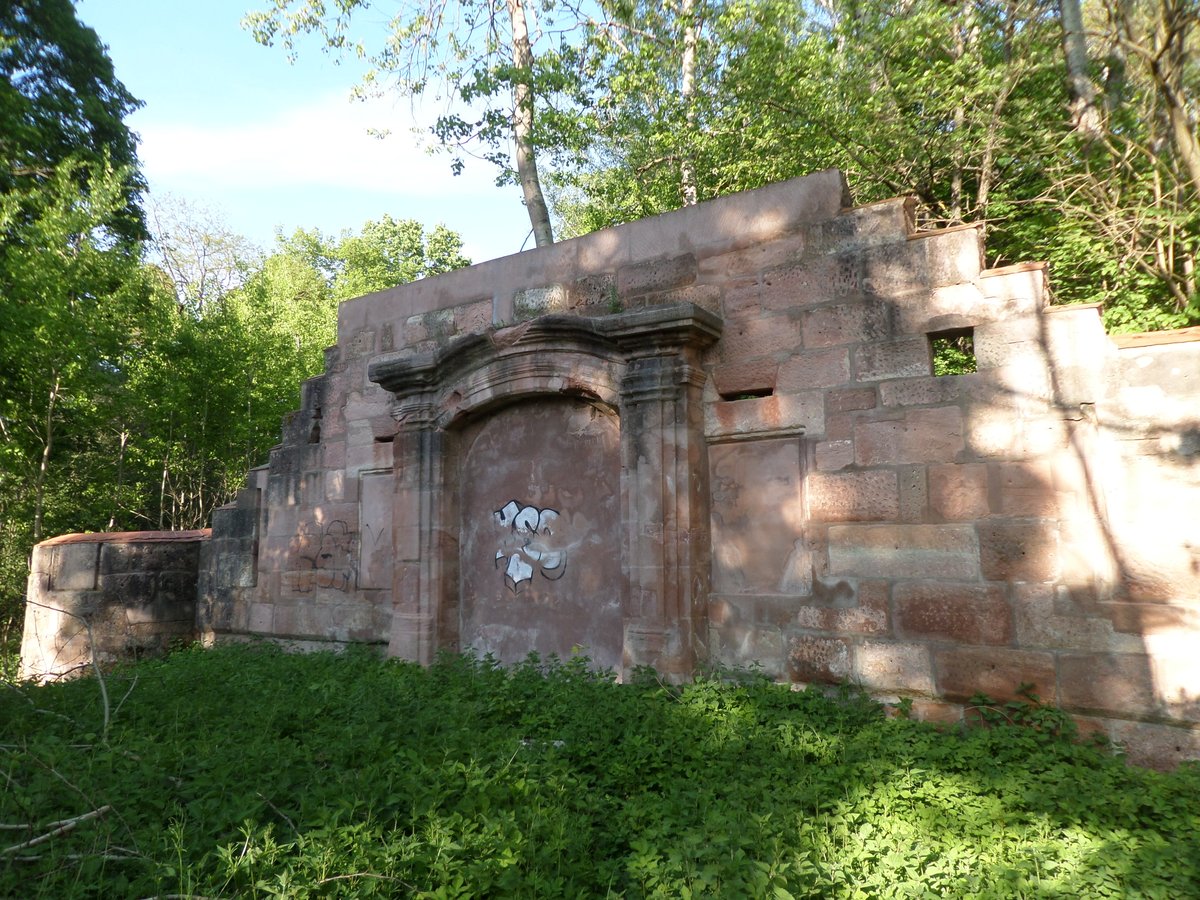
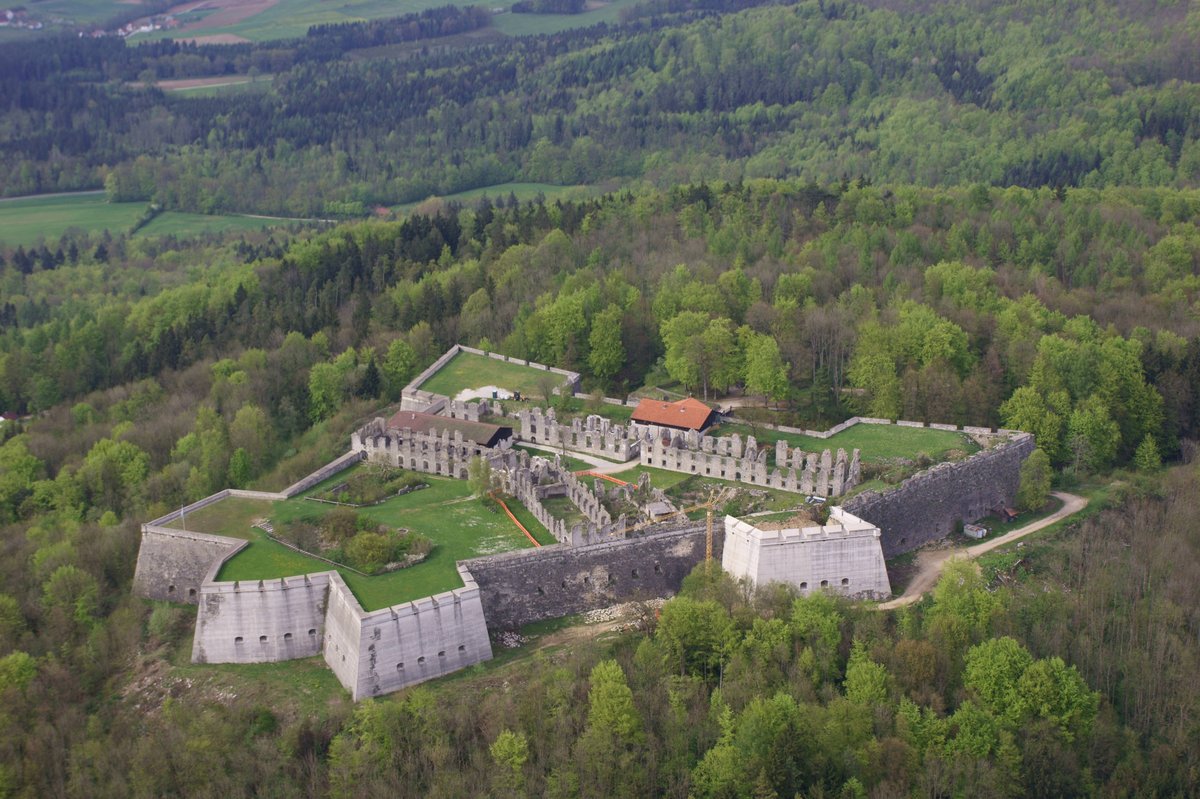
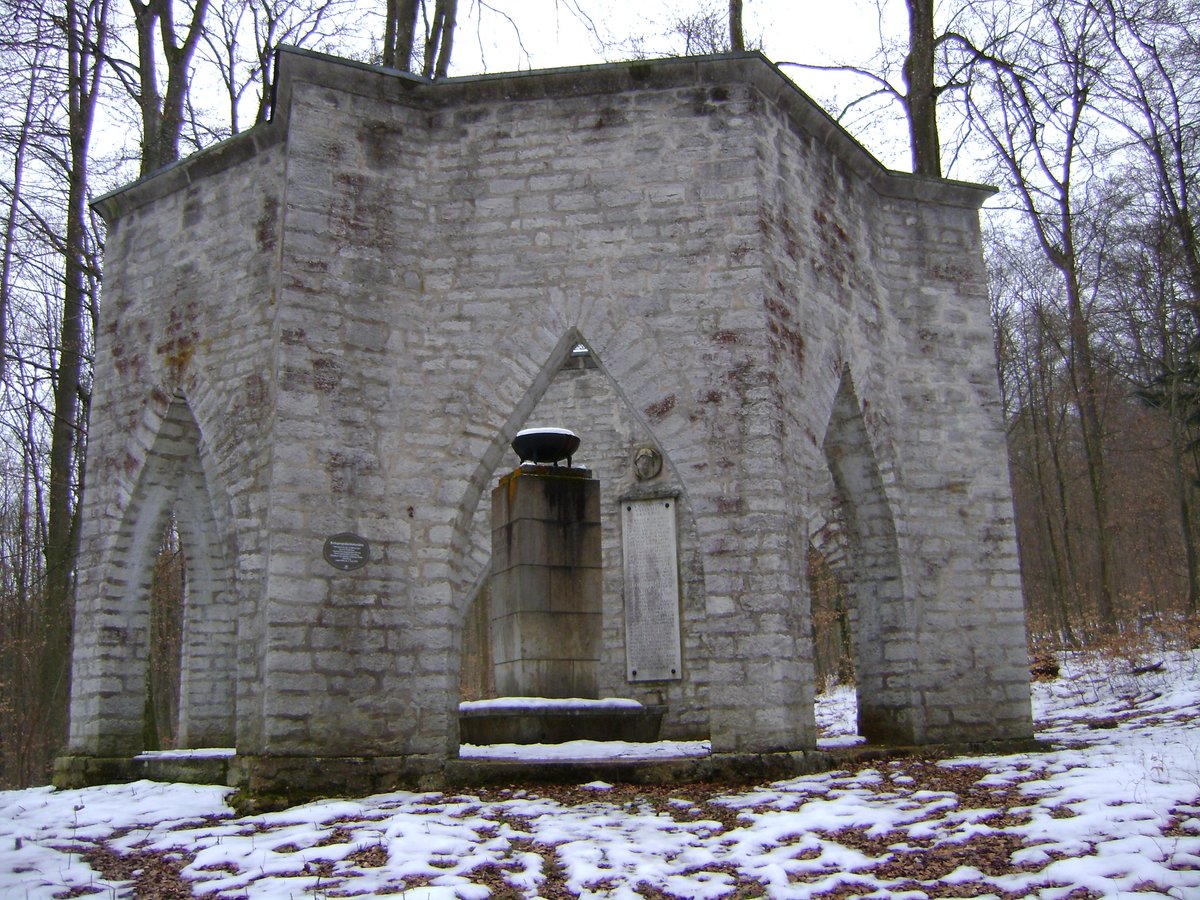
The entire moat remains intact, and the feed wall remains intact. Foundations of the castle remain, including a round tower foundation made of sandstone blocks. This foundation belonged to one of the castle's double-towered gates. A replica of a founding inscription exists at the site of the tower foundation. Nearby, the Catholic Church Mater Dolorosa stands on the castle square, built in 1886 on the foundations of the castle church.
Sources: Wikipedia, OpenStreetMap, Wikidata, Wikimedia Commons
Written by Aurora
Discuss this with the author and others
No comments yet. Be the first to start the conversation.